Reclaiming Your Shape After Pregnancy
Pregnancy transforms the body in remarkable ways, and the thighs and hips are among the areas most affected. Hormonal shifts, fat redistribution and stretched skin can leave behind stubborn bulges, mild laxity or cellulite that simply do not respond to diet and exercise alone. For many Indian mothers juggling busy lives and caregiving responsibilities, the prospect of surgery and lengthy recovery feels impractical.
This is where non-surgical approaches come in. Treatments such as HIFU, radiofrequency (RF) and fat freezing offer office-based options with minimal downtime, making post-pregnancy thigh and hip contouring India increasingly popular. In this guide, we compare how each technology works, what results to expect, and how to choose the right option for your body and goals.
Why Fat Accumulates and Skin Loosens After Pregnancy
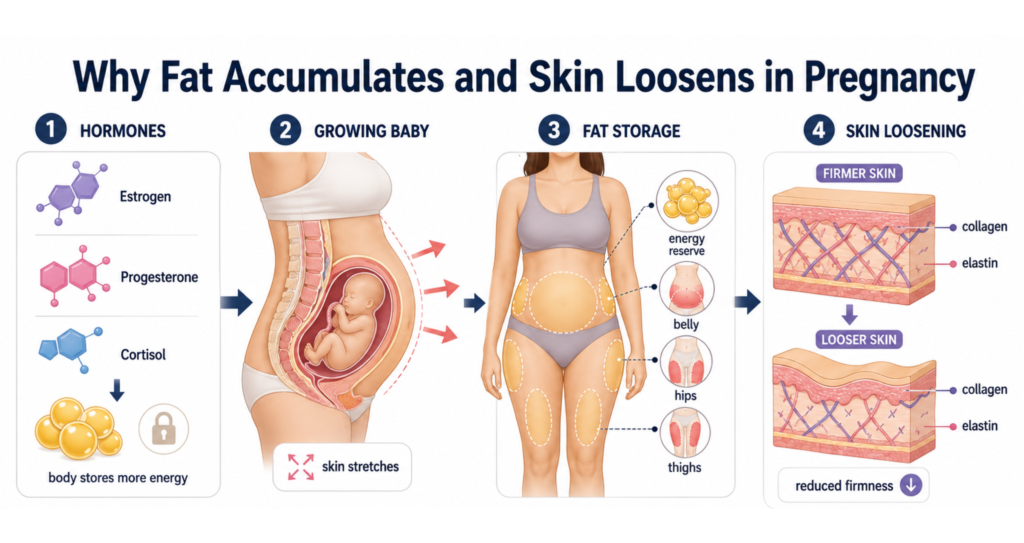
Understanding the biology behind postpartum changes helps set realistic expectations. During pregnancy, the body preferentially stores fat in the hips, thighs and buttocks under the influence of oestrogen and progesterone. These lower-body depots are thought to act as energy reserves for gestation and breastfeeding, which partly explains why they can be so resistant to dieting.
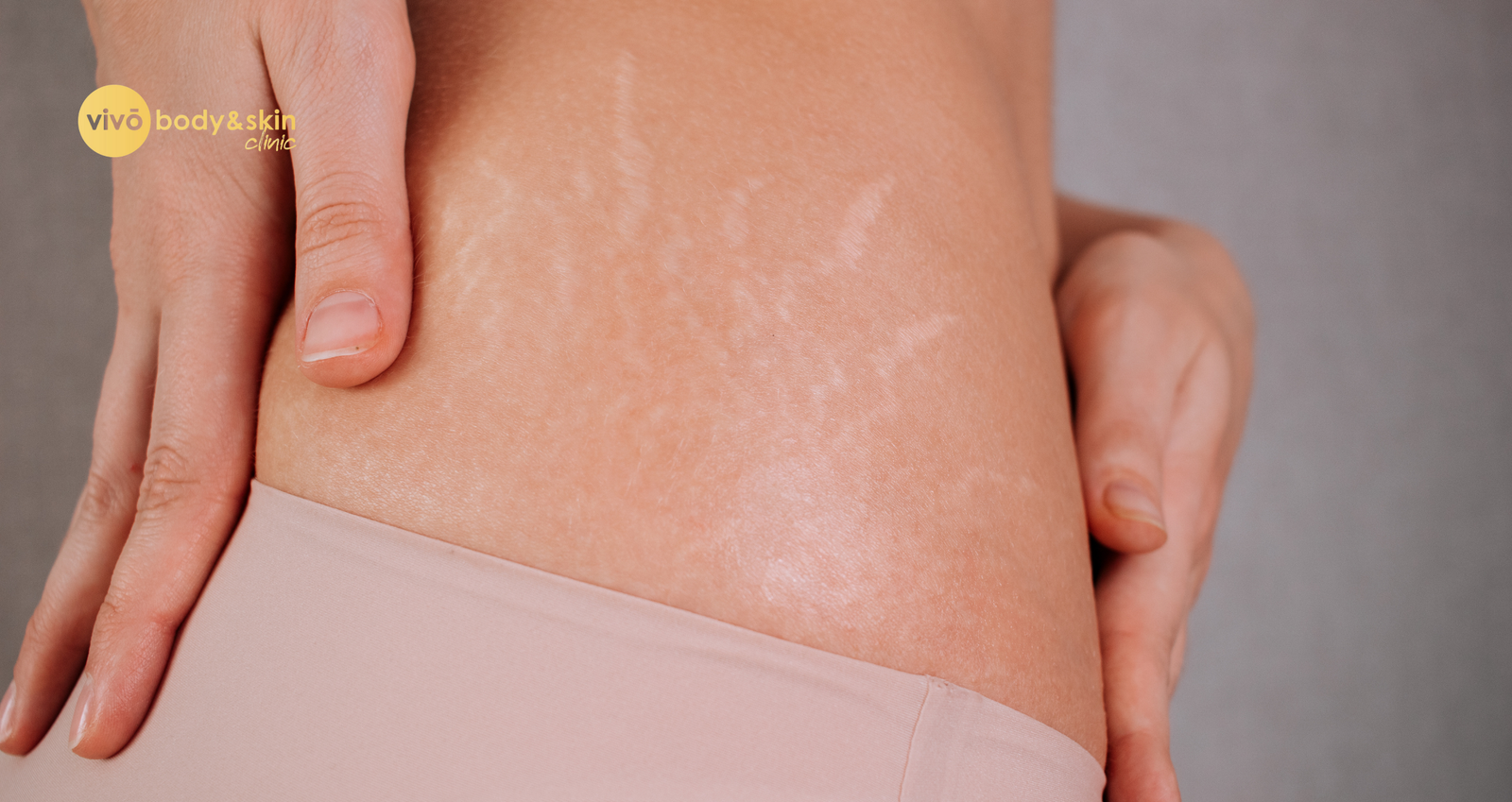
At the same time, the skin and connective tissue over the thighs and hips undergo significant mechanical stretching. Elevated relaxin and other hormones soften collagen and elastin fibres to allow the pelvis to widen, but this can leave residual laxity, stretch marks and textural irregularities once the mechanical stress eases. The degree of looseness depends on your pre-pregnancy weight, the amount and rate of gestational weight gain, your age, genetics and lifestyle.
After delivery, oestrogen and progesterone fall sharply before gradually normalising, while breastfeeding adds further metabolic changes. Many women find that subcutaneous fat in the thighs and hips persists for months even as overall weight reduces. Skin elasticity is finite, so where collagen has been stretched beyond its capacity, mild creping or folds may remain. Non-surgical contouring can meaningfully refine shape and firmness, but it works best as a finishing touch rather than a substitute for natural recovery, healthy eating and exercise.

HIFU for Postpartum Thighs and Hips
High-intensity focused ultrasound (HIFU) concentrates ultrasound energy at a precise depth beneath the skin, generating rapid heating that reaches temperatures high enough to cause controlled damage to fat cells and stimulate collagen production. Surrounding tissues, including the surface of the skin, are largely spared because the energy converges only at the focal point.
For body contouring, HIFU transducers are applied over areas of localised fat such as the inner thighs, outer thighs (“saddlebags”) and hips. Energy delivered to the subcutaneous fat triggers gradual clearance of damaged fat cells via the lymphatic system, while deeper passes stimulate neocollagenesis for skin tightening. This dual action makes HIFU for thighs postpartum particularly useful where small fat pockets coexist with mild laxity.
A 2025 systematic review of HIFU in aesthetic medicine found circumference reductions of roughly 2.5 to 4.5 cm in areas including the abdomen and thighs, with fewer than 5% of patients experiencing transient, mild side effects such as redness, swelling or temporary discomfort. Improvements typically begin within a few weeks and mature over two to three months as collagen remodelling progresses, with results often lasting 12 to 18 months when weight remains stable.
HIFU is not a weight-loss treatment, and the magnitude of fat reduction is modest. It is best suited to women within roughly 10 to 15 pounds of their target weight with discrete fat pads and mild to moderate skin laxity. If you are weighing up the options, our comparison of HIFU versus ultrasound cavitation explains how these technologies differ for fat reduction.
Radiofrequency (RF) for Hip Tightening
Radiofrequency body contouring uses electromagnetic energy to heat the dermis and, at higher doses, the subcutaneous fat. Because RF energy is not absorbed by melanin, it is suitable across a wide range of skin tones, including the darker phototypes common among Indian women, with a low risk of pigmentary side effects.
In skin-tightening mode, RF raises dermal temperatures to around 40 to 45 degrees Celsius, prompting collagen fibres to contract and stimulating fibroblasts to produce fresh collagen and elastin. Over weeks to months, this remodelling improves firmness, smooths the appearance of cellulite and reduces mild laxity. This makes RF hip tightening an excellent first-line choice when loose, crepey skin and dimpling are the dominant concerns rather than large volumes of fat.
Encouragingly, there is direct postpartum evidence. A prospective study of a combined RF, infrared light and tissue manipulation device in 20 postpartum women, treated weekly for five sessions on the abdomen, buttocks and thighs, reported a mean circumference reduction of 5.4 cm across treated zones alongside significant improvements in skin laxity, with excellent tolerability. The Cleveland Clinic notes that RF skin tightening is an outpatient procedure typically lasting around an hour, with most patients needing two to six sessions and results lasting one to three years with good skin care.
RF’s main limitation is the modest scale of fat reduction, so multiple sessions are usually needed for visible contour change. To learn more about how heat-based tightening performs, see our discussion of whether radiofrequency skin tightening genuinely works.
Fat Freezing (Cryolipolysis) for Hips in India
Cryolipolysis, popularly known as fat freezing, exploits the greater sensitivity of fat cells to cold compared with skin, nerves and muscle. A vacuum applicator draws a bulge of fat into a cooling cup, exposing the tissue to controlled low temperatures that crystallise lipids and disrupt fat cell membranes without harming the overlying skin. Over the following weeks, the body gradually clears the damaged fat cells, thinning the treated layer.
It is reassuring to know that the technology behind our fat freezing treatment is FDA cleared. Regulators have approved cryolipolysis for areas directly relevant to post-pregnancy concerns, including the inner and outer thighs, hips and flanks (“love handles”) and the “banana roll” beneath the buttocks. A systematic review of cryolipolysis reported average fat-layer thickness reductions of roughly 15 to 28%, with no significant changes in blood lipids or liver function, confirming its selectivity and systemic safety.
Fat freezing hips India is therefore a strong option for women with well-defined, “pinchable” fat bulges and reasonably good skin tone. Changes are often visible by three weeks, with the most dramatic improvement at around two months. However, cryolipolysis does not improve cellulite or skin laxity, and it carries a small risk of paradoxical adipose hyperplasia, where treated fat enlarges rather than shrinks and may need surgical correction. Pregnancy and breastfeeding are listed as contraindications, so timing matters. Our deeper look at how fat freezing performs on stubborn fat explores the technology further.
Non-Surgical Contouring at a Glance
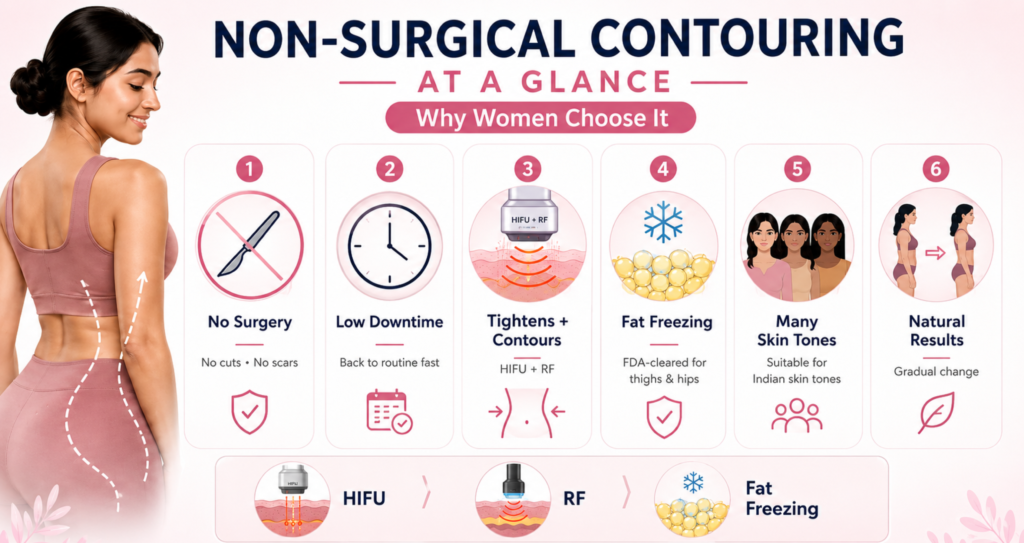
Why Women Choose It
- No incisions, anaesthesia or surgical scars
- Little to no downtime, allowing an immediate return to childcare and work
- HIFU and RF tighten skin as well as refining fat
- Fat freezing is FDA cleared and well validated for thigh and hip bulges
- Suitable across a range of skin tones common in India
- Gradual, natural-looking improvements rather than sudden change
Important Considerations
- Results are modest compared with surgery and not a weight-loss solution
- Multiple sessions are often required, adding to overall cost
- Best deferred until after breastfeeding and weight stabilisation
- Cannot remove significant excess skin or fully erase stretch marks
- Fat freezing does not improve cellulite or laxity
- Rare risks such as burns (HIFU/RF) or paradoxical fat growth (cryolipolysis)
HIFU vs RF vs Fat Freezing: A Comparison
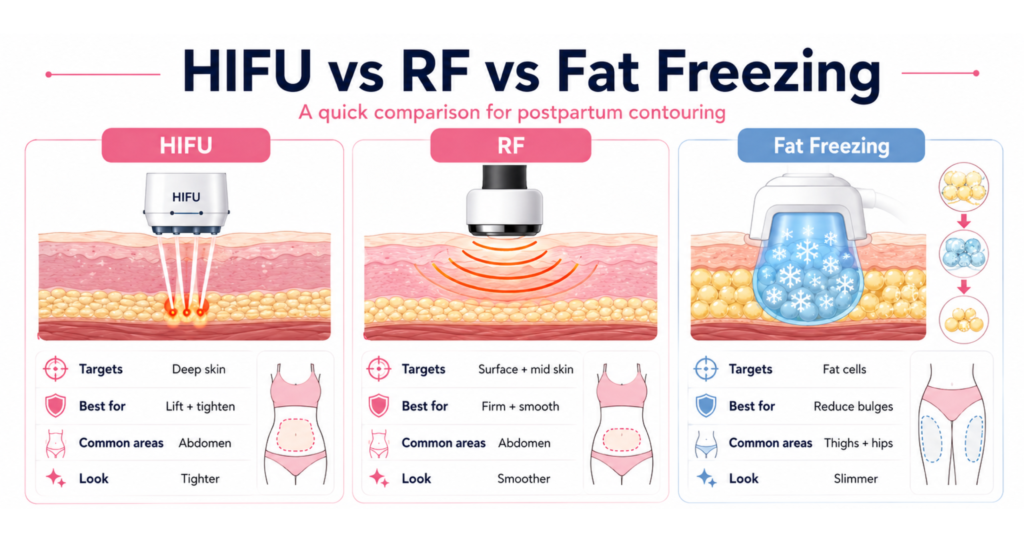
Each technology has distinct strengths. The table below summarises how they compare for postpartum body sculpting of the thighs and hips.
| Feature | HIFU | Radiofrequency (RF) | Fat Freezing |
|---|---|---|---|
| Main action | Fat reduction + deep skin tightening | Skin tightening + cellulite smoothing | Targeted fat reduction only |
| Typical effectiveness | ~2.5-4.5 cm circumference reduction | ~2-4 cm reduction + firmer skin | ~15-28% fat-layer reduction |
| Treatment duration | 30-60+ min per area | ~1 hour per area | 35-60 min per applicator |
| Downtime | Minimal; mild tenderness | Minimal; brief redness | Minimal; temporary numbness/soreness |
| Sessions needed | 1-3 per area | 2-6 per area | 1-3 per area |
| Ideal candidate | Small fat pads with mild laxity | Laxity and cellulite, minimal fat | Discrete fat bulges, good skin tone |
For a more detailed technology breakdown, our guide on HIFU versus RF skin tightening is a useful companion read.
Non-surgical contouring is best understood as a refinement, not a reset. It sculpts and tightens specific areas beautifully, but it works hand in hand with healthy living rather than replacing it.
Cost of Treatments in India
Pricing varies considerably depending on the technology, the size of the area treated, the clinic’s location and the expertise of the practitioner. In metropolitan centres, a single HIFU session for face or body using platforms such as Ultracel Q+ typically costs between ₹25,000 and ₹70,000, with body areas like the thighs and hips often at the higher end due to their larger surface area.
RF sessions are frequently bundled into packages because several treatments are needed to build results, while comprehensive non-surgical sculpting plans that include fat freezing or combined modalities can range internationally from around USD 1,500 to 4,500 (roughly ₹1.25 to ₹3.75 lakh) for a full course. Indian pricing is often more affordable in absolute terms thanks to lower costs of living.
When comparing quotes, look beyond the headline figure. Factors that influence value include whether the device carries recognised regulatory approval, the number of sessions included, and the qualifications of the treating clinician. For non-surgical body contouring Mumbai, choosing an established clinic with genuine, approved equipment is far more important than chasing the lowest price, particularly given the rare but real risks of burns or paradoxical fat growth with unregulated machines.
What to Expect During and After Treatment

Your journey begins with a consultation, during which a clinician assesses your fat distribution, skin quality, cellulite grade and overall health, and confirms you are an appropriate candidate. Photographs and measurements may be taken to track progress.
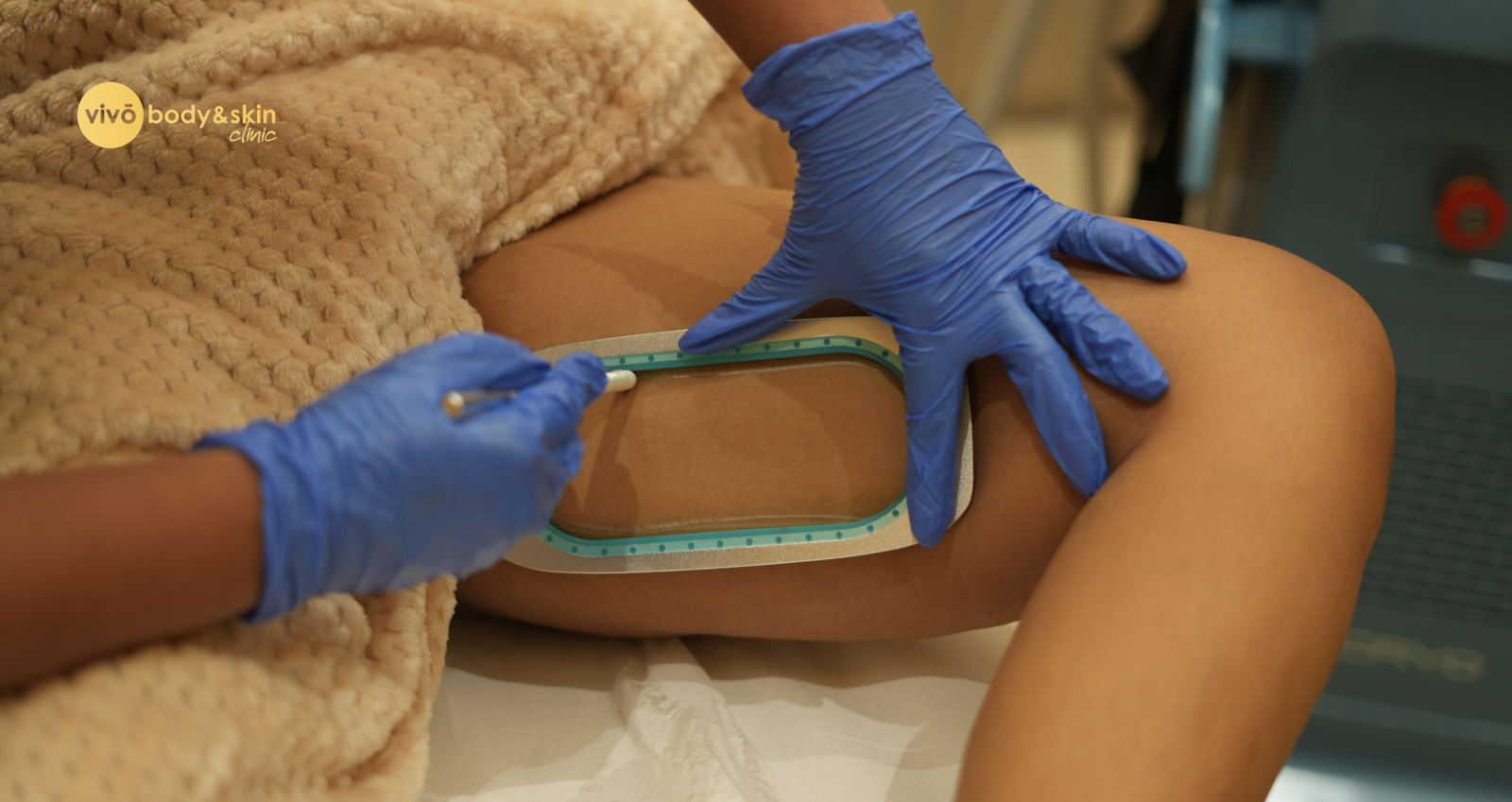
On the day, the treatment area is cleansed and marked. With HIFU, you may feel warmth or brief, staccato sensations as ultrasound pulses are delivered; modern devices use cooling and adjusted settings to keep this comfortable. RF typically feels like a warm, deep-tissue massage as the handpiece glides over the skin. Fat freezing begins with an intense cold and suction sensation that fades within five to ten minutes as the area becomes numb.
Afterwards, most women return to daily activities immediately. HIFU may leave the area tender for a few days, RF usually causes only brief redness, and fat freezing can produce temporary numbness, tingling or mild soreness lasting days to weeks. Results emerge gradually as the body clears damaged fat cells and rebuilds collagen, with the fullest effect appearing over two to three months. Maintaining a stable weight, staying hydrated and continuing gentle exercise all help prolong and enhance your outcome.

Who Should Choose Each Treatment
The right option depends on your dominant concern, your skin type and your timeline relative to childbirth and breastfeeding.
Choose Fat Freezing if…
Your main issue is a discrete, pinchable fat bulge on the inner or outer thighs, hips or flanks, and your skin tone is still reasonably firm. It delivers the most pronounced fat reduction of the three but does nothing for laxity or cellulite.
Choose RF if…
Loose, crepey skin and cellulite dominate, with only modest residual fat. RF is gentle, colour-blind across Indian skin tones, and can sometimes be considered slightly earlier in the postpartum journey. Its strength is tightening and texture, not dramatic slimming.
Choose HIFU if…
You have both small fat pads and mild to moderate laxity and want a lifting, firming effect alongside fat reduction. Combined HIFU and RF protocols can further enhance results for thigh and hip skin showing both looseness and dimpling.
Across all three, candidacy is strongest when your BMI is under 30, your weight is stable, and you are no longer pregnant or breastfeeding. If skin redundancy is severe, a surgical lift may be more appropriate. You may also find our overview of skin tightening after pregnancy and our wider guide to post-pregnancy body contouring helpful when planning your approach.
Why Choose Vivo Body & Skin Clinic For Post-Pregnancy Thigh & Hip Contouring
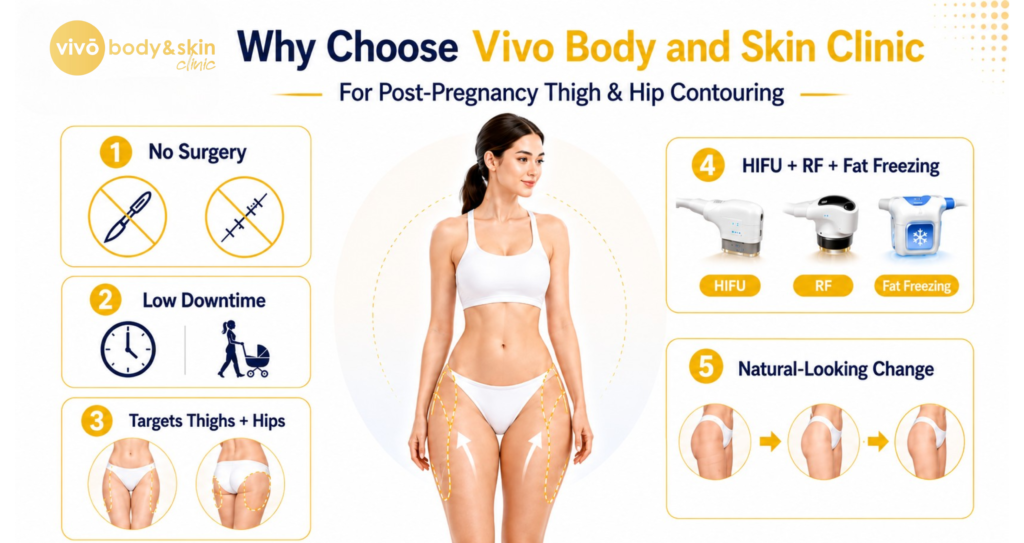
At VIVO Body & Skin Clinic in Mumbai, we offer a range of affordable, non-invasive aesthetic treatments tailored to the postpartum body. Our experienced team uses the latest pioneering aesthetic technology, including FDA-cleared fat freezing, HIFU and RF, to deliver natural, confidence-restoring results.
We believe in honest, personalised care. That means a thorough consultation, realistic guidance on what each treatment can and cannot achieve, and a plan built around your unique body, skin type and goals rather than a one-size-fits-all package. Whether your concern is stubborn thigh fat, loose hip skin or a combination of both, we will recommend the safest and most effective path forward.
Book your consultation today to restore your confidence and shape after pregnancy.
When is it safe to have these treatments after childbirth?
Most experts recommend waiting at least six to twelve months after delivery to allow natural recovery, hormonal normalisation and initial weight loss. Because fat freezing lists breastfeeding as a contraindication, and data on HIFU and RF in lactating women is limited, many clinicians advise waiting until you have finished or are close to finishing breastfeeding before treatment.
Are HIFU, RF and fat freezing safe?
All three have favourable safety profiles when performed with approved devices by trained practitioners. Most side effects are mild and temporary, such as redness, swelling or numbness. Rare risks include burns with HIFU and RF, and paradoxical adipose hyperplasia with fat freezing, which is why choosing a credentialed clinic with genuine equipment is essential.
Will these treatments help me lose weight?
No. Non-surgical contouring reduces localised fat and tightens skin but has little effect on overall body weight or BMI. These treatments are designed to refine specific problem areas in people who are already close to their target weight, not to replace healthy eating and exercise.
How many sessions will I need?
It varies by technology. HIFU and fat freezing often require one to three sessions per area, while RF typically needs two to six sessions spaced one to four weeks apart. Your clinician will tailor the plan based on your fat volume, skin laxity and goals.
How long do the results last?
Fat cells destroyed by HIFU or fat freezing do not regenerate, so fat-reduction results last as long as your weight remains stable. Skin-tightening effects from HIFU and RF generally last between 6 and 18 months, sometimes up to two years, after which maintenance sessions can sustain firmness.
Can these treatments remove cellulite and stretch marks?
RF has the best evidence for improving the appearance of cellulite by tightening collagen and smoothing the skin, though it rarely eliminates it entirely. No non-surgical contouring treatment can erase stretch marks, although collagen stimulation may modestly improve their texture and colour.
Is there any downtime?
Downtime is minimal for all three. Most women return to work and childcare the same day. HIFU may leave the area tender for a few days, RF causes brief redness, and fat freezing can produce temporary numbness or soreness lasting days to a few weeks.
Should I have treatment if I plan more children?
A future pregnancy may stretch the thighs and hips again and partially undo your results, so many women prefer to complete their family first. RF, being lower-risk and non-permanent, can be a reasonable interim option for mild laxity if a concern is significantly affecting your confidence.
Which treatment is most effective for stubborn fat?
For discrete, pinchable fat bulges with good skin tone, fat freezing delivers the most pronounced fat reduction. If skin laxity is also a concern, HIFU or a combined HIFU and RF approach offers a better balance of fat reduction and tightening.
How much does treatment cost in Mumbai?
A single HIFU session typically ranges from ₹25,000 to ₹70,000 depending on the area, while comprehensive sculpting plans involving fat freezing or combined modalities can run into lakhs over a full course. Costs depend on the clinic, device and number of sessions, so book a consultation for a personalised quote.
Conclusion
Post-pregnancy changes to the thighs and hips are entirely natural, but you do not have to live with stubborn fat or loose skin if they affect your confidence. HIFU offers fat reduction with skin tightening, RF excels at firming and smoothing, and FDA-cleared fat freezing targets defined fat bulges with proven results. Each has its place depending on your body, skin type and timing relative to childbirth and breastfeeding. With realistic expectations and an experienced clinician, non-surgical postpartum body sculpting can deliver meaningful, natural-looking improvements with minimal downtime. To find the right path for you, book a consultation with VIVO Body & Skin Clinic and take the first step towards feeling confident in your post-pregnancy shape.