Understanding Vaginal Laxity After Childbirth
Vaginal laxity is one of the most common yet least discussed concerns women raise after giving birth. It refers to a subjective feeling of vaginal “looseness” or reduced tightness at the vaginal opening, most often noticed after a vaginal delivery. For many women it can feel confusing and isolating, partly because it is rarely talked about openly and partly because reliable information can be hard to find.
The reassuring reality is that these changes are extremely common and, for a great many women, temporary. Available research suggests that anywhere between roughly 8% and 48% of women report some degree of vaginal laxity after childbirth, depending on how it is defined and when it is measured. Many cases improve over the first postpartum year, though a meaningful minority experience symptoms that persist and cause genuine distress.
This guide explains what vaginal laxity is, why it happens, how it differs from pelvic-floor weakness and prolapse, and what the evidence actually says about the treatment options available, so you can make informed, unhurried decisions about your own body.
What Exactly Is Vaginal Laxity?
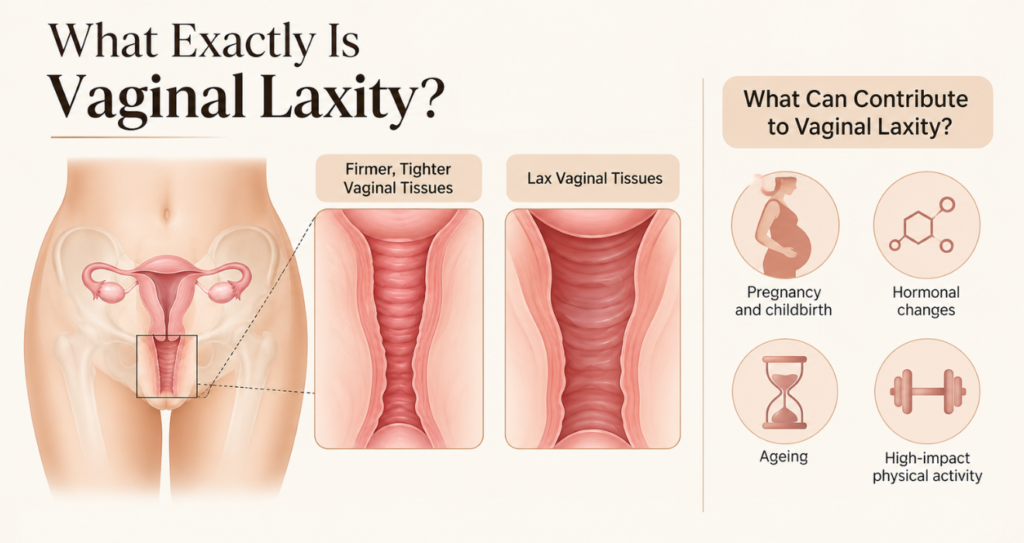
In the clinical literature, vaginal laxity is defined as a subjective sensation of vaginal looseness or decreased tightness, rather than a strictly measurable anatomical change. Women commonly describe it in relation to sexual activity, such as reduced friction or sensation, but it can also be experienced at rest as an overall feeling that the vagina feels “more open” than before.
Interestingly, perception and measurement do not always match. Some women feel loose despite very little measurable change, while others with measurable muscle weakness report no bother at all. Because of this, clinicians often rely on validated questionnaires such as the Vaginal Laxity Questionnaire alongside a physical examination, rather than anatomical measurements alone.
It is worth clearing up a persistent myth here: frequent sexual activity does not “stretch out” the vagina. The vaginal walls are designed to relax and return towards their resting state in response to hormonal and mechanical cues. Persistent laxity is far more strongly linked to childbirth-related tissue changes, pelvic-floor strain and, over time, ageing.
Why It Happens: Pregnancy, Birth and Tissue Changes
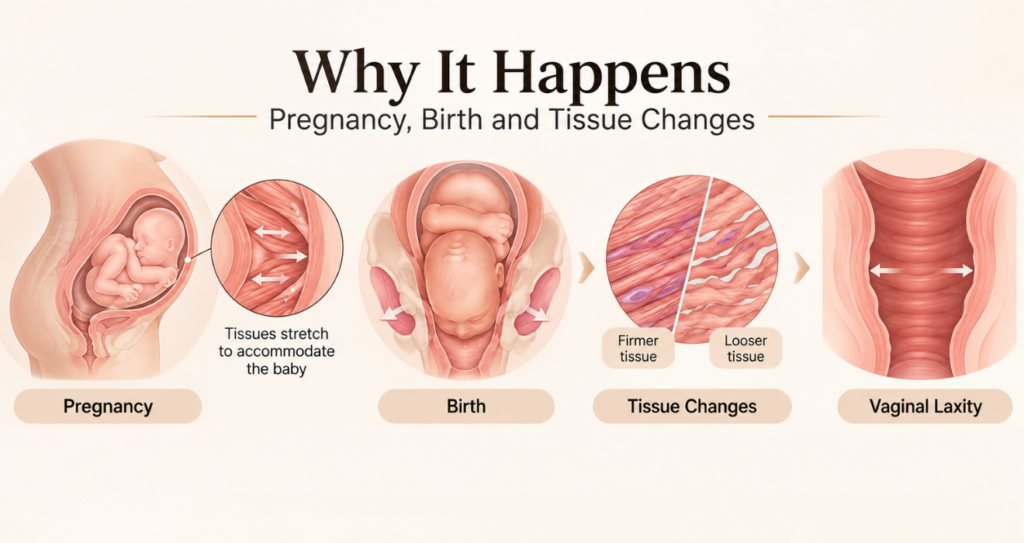
Pregnancy and vaginal childbirth place substantial mechanical and hormonal demands on the pelvic floor and vaginal canal. Understanding these helps explain why laxity is such a common experience.
The role of pregnancy
Even before birth, the growing uterus increases pressure on the pelvic floor. Hormones such as progesterone and relaxin soften connective tissues and ligaments to prepare the body for delivery, which can temporarily reduce baseline support and elasticity.
The mechanical effect of birth
During a vaginal delivery, the vaginal walls, pelvic-floor muscles and perineal tissues stretch considerably to allow the baby to pass. Collagen fibres expand and the levator ani muscles, which form the supportive sling around the vagina, are placed under significant strain. Larger babies, longer labours and instrument-assisted deliveries (forceps or vacuum) can increase the degree of stretching.
Collagen, elastin and hormones
The vaginal wall relies on collagen and elastin for strength and recoil. Repeated deliveries and advancing age can gradually reduce or disorganise these fibres. Breastfeeding also brings a temporary drop in oestrogen, which can thin the tissue and reduce elasticity and lubrication until hormonal levels stabilise.
Crucially, the vagina and pelvic floor are built to stretch and recover. Younger mothers with uncomplicated first deliveries often regain their pre-pregnancy sensation within the first six months. The levator ani muscle group and surrounding connective tissue are remarkably resilient in many women.
Laxity vs Pelvic-Floor Weakness vs Prolapse
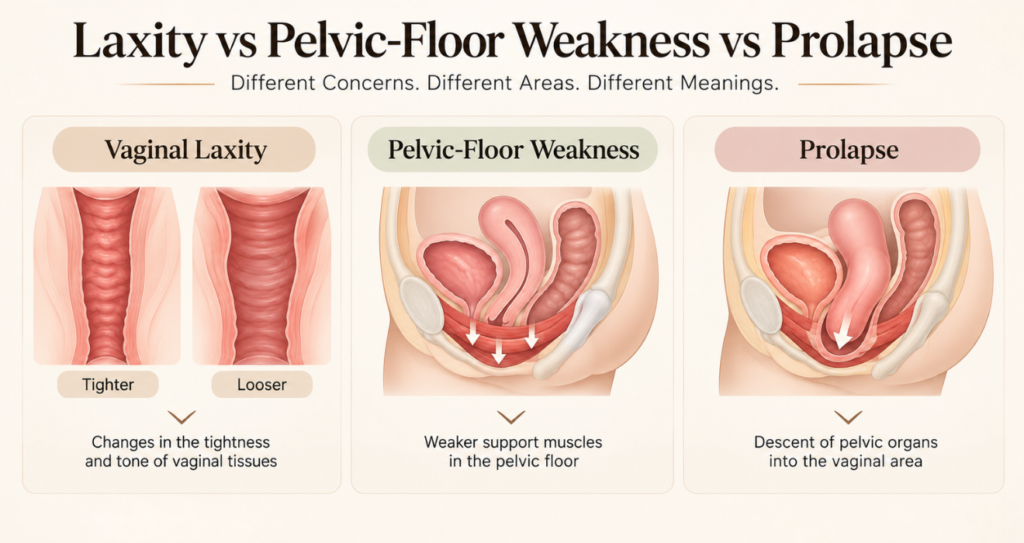
These three terms are often used interchangeably, but they describe different things, and distinguishing between them matters for treatment.
- Vaginal laxity is primarily a perceived reduction in tone or tightness at the vaginal opening and walls.
- Pelvic-floor weakness refers to reduced strength or injury of the muscles supporting the vagina, bladder and bowel. It can contribute to laxity but is measurable through examination.
- Pelvic-organ prolapse involves the actual descent of pelvic organs (such as the bladder or bowel) into or through the vaginal canal, producing a sensation of bulging or heaviness.
These conditions can coexist and share risk factors such as multiple vaginal births and levator ani injury, but they are not the same. A feeling of “looseness” is not the same as prolapse, and a careful examination can tell them apart. This is one reason professional assessment is so valuable when symptoms persist or worsen.
When Should You Seek a Medical Assessment?
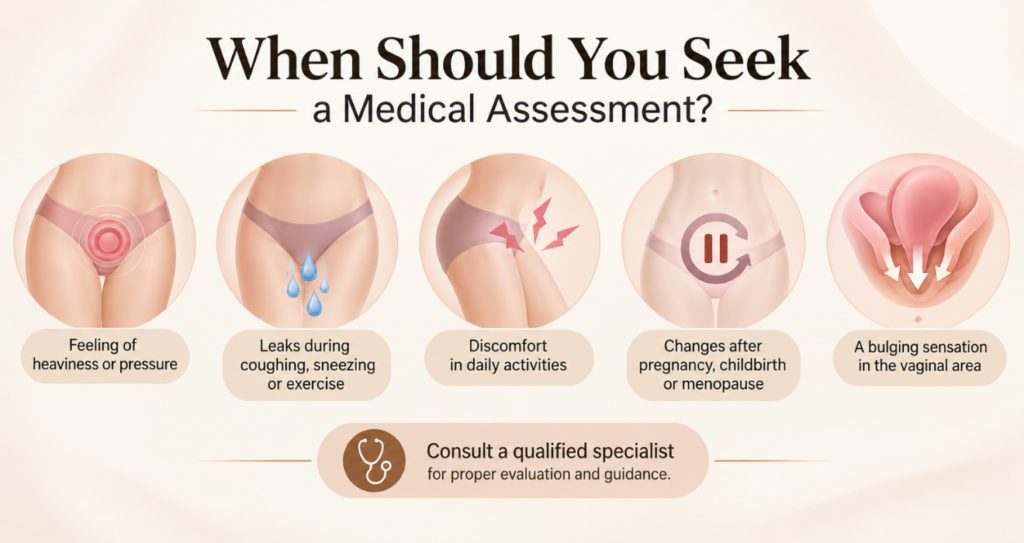
Postpartum changes often settle over the first six to twelve months, so there is no need to rush into treatment. However, it is sensible to seek assessment if you experience any of the following:
- Laxity that causes significant distress or affects your wellbeing or relationships
- Symptoms that persist beyond six to twelve months or worsen over time
- Associated concerns such as urine leakage when you cough, sneeze or exercise
- A sensation of bulging, heaviness or something “coming down,” which may indicate prolapse
A routine postpartum check is a good starting point. If symptoms persist, a referral to a pelvic-health specialist, such as a urogynaecologist, pelvic-floor physiotherapist or sexual-medicine clinician, allows a more detailed evaluation. Anyone considering energy-based or surgical procedures should particularly seek specialist advice first, so decisions are guided by current evidence rather than marketing.
Evidence-Based Treatment Options
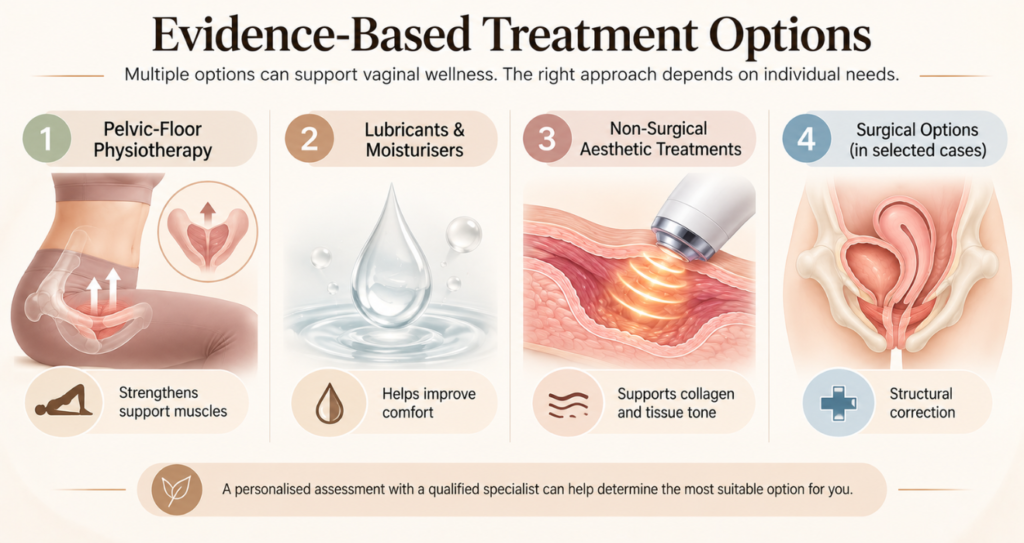
Treatment ranges from simple, low-risk conservative measures through to newer aesthetic technologies and, in selected cases, surgery. The right choice depends on severity, individual circumstances and personal preference.
Pelvic-floor muscle training and physiotherapy
Pelvic-floor muscle training (often called Kegel exercises) is the internationally recommended first-line therapy for pelvic-floor dysfunction, including laxity. It does not literally tighten the vaginal walls themselves; instead, it strengthens the muscular sling that surrounds and supports the vagina, which can meaningfully improve perceived tightness and control.
Working with a pelvic-floor physiotherapist adds real value, as they can confirm you are using the correct muscles, provide biofeedback and tailor a progressive programme. It is low-risk, low-cost and benefits overall pelvic health, so it is almost always the sensible place to begin.
Lubricants, moisturisers and behavioural strategies
While these do not address laxity directly, they can improve comfort and sexual satisfaction, particularly during the breastfeeding period when oestrogen is lower. Open communication with a partner, gradual re-engagement with intimacy and, where helpful, psychosexual counselling can all support recovery.
Non-surgical aesthetic (energy-based) treatments
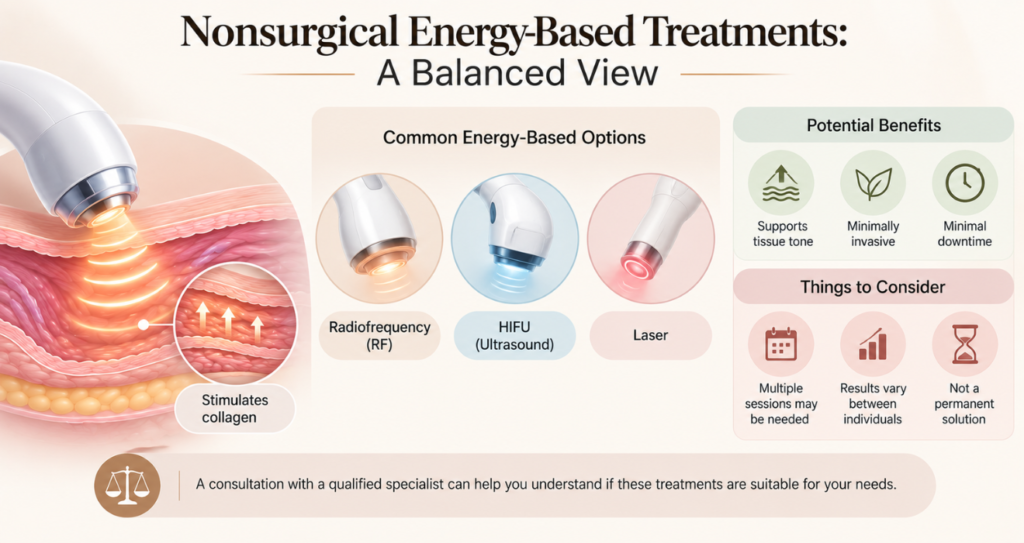
Radiofrequency and laser devices apply controlled heat to the vaginal tissues, aiming to stimulate collagen and elastin remodelling. Short-term studies, including a small randomised trial of radiofrequency, report modest subjective improvements in perceived laxity and sexual satisfaction, with generally mild and transient side effects.
However, the evidence is far from settled. Benefits appear largely subjective, may fade over 6 to 12 months and objective measures of muscle strength often do not change. Importantly, these treatments are not guaranteed, not permanent and not suitable for everyone, and long-term safety data remain limited.
Surgical options
Procedures such as posterior vaginoplasty with perineoplasty offer more direct structural correction and are generally reserved for women with significant laxity, often linked to substantial obstetric trauma or coexisting prolapse. They are more invasive, carry risks such as pain, scarring and altered sensation, and are not medically indicated for purely cosmetic reasons.
Treatment Options at a Glance
| Option | How it works | Realistic benefits | Key considerations |
|---|---|---|---|
| Pelvic-floor training / physiotherapy | Strengthens supporting muscles around the vagina | Improves support and perceived tightness; benefits overall pelvic health | Requires consistency and correct technique; may not fully correct severe defects |
| Lubricants & moisturisers | Improve comfort and reduce friction-related discomfort | Enhanced comfort during intimacy | Do not address laxity itself |
| Local vaginal oestrogen | Restores tissue thickness and elasticity in atrophic tissue | Effective for menopausal dryness and atrophy | Mainly for postmenopausal women; not first-line for younger postpartum laxity |
| Radiofrequency / laser (energy-based) | Controlled heat to stimulate collagen remodelling | Possible short-term subjective improvement | Not guaranteed or permanent; long-term safety uncertain; not suitable for everyone |
| Surgical vaginoplasty / perineoplasty | Structural reconstruction of vaginal wall and perineum | More direct, durable structural change in selected cases | Invasive; risks of pain, scarring, altered sensation; specialist assessment essential |
Non-Surgical Energy-Based Treatments: A Balanced View
Safety, Contraindications and Realistic Expectations
Whatever the approach, honest expectations matter. Conservative treatments are gentle but require patience and consistency. Non-surgical aesthetic treatments may offer subjective improvement for some, but they should never be presented as a certain or lifelong fix.
Energy-based procedures are generally not appropriate during pregnancy, while breastfeeding when hormone levels are still stabilising, or in the presence of active infection, unexplained bleeding or certain gynaecological conditions. Most sources recommend waiting until at least six months after birth, once pelvic-floor recovery is reasonably established, before considering any regenerative treatment.
Regulators, including the US Food and Drug Administration, and professional bodies such as the American College of Obstetricians and Gynecologists (ACOG) have cautioned that energy-based devices are not approved specifically for vaginal rejuvenation, laxity, incontinence or sexual dysfunction, and that women should be fully counselled on the uncertain long-term evidence. This is precisely why a careful, individual consultation is so important.
Vaginal laxity is not merely a mechanical problem to be “tightened”; it is a personal experience shaped by biology, hormones, sexuality and confidence, and it deserves a patient-centred, unhurried approach.
The Vivo Body & Skin Clinic Approach in Mumbai

At VIVO Body & Skin Clinic in Mumbai, we offer a range of affordable, non-invasive aesthetic treatments delivered by an experienced team using the latest pioneering technology. Our philosophy is straightforward: honest advice, realistic expectations and treatments suggested only where they genuinely fit your needs.
For many postpartum women, non-surgical care is part of a wider recovery journey. We frequently support women who are also exploring post-pregnancy body contouring, targeted thigh and hip contouring, or facial rejuvenation using HIFU, RF and microneedling as they rebuild confidence in their own time. Where loose skin is a concern following weight change or pregnancy, we also offer non-surgical skin tightening and abdominal skin tightening options.
Any intimate wellness concern begins with a private, judgement-free consultation. We will listen to your symptoms, discuss the full range of evidence-based options, including conservative first-line measures such as pelvic-floor physiotherapy, and be clear about what any treatment can and cannot realistically achieve. Where a gynaecologist or pelvic-floor specialist is more appropriate, we will say so.
Book a confidential consultation
If postpartum changes are affecting your comfort or confidence, you do not have to navigate it alone. Contact VIVO Body & Skin Clinic in Mumbai to arrange a discreet, no-pressure consultation, where you can ask questions openly and receive honest, tailored guidance about the options best suited to you.
Is vaginal laxity after childbirth normal?
Yes, it is very common. Studies suggest that somewhere between roughly 8% and 48% of women report some degree of vaginal laxity after birth, depending on how it is defined. For many women, especially younger mothers after an uncomplicated first delivery, the sensation improves over the first six to twelve months as tissues heal and pelvic-floor muscles recover strength.
Will a caesarean section prevent vaginal laxity?
Not necessarily. While a caesarean avoids the direct stretching of the vaginal canal during birth, pregnancy itself still affects the pelvic floor and hormones. Research also suggests there is no clear long-term difference in some sexual-function concerns between women who deliver vaginally and those who have a caesarean. A caesarean should never be chosen primarily for presumed sexual benefits.
Is vaginal laxity permanent?
Often not. Many women regain their pre-pregnancy sensation within six to twelve months, and pelvic-floor training can support this natural recovery. In women with multiple births, significant trauma or advancing age, some laxity may persist, but even then, symptoms can frequently be improved with the right, individualised approach.
Do tightening creams or pills work?
There is no credible clinical evidence that over-the-counter creams, pills or ointments meaningfully improve vaginal laxity. Some may even contain irritants or unregulated ingredients. Pelvic-floor strengthening remains the best-supported non-invasive approach, and any hormonal treatment should always be supervised by a clinician.
How safe are non-surgical vaginal rejuvenation treatments?
Short-term data suggest energy-based treatments are generally well tolerated, with mostly mild, temporary side effects. However, long-term safety and effectiveness remain uncertain. Regulators including the FDA and bodies such as ACOG have cautioned against unsupported marketing claims. These treatments are not guaranteed, not permanent and not suitable for everyone, so a thorough consultation is essential.
How soon after childbirth can I consider treatment?
Most experts recommend waiting until at least six months after birth, and until pelvic-floor recovery is reasonably established, before considering any regenerative or aesthetic treatment, particularly while breastfeeding when hormone levels are still stabilising. Conservative measures such as pelvic-floor physiotherapy can usually begin sooner under professional guidance.
Can pelvic-floor exercises make the vagina too tight?
This is very unlikely in a postpartum setting where weakness is more common. Correctly performed pelvic-floor training improves muscle control and support, allowing the muscles to relax and contract appropriately. If you experience pain or a sensation of constant tension, pause and consult a pelvic-floor physiotherapist to adjust your programme.
How does vaginal laxity relate to urine leakage or prolapse?
They frequently coexist because they share underlying pelvic-floor changes, but they are distinct conditions. Stress urinary incontinence involves leakage with exertion, while prolapse involves organs descending into the vaginal canal. Pelvic-floor training can help with all three, but symptoms of bulging, heaviness or leakage should always prompt a proper medical assessment.
What results can I realistically expect from treatment?
Conservative treatments work gradually over weeks to months and rely on consistency. Non-surgical aesthetic treatments may offer subjective improvement for some, but results can be modest and may fade over 6 to 12 months. No ethical clinic can promise a guaranteed “tightening” or improved sexual satisfaction, and honest expectations are part of good care.
When should I see a gynaecologist or pelvic-floor specialist?
Seek specialist assessment if symptoms persist beyond a year, worsen over time, cause significant distress, or occur alongside urine leakage or a sensation of bulging. A urogynaecologist, pelvic-floor physiotherapist or sexual-medicine clinician can offer a detailed evaluation and help you weigh conservative and advanced options appropriately.