Why Timing Matters for Laser Hair Removal Before Diwali
As the festive season approaches, many people in Mumbai begin planning their grooming routines well ahead of the celebrations. New lehengas, short-sleeved blouses, saris with exposed midriffs and family photographs all heighten the desire for smooth, confident skin. If you are wondering about laser hair removal before Diwali, the single most important thing to understand is this: laser works gradually, over a series of sessions, rather than instantly.
In 2026, the main day of Diwali (Lakshmi Puja) falls on Sunday, 8 November, within the five-day sequence running from Dhanteras to Bhai Dooj. Treating that date as your “finish line” is sensible, but reaching your best results by then means working backwards and starting several months in advance. Unlike a quick waxing or threading appointment that can be booked days before an event, laser hair reduction follows your hair’s natural growth cycles and only shows its full benefit after multiple treatments.
This guide, written to help you make a calm, informed decision, explains how the treatment works, when to start, how many sessions you can realistically expect to need, and what results are achievable if time is short. If you are also thinking about other seasonal treatments, our overview of when to book your festive skin preparation is a useful companion read.
How Laser Hair Removal Actually Works
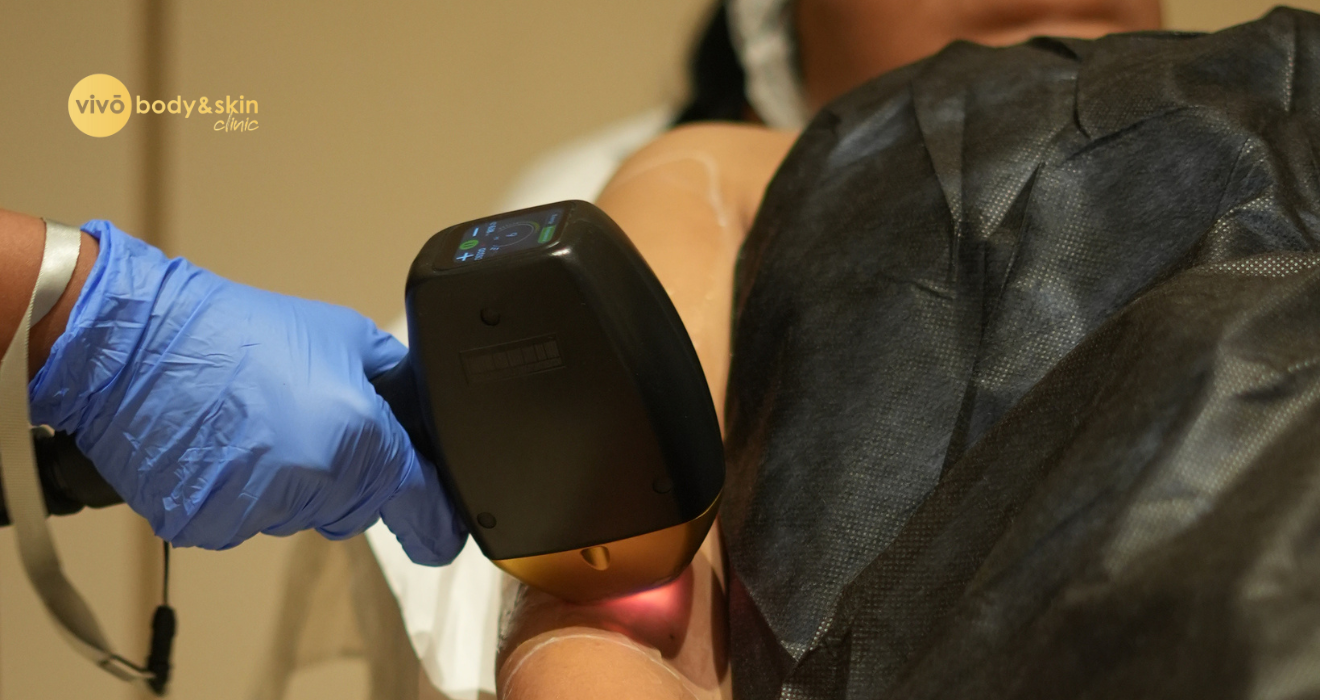
Laser hair removal uses a principle called selective photothermolysis. A focused beam of light is absorbed by the melanin (pigment) in the hair, where it converts into heat and damages the follicle, slowing or inhibiting future growth. Because the laser targets pigment, it tends to work most effectively on dark hair.
The reason you cannot achieve lasting results in one visit comes down to biology. Each hair follicle cycles through growth (anagen), resting (telogen) and shedding phases, and only follicles in the active growth phase are vulnerable to the laser at any given time. At any moment, only a fraction of the hair in a given area is in this receptive phase. This is why, according to the American Academy of Dermatology, most people need several sessions spaced roughly four to six weeks apart.
It is also worth knowing that treated hairs do not fall out immediately. As the Mayo Clinic explains, hair sheds over a period of days to weeks after each session, and may even appear to keep growing before it detaches. Many people misread this as the laser “not working”, when in fact it is simply the normal shedding process. The visible benefit of each session builds up over the following weeks.
Long-term reduction, not permanent removal
It is important to set honest expectations. Laser hair removal is accurately described as long-term hair reduction rather than permanent removal. After a completed course, many people enjoy smooth skin for months or even years, with any regrowth typically finer and lighter. Some maintenance sessions may be needed over time, particularly for hormonally influenced areas such as the face.
When Should You Start Laser Hair Removal Before Diwali?
The honest answer to when to start laser hair removal depends on how many sessions you want to complete and how far apart they are spaced. Most initial courses involve four to eight professional sessions, often six to eight for common areas such as the legs, underarms and bikini line, scheduled every four to six weeks.
For the best possible results by Diwali, the ideal approach is to begin roughly six to nine months in advance. This mirrors the advice given for a laser hair reduction before a wedding, where experts consistently recommend starting six to nine months before the date so that multiple sessions can align with hair growth cycles.
Working backwards from early November 2026, aiming to complete your final session around late September to early October gives any temporary redness or shedding time to settle before the celebrations. That means:
- An intensive eight-session course at four-week intervals would ideally begin around late March to early April 2026.
- A moderate six-session course at four-week intervals could start a little later, around late May to June.
- If using six-week intervals, you would need to begin earlier, from around February to mid-March.
Starting in late winter or early spring has an added benefit for Mumbai residents: skin is less likely to be tanned, which reduces the risk of pigmentation changes and avoids frequent pauses in the treatment plan.
Practical Diwali Timeline
The table below translates the science into a simple, scannable plan. These are general guides; your clinician will individualise the schedule after assessing your skin and hair.
| Time before Diwali | What can realistically be achieved | What to avoid |
|---|---|---|
| 6-9 months (Feb-May 2026) | Ample time for a full course of 6-8 sessions; near-maximal reduction with finer, sparser remaining hair | Rushing intervals; intense sun exposure or tanning between sessions |
| 4-5 months (Jun-Jul 2026) | A realistic 5-6 sessions; clear, visible reduction across most areas | Waxing, threading or plucking treated areas; skipping sunscreen |
| 2-3 months (Aug-Sep 2026) | Around 2-3 sessions; noticeable thinning and slower regrowth, but not full smoothness | Expecting complete reduction; booking a session in the final week |
| Under 1 month (Oct 2026) | 1 session with roughly 10-25% reduction on some hair; best for small, fast-growing areas such as the upper lip | Any treatment within days of the festival due to possible temporary redness |
In all scenarios, your final session should sit at least three to four weeks before Diwali so that any transient redness, swelling or shedding has fully settled before the main festival days.
Laser hair removal is a longitudinal plan, not a last-minute fix. The earlier you start before Diwali, the smoother and more reliable your results will be on the day.
What to Expect After Your First Session
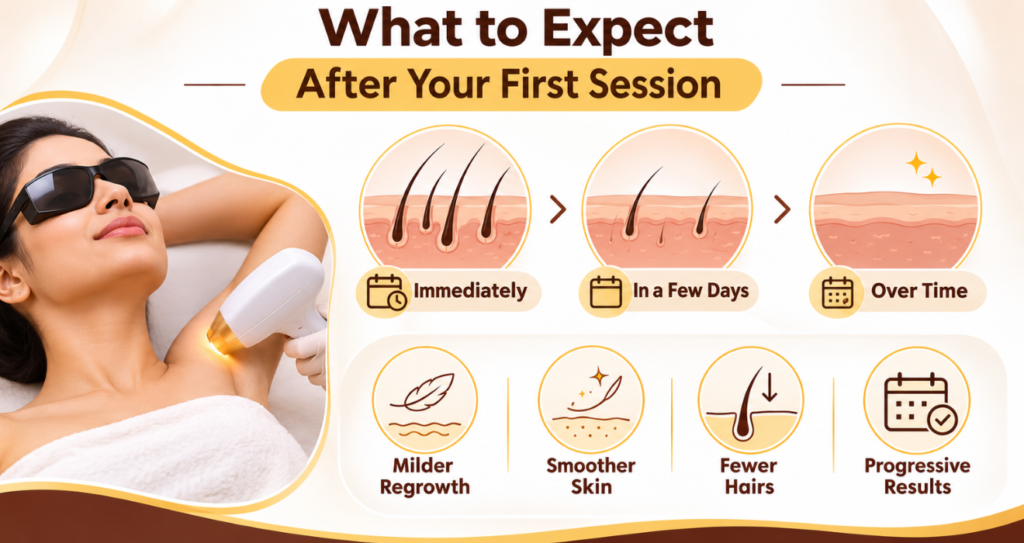
After your first session, you may notice some redness, mild swelling or a sensation similar to light sunburn in the treated area. These effects are usually minor and settle within hours to a couple of days, and applying a cool compress helps. The American Academy of Dermatology notes that most people see roughly a 10% to 25% reduction in hair after the first treatment, with progressive thinning as the course continues.
Over the following one to three weeks, treated hairs shed. This stage can be confusing because the hair may look as though it is still growing before it loosens and falls away. Gentle exfoliation can help, but you should never wax, thread or pluck between sessions, as this removes the follicle the laser needs to target. Shaving is perfectly acceptable.
Why results vary from person to person
Outcomes differ because they depend on several factors: hair colour and coarseness, skin tone, the area being treated and your individual response. Dark, coarse hair on the underarms or bikini line often responds earlier and more dramatically, while fine or light hair responds less strongly and may need more sessions. Hormonal conditions such as PCOS can also drive new facial hair growth, meaning maintenance may be needed over time.
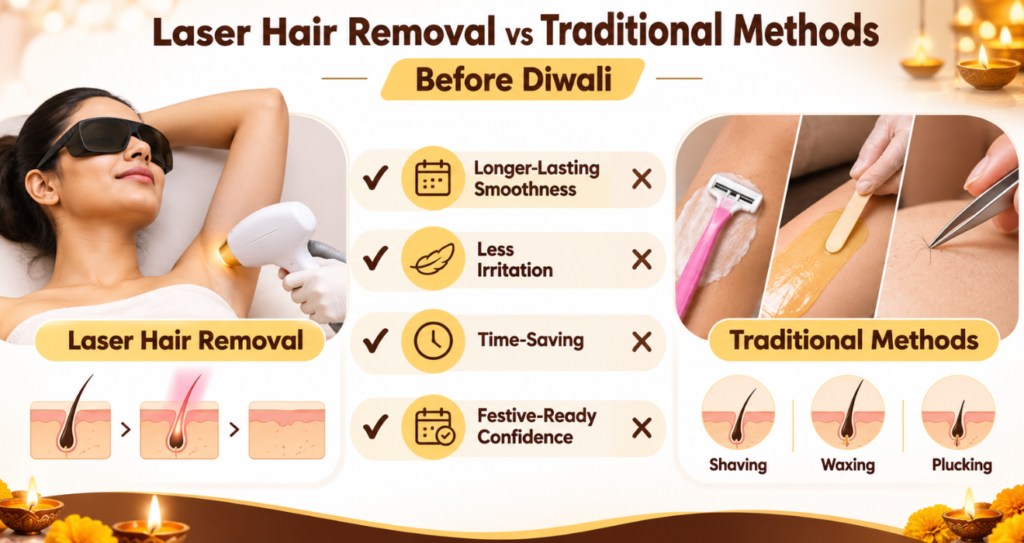
Laser Hair Removal vs Traditional Methods Before Diwali
Safety Guidance for Indian Skin
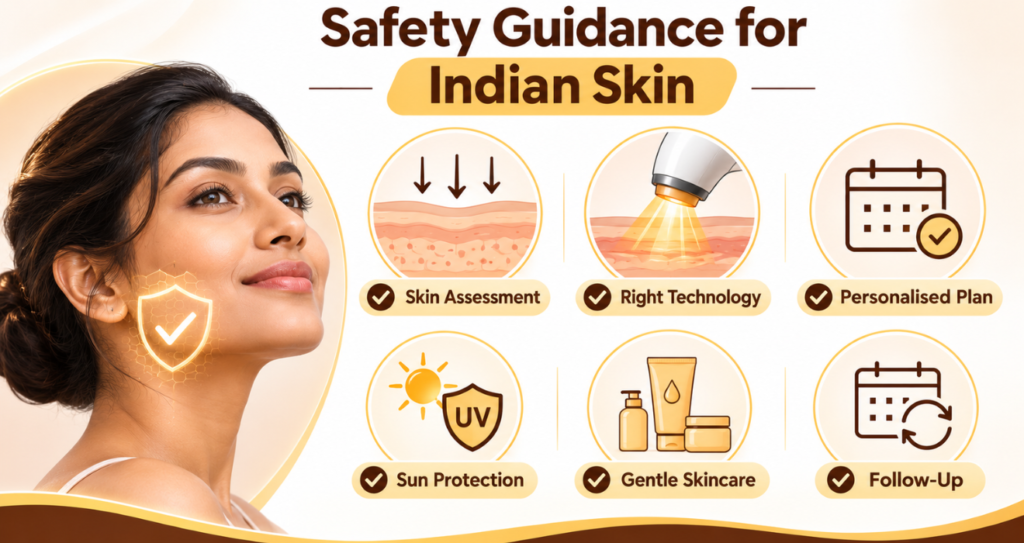
Laser hair removal is safe and effective for most people when performed by trained practitioners, but Indian skin requires particular care. Many people of South Asian descent have medium to dark skin with dark hair, which makes them excellent candidates for hair reduction, but also raises the risk of pigmentation changes if the wrong device or settings are used. Long-pulsed Nd:YAG lasers and carefully cooled diode lasers are generally preferred for darker skin because they reduce melanin absorption in the surface layers while still targeting the follicle.
Patch testing and consultation
A patch test and a thorough consultation should always precede your first full session. This allows the clinician to assess your skin type, hair characteristics and medical history, and to set the laser conservatively before escalating. It is the single most important safeguard against side effects.
Sun exposure and tanning
Tanned skin significantly increases the risk of burns and pigmentation changes because elevated melanin in the skin competes for the laser energy. Most clinics advise avoiding intentional sun exposure, tanning beds, spray tans and self-tanners for at least two weeks before each session. The Mayo Clinic recommends protecting treated areas from the sun for around six weeks after treatment and using a broad-spectrum SPF 30 sunscreen daily.
Shaving versus waxing and threading
Because the laser needs an intact follicle, you should shave rather than wax, thread or pluck the treatment area, typically around 24 hours before your appointment unless advised otherwise. Avoid applying deodorants, perfumes, lotions or make-up to the area on the day of treatment.
Medications and when to postpone
Certain medications and conditions require caution. Isotretinoin (used for severe acne) is usually stopped several months before treatment, and photosensitising drugs, retinoids such as Retin-A, and hydroquinone should be reviewed with your clinician. A history of keloid scarring, active herpes simplex, psoriasis or vitiligo in the treatment area, recent chemical peels, sunburn or pregnancy are all reasons to pause or reconsider treatment. According to the NHS, laser hair removal is a cosmetic procedure that should be carried out by a suitably qualified and experienced practitioner.
Common Treatment Areas: Underarms, Legs, Bikini and Face
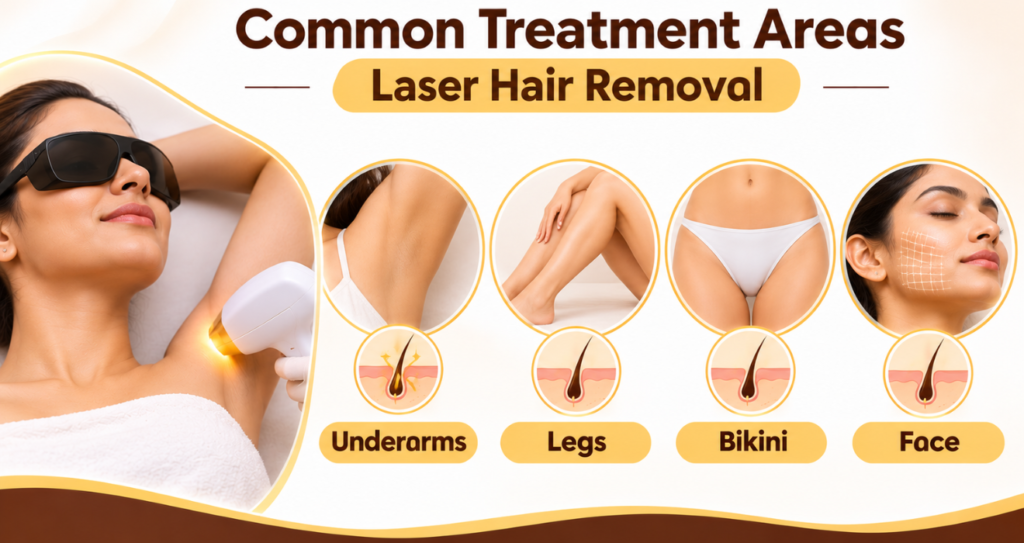
Different areas behave differently, which is why a tailored plan matters so much.
- Underarms: Coarse, dark hair that often responds well and relatively quickly. A popular, manageable area to treat ahead of festive sleeveless blouses.
- Legs: A larger area with mostly stable, non-hormonal hair, so results tend to be lasting after a full course.
- Bikini area: Sensitive and best handled by experienced clinicians, but typically responds well due to the hair type.
- Face: The upper lip, chin and jawline grow faster and may show quicker visible changes, but can be hormonally influenced and may need more sessions. Laser is never used on the eyelids, eyebrows or the immediate area around the eyes for safety reasons; threading remains the method of choice there.
Suitability and laser settings for each area must be individually assessed, and it is common to stagger start dates by area depending on your priorities and skin.
Is It Too Late to Start Before Diwali?
If Diwali is only a few weeks away, it is not too late to begin, but it is important to be realistic about what one or two sessions can deliver. A single session typically produces around 10% to 25% reduction, with the full effect of that session only becoming visible a few weeks later as the hair sheds. You will see thinning and slower regrowth, particularly in fast-growing areas such as the upper lip, but you will not achieve near-complete, long-lasting smoothness in time.
The most sensible approach when time is short is to start now and treat Diwali as the beginning of a longer plan rather than the finish line. Your first session or two will still count towards your overall course, and you can use gentle temporary methods such as shaving for the festival itself. After Diwali, you simply continue the course, so you are well ahead for the next wedding, vacation or festival. Crucially, avoid booking any laser session within a few days of the main festival, as temporary redness could be unwelcome during celebrations.
Laser Hair Removal Cost in Mumbai
The cost of laser hair removal in Mumbai varies according to the area being treated, the number of sessions required and the technology used. Because pricing is best quoted accurately for your specific needs, we recommend booking a consultation so that you receive a clear, personalised plan and an honest estimate rather than a generic figure. During your consultation at Vivo Body & Skin Clinic, our team will assess your skin and hair, explain the recommended number of sessions, and outline the investment involved before you commit to treatment.
Why Choose Vivo Body & Skin Clinic?

At Vivo Body & Skin Clinic in Mumbai, we offer a range of affordable, non-invasive aesthetic treatments delivered by an experienced team using the latest aesthetic technology. When it comes to laser hair reduction, we place safety and realistic expectations at the heart of everything we do.
Every treatment begins with a thorough consultation and a personalised assessment of your skin type, hair characteristics and goals, followed by a patch test where appropriate. This safety-focused approach is especially important for Indian skin tones, where the right device and settings make all the difference. We will give you an honest timeline for your chosen areas and explain exactly what you can expect in time for Diwali.
If you are planning several festive treatments, our guidance on booking your aesthetic treatments ahead of the Indian festive season can help you coordinate your schedule. To begin your journey well before the celebrations, book a consultation with our team and let us design a plan tailored to you.
How many laser hair removal sessions will I need before Diwali?
Most people need between four and eight sessions for a noticeable, long-lasting result, with six to eight common for areas like the legs, underarms and bikini line. Sessions are usually spaced four to six weeks apart. The exact number depends on your hair colour and coarseness, skin tone and the area treated, which is why a personalised assessment is recommended.
Is one laser session enough to see results by Diwali?
A single session can produce around a 10% to 25% reduction and some visible thinning, but it will not deliver the full, lasting smoothness of a complete course. Because treated hair sheds over a few weeks, the effect of one session near the festival may not even be fully visible by Diwali. One or two sessions are best viewed as the start of a longer plan.
When is the ideal time to start laser hair removal before a festival or wedding?
For the best results, start roughly six to nine months in advance. This allows a full course of sessions spaced to align with your hair growth cycles, so that your final treatment is completed several weeks before the event and any temporary redness has settled.
Why does my hair seem to keep growing after a laser session?
This is normal. Treated hairs do not fall out immediately; they loosen and shed over a period of days to weeks, which can look like continued growth before the hair detaches. Gentle exfoliation can help the process, but you should never wax or pluck between sessions.
Is laser hair removal safe for Indian skin tones?
Yes, when performed with the correct technology and settings by trained practitioners. Darker skin has a higher risk of pigmentation changes if the wrong laser is used, so clinics typically favour long-pulsed Nd:YAG or carefully cooled diode lasers, start conservatively and carry out a patch test first.
Should I shave or wax before my appointment?
Shave, do not wax. The laser targets the hair follicle, so waxing, threading or plucking removes the very target the laser needs. Shaving trims the hair at the surface while leaving the follicle intact. Most clinics advise shaving around 24 hours before your session.
Can I go out in the sun during my laser course?
You should avoid intentional sun exposure, tanning beds and self-tanners for at least two weeks before each session, and protect treated skin with a broad-spectrum SPF 30 sunscreen for several weeks afterwards. Tanned skin significantly increases the risk of pigmentation changes and burns.
Does laser hair removal hurt?
Most people describe the sensation as a quick snap or a mild warmth. Discomfort varies by area and laser type, with sensitive areas feeling more intense. Modern devices use cooling systems to improve comfort, and any mild redness usually settles within hours.
Is laser hair removal permanent?
No. It is accurately described as long-term hair reduction. After a completed course, many people enjoy smooth skin for months or years, with regrowth that is finer and lighter. Occasional maintenance sessions may be needed, particularly for hormonally influenced areas such as the face.
When should I avoid or postpone laser hair removal?
Treatment should be postponed if you are pregnant, have sunburnt or recently tanned skin, have an active skin infection such as herpes in the area, or have recently had a chemical peel or laser resurfacing. Certain medications, including isotretinoin and some photosensitising drugs, also require caution. Always disclose your full medical history during consultation.
Final Thoughts: Plan Ahead for a Confident Diwali
The key to beautiful results before Diwali is simple: start early and plan around your hair’s natural cycles rather than the calendar alone. Beginning six to nine months ahead gives you the best chance of near-complete reduction, while even a shorter head start delivers visible improvement and sets you up for events beyond the festival. Whatever your timeline, a safety-focused clinic that assesses your individual skin and hair will help you get the most from your treatment. Book your consultation with Vivo Body & Skin Clinic and let us create a plan that has you feeling confident and comfortable for the celebrations ahead.