The neck is often one of the first areas to show visible ageing. Fine lines, crepey texture, mild sagging and loss of firmness can develop earlier than many people expect, even when the face still looks relatively youthful. That is why radiofrequency skin tightening for the neck has become such a sought-after treatment. It promises firmer, smoother skin without surgery, long recovery periods or dramatic downtime.
But does it actually work? In many cases, yes, for the right person and the right degree of skin laxity. In this article, we will explain what radiofrequency treatment for neck tightening involves, how it stimulates collagen, what results are realistic, what it may cost in Mumbai, and who is most likely to benefit. If you are considering RF neck tightening, this guide will help you make a more informed decision.
What Is Radiofrequency Skin Tightening?
Radiofrequency, often shortened to RF, is a non-invasive technology that uses controlled energy to heat the deeper layers of the skin. The aim is not to damage the surface, but to deliver thermal energy into the dermis where collagen and elastin structures sit. This controlled heating can trigger an immediate mild tightening effect and, more importantly, encourage the skin to produce new collagen over time.
Collagen is the protein that helps keep skin firm, resilient and smooth. As collagen production slows with age, the neck may begin to look looser, thinner and more wrinkled. According to peer-reviewed research published on PubMed, radiofrequency-based treatments are widely used in facial and neck rejuvenation because they can improve laxity and texture with a good safety profile when performed correctly. Histological studies have also shown changes in collagen content and dermal remodelling after RF exposure, supporting the biological basis behind treatment results.
For the neck specifically, RF devices are used to target areas with mild to moderate laxity, early jowl formation, horizontal neck lines and crepey skin. If you are comparing options, our guide to HIFU vs RF skin tightening may also help you understand how different technologies work on the lower face and neck.
Does RF Skin Tightening for the Neck Really Work?
The short answer is that radiofrequency skin tightening for the neck can work well for mild to moderate skin laxity, but it is not a replacement for surgery in severe cases. Clinical evidence suggests RF can improve firmness, elasticity and skin texture by heating the dermis to temperatures that stimulate fibroblasts and collagen remodelling. A review of monopolar radiofrequency published in the medical literature found measurable improvements in skin tightening and collagen changes following treatment, especially when suitable energy levels and treatment protocols were used.
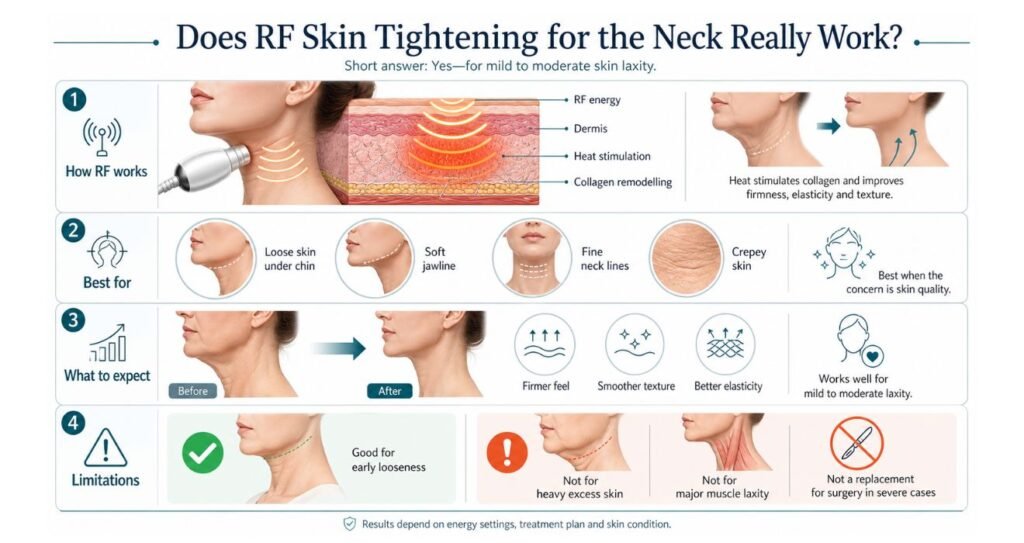
In practical terms, RF neck tightening works best for people who are beginning to notice loose skin under the chin, softening along the jawline, fine wrinkles on the neck, or a crepey appearance that makes the area look older. It is especially useful when the concern is skin quality rather than heavy excess skin or significant muscle banding.
It is important to set realistic expectations. Most patients do not leave one session looking dramatically lifted. Instead, radiofrequency for sagging skin tends to create a gradual improvement over several weeks and months as fresh collagen forms. Some people notice a subtle immediate firmness due to collagen contraction, but the more meaningful change comes later. Reputable sources such as the Cleveland Clinic note that RF is generally used for modest, natural-looking improvement rather than extreme transformation.
So, does RF neck tightening work? For the right candidate, with an appropriate treatment plan and medically sound expectations, yes. It can noticeably improve texture, firmness and early sagging without the downtime of a surgical neck lift.
Benefits of Radiofrequency Neck Tightening
One reason RF neck tightening remains popular is that it fits the needs of patients who want visible improvement without the commitment of surgery. The treatment is non-invasive, usually quick, and suitable for busy people who cannot take significant time away from work or social activities.
Key benefits of radiofrequency treatment for neck concerns include:
- Non-surgical treatment: No incisions, stitches or general anaesthetic are required.
- Minimal downtime: Most people return to normal activities the same day.
- Smoother neck wrinkles: RF can soften fine lines and improve crepey skin texture.
- Better elasticity: Collagen stimulation can help the skin feel firmer and more resilient.
- Gradual, natural-looking results: Improvements develop progressively rather than suddenly.
- Versatility: RF may be used as part of a broader non-surgical neck lift approach.
Compared with invasive procedures, RF neck tightening usually involves lower risk, less discomfort and far less recovery time. For many patients, that balance is highly appealing. If you are exploring other treatment approaches for the chin and lower face, you may also find our comparison on double chin removal without surgery useful, especially if fullness under the chin is contributing to the overall appearance of the neck.
RF Neck Tightening: Benefits and Considerations
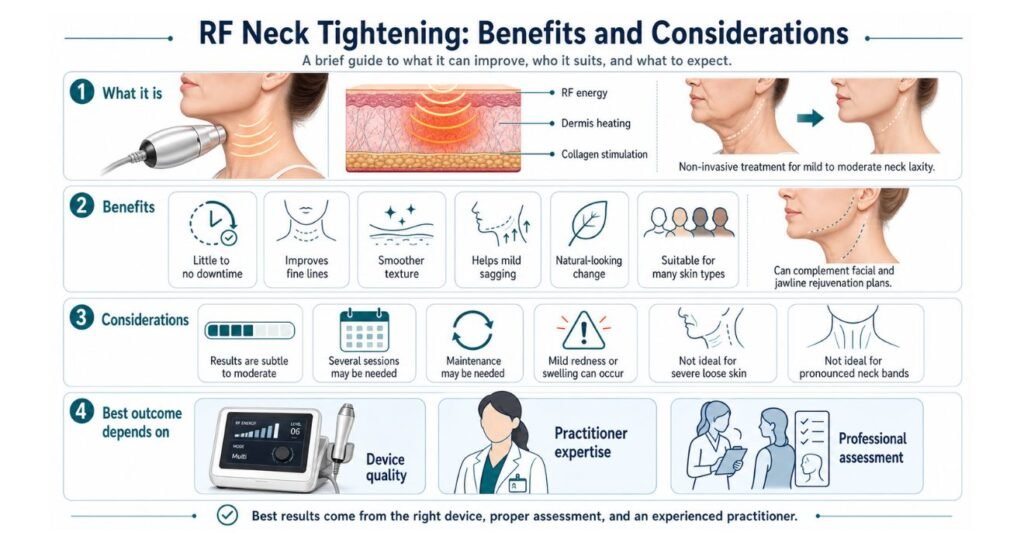
Benefits
- Non-invasive option for mild to moderate neck laxity
- Little to no downtime for most patients
- Can improve fine lines, texture and early sagging
- Gradual collagen stimulation supports natural-looking change
- Suitable for many skin types when professionally assessed
- Can complement broader facial and jawline rejuvenation plans
Considerations
- Results are usually subtle to moderate, not surgical
- Several sessions may be needed for the best outcome
- Maintenance treatments are often required over time
- Not ideal for severe loose skin or pronounced neck bands
- Mild redness or swelling can occur temporarily after treatment
- Outcomes depend heavily on device quality and practitioner expertise
What to Expect During and After RF Treatment for the Neck
At a reputable clinic, RF neck tightening begins with a consultation. Your practitioner should assess your skin quality, degree of laxity, age, goals and medical suitability. This step matters because not every neck concern is best treated with RF alone. In some cases, combinations with other technologies may offer better overall contouring.
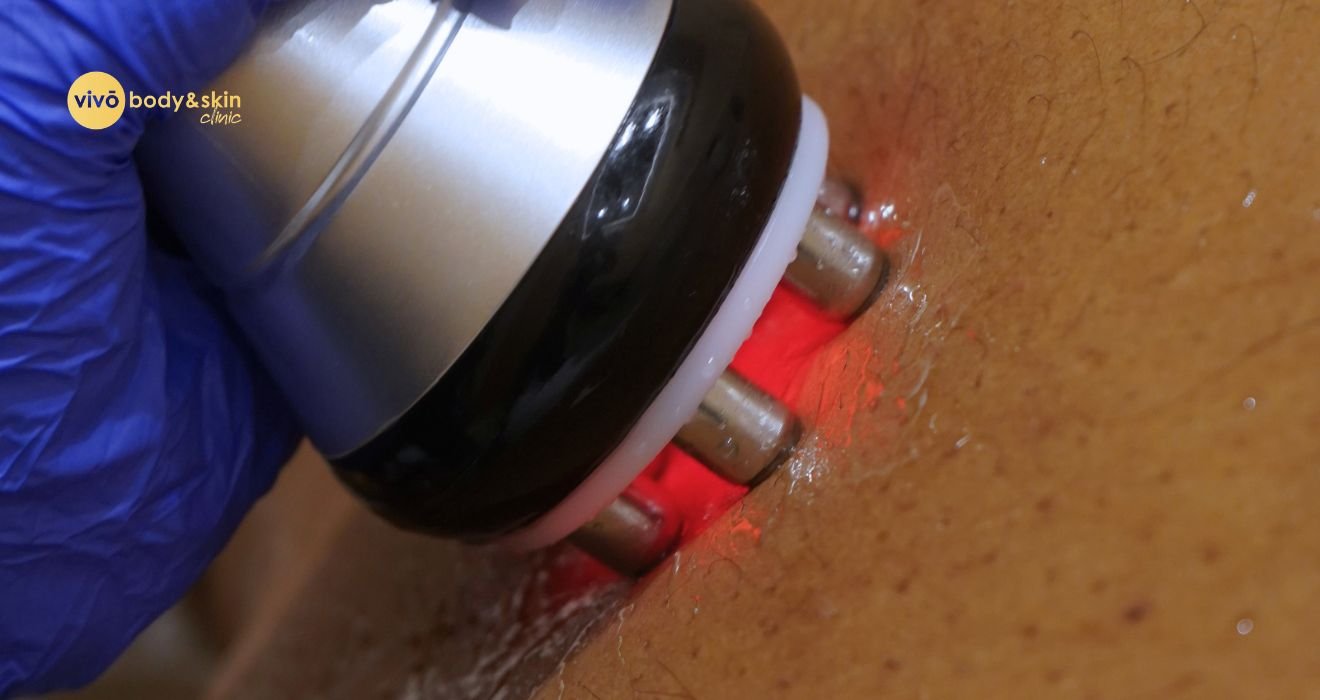
On the day of treatment, the skin is cleansed and a conductive gel may be applied, depending on the device used. The handheld applicator is then moved over the neck in a controlled pattern while the device delivers heat into the deeper skin layers. Most people describe the sensation as warm, tolerable and only mildly uncomfortable. It is not usually considered painful, though sensitivity varies from person to person.
A typical session of radiofrequency skin tightening for the neck can take around 20 to 45 minutes, depending on the treatment area and technology used. After the session, you may notice temporary redness, mild warmth or slight swelling. These effects are usually short-lived and often settle within a few hours to a day.
There is generally no major recovery period. Most patients return to work, errands or social commitments immediately. Results develop gradually. Some people see an early tightening effect, but the main improvement often becomes more visible from six to twelve weeks onwards, with continued collagen remodelling over the following months.
If you are researching non-surgical lifting more broadly, our articles on HIFU facelift treatment areas and HIFU treatment side effects offer helpful context on alternative or complementary tightening technologies.
Cost of Radiofrequency Neck Tightening in Mumbai
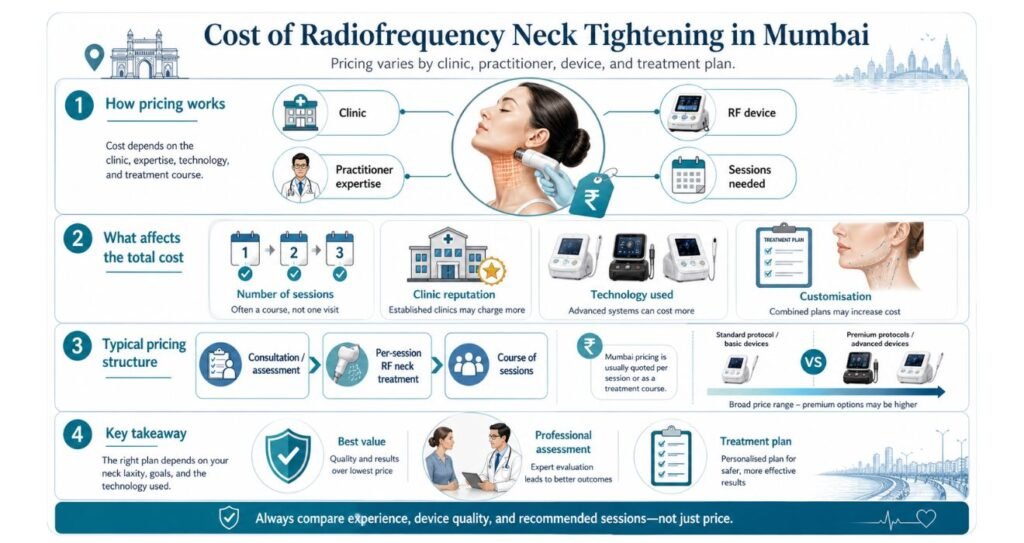
The cost of neck skin tightening Mumbai patients can expect will vary depending on the clinic, the expertise of the practitioner, the device used and the number of sessions recommended. In Mumbai, radiofrequency treatment for neck tightening commonly falls within a broad range of around ₹5,000 to ₹20,000 per session, though premium protocols or advanced devices may be priced higher.
Several factors affect pricing:
- Number of sessions: Many patients need a course of treatments rather than one appointment.
- Clinic reputation and expertise: Established clinics with experienced practitioners may charge more.
- Technology used: Different RF systems vary in sophistication, comfort and depth of delivery.
- Customisation: Combined treatment plans may influence the total cost.
Choosing purely on price is rarely wise with aesthetic medicine. Treatment quality, safety standards and practitioner judgement are crucial. If you are considering a provider, our guide on what to check before choosing a laser clinic in Mumbai can help you assess standards more carefully.
RF neck tightening can deliver real improvement, but the best results come from realistic expectations, the right candidate and expert treatment planning.

Who Should Choose Radiofrequency Neck Tightening?
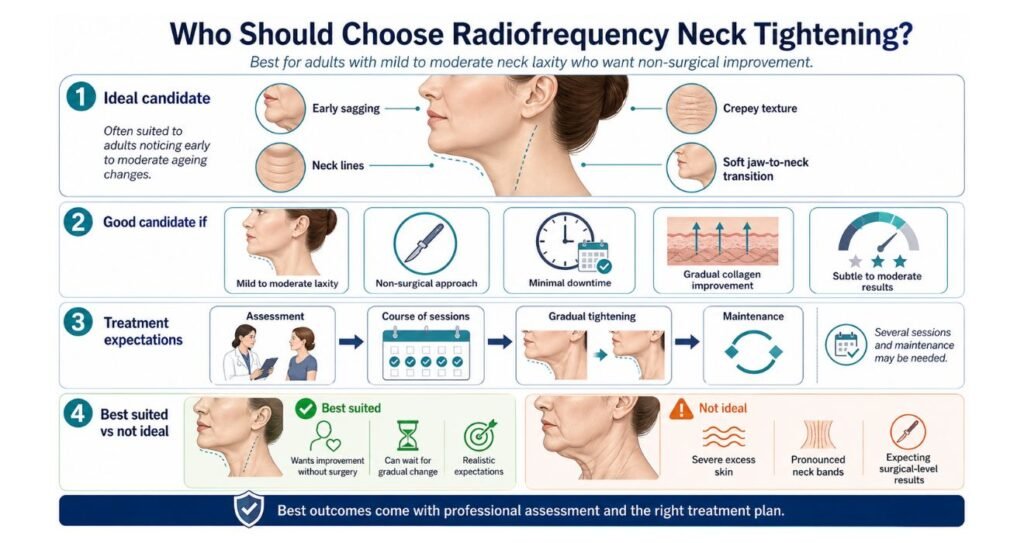
RF neck tightening is usually best for adults with mild to moderate looseness in the neck who want improvement without surgery. Ideal candidates often include people in their thirties, forties, fifties and beyond who have started to notice early sagging, horizontal neck lines, crepey texture or a softening of the jaw-to-neck transition.
You may be a good candidate if:
- You have mild to moderate skin laxity rather than severe excess skin
- You want a non-surgical neck lift approach with minimal downtime
- You are willing to wait for gradual collagen-based improvement
- You understand that several sessions or maintenance treatments may be needed
- You have realistic expectations about subtle to moderate results
RF may be less suitable if you have very heavy sagging skin, prominent platysmal bands, certain implanted electronic devices, active skin infection in the area, or medical issues that make heat-based treatment inappropriate. Pregnant patients are also generally advised to avoid elective aesthetic procedures unless specifically cleared by a medical professional.
For patients with more advanced skin laxity or multiple concerns, a practitioner may suggest combining technologies or considering alternatives. At Vivo Body & Skin Clinic, treatment planning is based on skin assessment rather than a one-size-fits-all sales approach. In some cases, comparing RF with body contouring and skin-firming options can be useful, especially where under-chin fullness or lower-face contour is also a concern. You can explore this further in our article on fat freezing vs HIFU vs RF.
Why Choose Vivo Body & Skin Clinic for Radiofrequency Neck Tightening?
Choosing the right clinic matters as much as choosing the right treatment. Vivo Body & Skin Clinic in Mumbai offers non-invasive aesthetic treatments using advanced technology and a personalised approach. Rather than treating every neck concern in the same way, the team assesses skin laxity, texture, facial balance and treatment goals before recommending a plan.
Patients value professional guidance, modern RF systems and a focus on realistic, natural-looking outcomes. Whether you are just starting to notice neck ageing or want to improve skin firmness without surgery, a medically informed consultation can help you understand what is achievable. Book your consultation today to find out if RF skin tightening is right for you.
Conclusion
So, does radiofrequency skin tightening for the neck really work? For many people, yes. RF neck tightening can improve mild to moderate laxity, soften fine lines and enhance skin texture by stimulating collagen in the deeper layers of the skin. It is not a surgical replacement, but it can be an effective non-surgical neck lift option for the right candidate. The key is proper assessment, realistic expectations and treatment by an experienced clinic. If you are considering neck skin tightening Mumbai options, Vivo Body & Skin Clinic can help you understand whether radiofrequency for sagging skin is the best fit for your goals. Book a consultation to get a personalised treatment plan.

Is RF skin tightening for the neck painful?
Most patients describe RF neck tightening as warm and tolerable rather than painful. You may feel heat and pressure from the applicator, but discomfort is usually mild. The exact sensation depends on the device used, your skin sensitivity and the treatment intensity.
How many sessions are required for neck tightening?
Many people need a course of around 3 to 6 sessions for the best results, although this varies by device and skin condition. Some patients with very mild laxity may need fewer sessions, while others benefit from maintenance appointments over time.
What is the recovery time after RF treatment?
Recovery is usually minimal. Mild redness, warmth or slight swelling may occur immediately after treatment, but these effects often settle within hours to a day. Most patients return to normal activities straight away.
How long does it take to see results from RF neck tightening?
Some people notice early firmness soon after treatment, but the main results appear gradually as collagen remodelling develops. Visible improvements often become clearer over 6 to 12 weeks, with ongoing enhancement over several months.
Are there any side effects of RF for neck tightening?
Common side effects are usually mild and temporary, such as redness, warmth, tenderness or slight swelling. When treatment is performed correctly, serious complications are uncommon. A professional consultation helps reduce risk by checking suitability and medical history.
Is radiofrequency treatment for neck suitable for everyone?
No. People with severe sagging, some medical implants, certain skin conditions, active infection or other contraindications may not be suitable candidates. The safest way to decide is through a proper clinical assessment.