Restoring Your Glow After Motherhood
Pregnancy transforms far more than your body. Many new mothers notice their face looks different too: skin that once felt firm now seems a little lax, cheeks appear less full, and a once-bright complexion turns dull, tired, or blotchy. Hormonal shifts, disrupted sleep, and the natural decline in collagen all conspire to alter the face during and after pregnancy.
Understandably, few new mothers have the time or inclination for surgery. That is why interest in post-pregnancy facial rejuvenation India now centres firmly on non-surgical solutions. Treatments such as HIFU, radiofrequency (RF), and microneedling promise gradual, natural-looking improvements with minimal downtime, allowing mums to refresh their appearance without disrupting childcare. This guide compares these three options so you can choose confidently.
Why Post-Pregnancy Skin Loses Elasticity
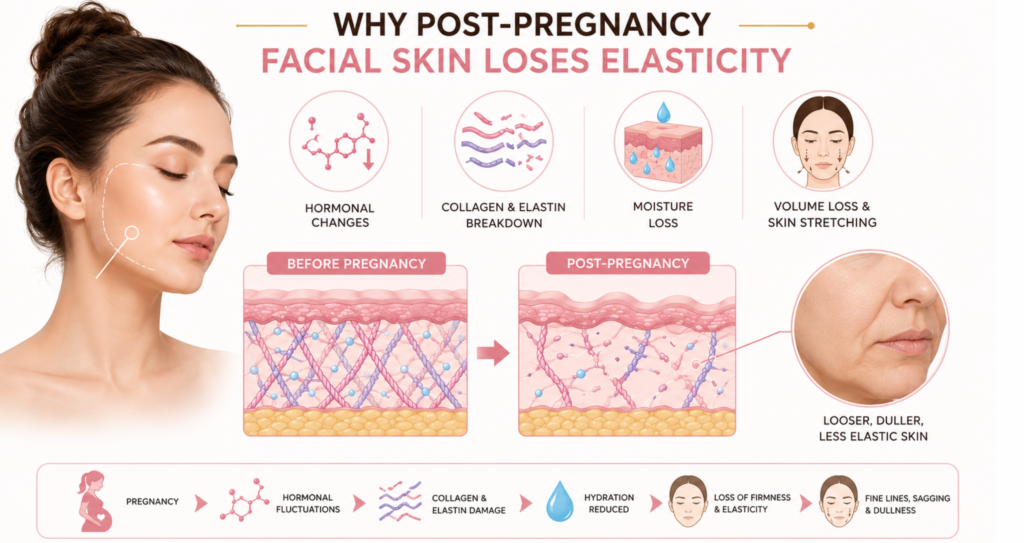
The changes you see in the mirror after childbirth are rooted in physiology. During pregnancy, elevated levels of oestrogen, progesterone, and melanocyte-stimulating hormone increase pigment production, which is why so many women develop melasma, the tell-tale mask of pregnancy, on the cheeks, forehead, and upper lip. For Indian women, typically with Fitzpatrick skin types III to V, this pigmentation tends to be more pronounced and more prone to recurrence.
Beyond pigment, pregnancy-related weight gain followed by postpartum weight loss shifts the facial fat compartments, particularly in the midface and lower face. This redistribution can accentuate nasolabial folds, marionette lines, and early jowling. At the same time, the skin and its supporting fibromuscular structures show mild to moderate laxity, especially in women in their thirties and forties whose baseline collagen has already begun to decline.
Lifestyle factors make matters worse. Reduced sleep, nutritional deficiencies, and stress all impair collagen synthesis and weaken the skin barrier, accelerating fine lines and dullness. Post-inflammatory hyperpigmentation from postpartum acne adds further unevenness. According to a review of physiological skin changes in pregnancy, these hormonal and structural effects are common and often persist for months. The good news is that each can be addressed with the right, carefully timed treatment.

HIFU Facial Rejuvenation
High-intensity focused ultrasound (HIFU) is often described as a non-surgical facelift, and for good reason. It uses concentrated acoustic energy to create tiny zones of controlled heating deep beneath the skin surface, reaching the deep dermis, sub-dermis, and even the fibromuscular SMAS layer, all while leaving the outer skin intact. These micro-thermal points trigger immediate collagen contraction followed by a healing cascade that stimulates fresh collagen and elastin over the following weeks.
Benefits and areas treated
Because HIFU penetrates deeper than most lasers or RF devices, it excels at genuine lifting and contouring. It is the treatment of choice for a sagging jawline, submental fullness (the dreaded double chin), midface descent, and neck laxity. A clinical study on HIFU in Indian skin reported improvements in mandibular contour, cheek relaxation, nasolabial grooves, and double chin, establishing it as an effective non-surgical option for Indian phototypes.
Crucially, HIFU does not depend on melanin as a target, making it inherently safe across darker skin tones with minimal risk of hyperpigmentation. Results develop gradually: roughly 10% of the effect appears in the first month, with the full outcome emerging by around three months as new collagen forms. Most women need only a single session, with results lasting one to several years.
The trade-off is cost and the timeline. HIFU is best suited to women who have finished breastfeeding, as safety data during pregnancy and lactation is lacking, and most reputable clinics advise deferring it. If you are also considering body areas, our guides on HIFU versus RF skin tightening and non-surgical neck tightening explore how the technology performs elsewhere.
RF Skin Tightening
Radiofrequency (RF) skin tightening uses low-frequency electromagnetic waves to generate gentle, controlled heat within the dermis. This warming partially denatures existing collagen, causing an immediate tightening, and then stimulates a secondary wave of new collagen and elastin production. The result is firmer, smoother, more elastic skin that continues to improve over two to six months.
How it firms skin and boosts elasticity
RF is prized for its versatility and gentle profile. It suits mild to moderate laxity, early fine lines, and general texture concerns, and it is frequently used across the face, jawline, and neck. Like HIFU, it does not target pigment, so it can be applied safely across Indian skin tones, provided the device includes proper cooling and temperature controls. The Cleveland Clinic notes that RF improves tone, texture, and firmness while reducing fine lines and sagging, with results typically lasting one to three years.
RF microneedling is a powerful hybrid that combines fine needles with RF energy, delivering heat directly into the deeper reticular dermis. This makes it particularly effective for acne scars, deeper wrinkles, and stretch marks, concerns that frequently emerge or worsen after pregnancy. A single-arm study of microneedle RF in postpartum women even demonstrated meaningful improvement in abdominal skin laxity, hinting at its remodelling potential.
RF sits comfortably in the middle ground: more affordable than HIFU, more powerful than microneedling alone, and well tolerated with minimal downtime. As with HIFU, RF and RF microneedling are usually deferred during pregnancy and breastfeeding. To understand how RF compares for specific areas, see our article on radiofrequency skin tightening for the neck.
Microneedling
Microneedling, also known as percutaneous collagen induction, uses fine needles to create controlled micro-channels in the skin. These tiny injuries kick-start the body’s natural healing response, releasing growth factors, activating fibroblasts, and boosting collagen and elastin. The new tissue that forms tends to be smoother and more even in tone, softening scars, fine lines, enlarged pores, and roughness.
Collagen induction and skin tone improvement
For post-pregnancy faces, microneedling has a special advantage: it directly addresses melasma and post-inflammatory hyperpigmentation, two of the most common postpartum complaints in Indian skin. A comprehensive review of microneedling in melasma found significant improvement within 8 to 12 weeks, with histology showing reduced melanin density and a thickened, healthier epidermis. Because microneedling does not rely on heat or light, it carries a lower risk of pigmentary complications in darker skin than many laser treatments.
Microneedling also enhances the penetration of active ingredients, so it pairs beautifully with topical agents such as tranexamic acid or vitamin C, achieving strong results at lower concentrations. Depths of 0.5 to 1.0 mm suit superficial rejuvenation and fine lines, while 1.5 mm is favoured for melasma and deeper texture concerns.
Perhaps most importantly for new mothers, microneedling is increasingly recognised as compatible with breastfeeding. Because it works locally with minimal systemic absorption, it can be performed safely when numbing creams are used appropriately and away from sensitive areas. It is also the most affordable of the three treatments, making it an excellent starting point for younger mums working within a budget.
Non-Surgical Rejuvenation at a Glance
Why Mums Choose These Treatments
- No surgery, incisions, anaesthesia, or hospital stay
- Minimal downtime, so you can resume childcare quickly
- Natural, gradual results that refresh rather than transform
- Safe across Indian skin tones when performed correctly
- Microneedling is compatible with breastfeeding
- Treatments can be layered for comprehensive results
Points to Keep in Mind
- HIFU and RF should be deferred during pregnancy and breastfeeding
- Results develop gradually over weeks to months, not overnight
- Melasma is prone to recurrence and needs ongoing sun protection
- Multiple microneedling sessions are usually required
- HIFU carries a higher upfront cost than other options
- Effects are not permanent and may need maintenance
HIFU vs RF vs Microneedling: A Side-by-Side Comparison
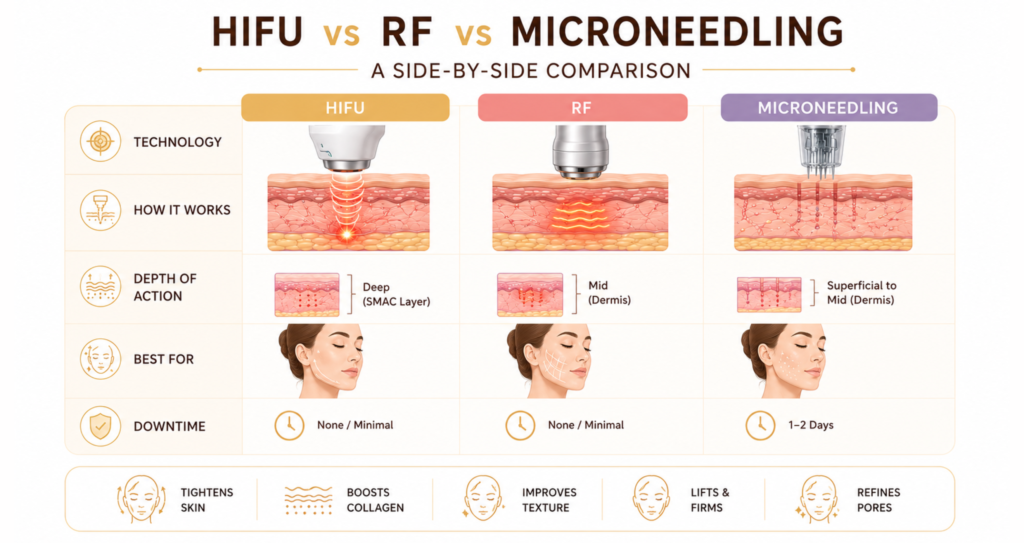
Each treatment occupies a distinct niche. The table below summarises how they compare on the factors that matter most when planning your post-pregnancy facial rejuvenation.
| Factor | HIFU | RF Skin Tightening | Microneedling |
|---|---|---|---|
| Best for | Deep lifting, jawline, double chin, neck laxity | Mild to moderate laxity, firmness, texture | Melasma, pigmentation, acne scars, fine lines |
| Depth of action | Deep dermis, sub-dermis, SMAS | Upper to mid dermis | Papillary and upper dermis (surface texture) |
| Effectiveness | Strong lifting and contouring | Versatile, moderate tightening | Excellent for tone, pigment, and scars |
| Sessions needed | Often single session | Typically 2 to 6 | Usually 3 to 6 |
| Downtime | Minimal; mild soreness for a few weeks | Minimal; mild redness for up to a day | A few days of redness and mild peeling |
| Approx. cost (India) | ₹25,000 to ₹80,000 (full face) | Intermediate, varies by device | ₹1,500 to ₹20,000 per session |
| Breastfeeding safe? | Defer until after breastfeeding | Defer until after breastfeeding | Generally compatible with precautions |
| Ideal candidate | Finished breastfeeding, wants lifting | Mild laxity, wants firmness on a budget | Melasma or scars, wants gentle rejuvenation |
There is no single miracle procedure. The safest and most effective path to a rejuvenated post-pregnancy face is a personalised, staged plan built around your skin, your budget, and where you are in your journey as a mother.
Cost of Treatments in India
Pricing varies considerably depending on the city, the clinic’s reputation, the technology used, and the size of the area treated. In metropolitan centres such as Mumbai, costs tend to sit at the higher end of national ranges, reflecting advanced devices and experienced practitioners.
As a broad guide for non-surgical facial rejuvenation Mumbai clients can expect the following. HIFU for the full face commonly ranges from ₹25,000 to ₹80,000, with smaller focal areas around the chin or eyes from ₹10,000 to ₹25,000. Microneedling is the most accessible, typically ₹1,500 to ₹20,000 per session depending on depth and any added serums. RF skin tightening and RF microneedling sit in an intermediate band, varying widely with the specific platform.
Several factors influence the final quote: the number of shots or passes required, the practitioner’s expertise, whether combination protocols are used, and the quality of aftercare included. Rather than chasing the lowest price, prioritise a clinic that uses regulatory-approved devices and has genuine experience treating Indian skin, as this is the single biggest safeguard against pigmentary complications. For related body concerns, our guide to skin tightening after pregnancy in India offers further context.
What to Expect During and After Treatment
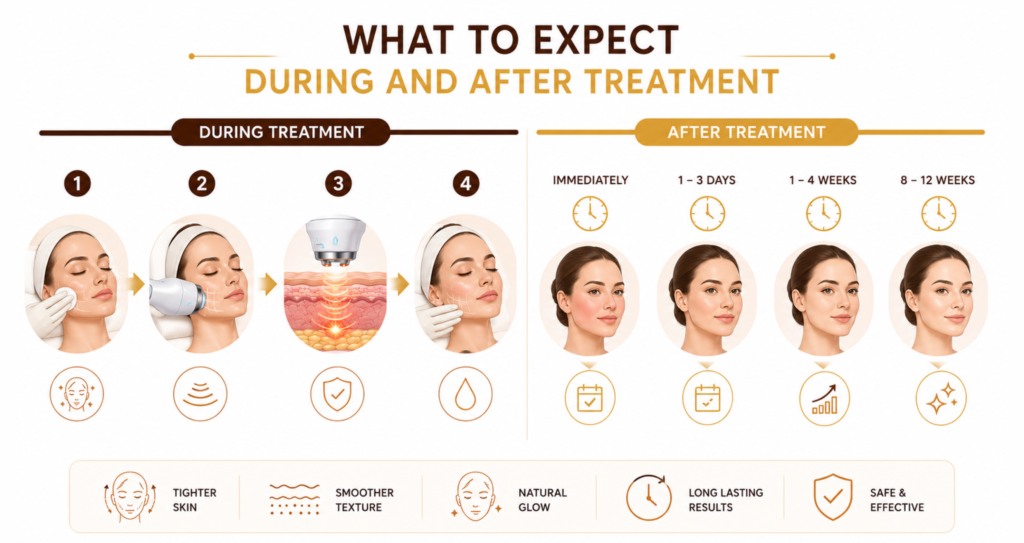
All three treatments are performed as outpatient procedures, so you can return home the same day. Your appointment begins with a thorough consultation and skin assessment, followed by cleansing and, where appropriate, a topical numbing cream.
During HIFU, the practitioner maps your face into zones and delivers pulses of ultrasound energy, which feel like brief warmth or tingling. The session takes 30 to 60 minutes. Afterwards, mild soreness or tenderness may linger for a couple of weeks, but there is no wound care and you can resume daily life immediately.
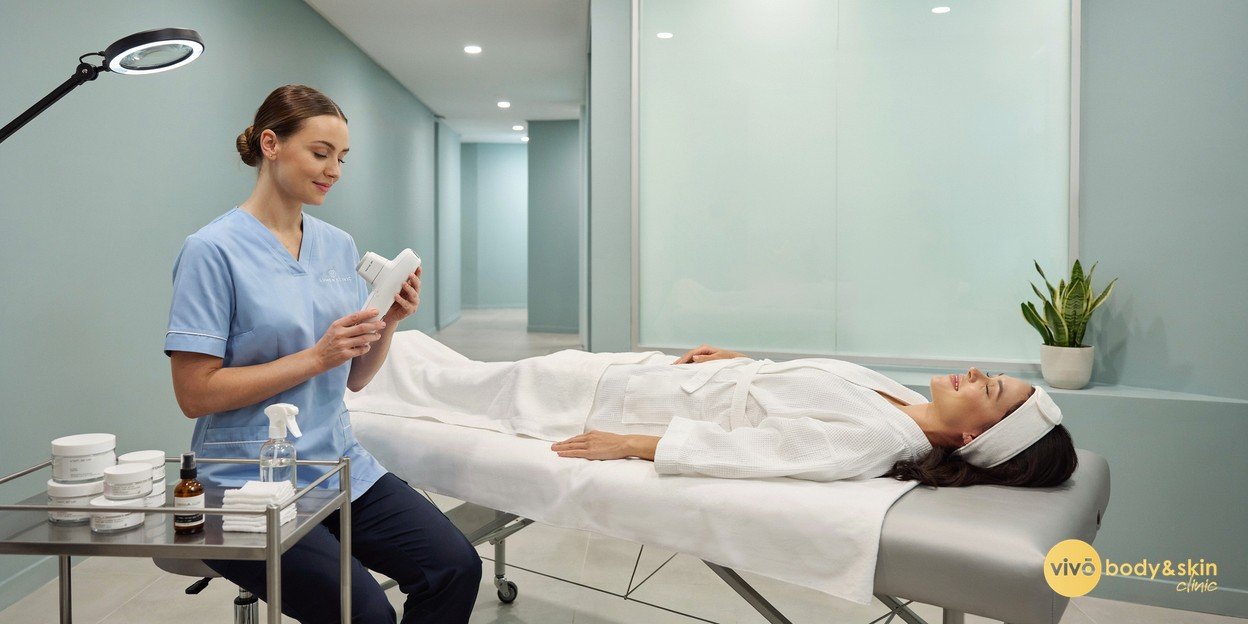
An RF session involves gliding a warmed handpiece across the treatment area for around an hour. It is comfortable, often relaxing, with only mild redness that settles within a day. Microneedling takes 20 to 40 minutes; expect redness and mild swelling for a few days, similar to light sunburn, sometimes followed by gentle peeling.
Across all three, aftercare is straightforward: avoid intense sun exposure, use a gentle cleanser and mineral sunscreen, skip strenuous exercise and makeup for 24 to 48 hours after microneedling, and stay well hydrated. Because results build gradually as new collagen forms, patience is key. Most women see progressive improvement over two to three months.
Who Should Choose Each Treatment
The right choice depends on your primary concern, your skin type, your age, and where you are in your postpartum journey.
Choose HIFU if your main issue is sagging, a softened jawline, a double chin, or midface descent, and you have finished breastfeeding. It is ideal for women in their thirties and forties who want visible lifting without surgery and are willing to invest in a single higher-cost session for longer-lasting structure.
Choose RF skin tightening if you have mild to moderate laxity, early fine lines, and general dullness, and prefer a gentle, gradual approach at a more moderate price. It also complements HIFU beautifully, refining surface firmness after deeper lifting.
Choose microneedling if pigmentation, melasma, acne scars, enlarged pores, or uneven texture are your leading concerns. It is the most budget-friendly entry point, works especially well when paired with topical actives, and is the only one of the three generally considered compatible with breastfeeding.
Many women benefit most from a staged, multimodal plan: microneedling first for tone and scars during breastfeeding, then HIFU and RF later for lifting and firmness once reproductive considerations no longer apply. A personalised consultation is the best way to map this out. If you are also addressing body changes, see our post-pregnancy body contouring guide.
Why Choose VIVO Body & Skin Clinic
At VIVO Body & Skin Clinic in Mumbai, we understand that motherhood is demanding and that your time is precious. Our experienced team specialises in affordable, non-invasive aesthetic treatments delivered with the latest pioneering technology, so you can achieve genuine, natural-looking results without surgery or lengthy downtime.
We take a personalised approach to every post-pregnancy face, carefully assessing your skin type, your concerns, and your stage in the postpartum journey, including reproductive considerations, before recommending HIFU, RF, microneedling, or a thoughtfully staged combination. Our priority is always your safety and satisfaction, with treatments tailored to Indian skin and a focus on subtle, refreshing outcomes.
Book your consultation today to restore post-pregnancy facial glow safely.
Are these treatments safe while breastfeeding?
Microneedling is generally considered safe during breastfeeding because it works locally with minimal systemic absorption and no known impact on breast milk, provided numbing creams are used correctly and away from sensitive areas. HIFU and RF-based treatments lack specific safety data during breastfeeding, so reputable clinics recommend deferring them until you have finished nursing.
When can I start facial rejuvenation after giving birth?
Microneedling can often begin while breastfeeding with appropriate precautions. HIFU and RF are usually best deferred until breastfeeding has concluded and your hormones have stabilised. A consultation will help determine the ideal timing for your individual situation.
Which treatment is best for a sagging jawline and double chin?
HIFU is the strongest option for structural sagging, as it reaches the deep SMAS layer responsible for lifting. Clinical studies have shown improvements in jawline contour and double chin. RF can help with milder laxity, and the two are sometimes combined for enhanced results.
What is the best treatment for postpartum melasma?
Microneedling, ideally combined with topical agents such as tranexamic acid or vitamin C and strict daily sun protection, has the strongest evidence for melasma. HIFU and RF do not directly target pigment. During pregnancy and breastfeeding, focus on broad-spectrum sunscreen and pregnancy-safe topicals until stronger options are appropriate.
How many sessions will I need and how long do results last?
HIFU is often a single session with results developing over three months and lasting one to several years. RF typically needs two to six sessions with results lasting one to three years. Microneedling usually requires three to six sessions; its benefits last months to years, though melasma may need periodic maintenance.
Will these procedures worsen pigmentation in Indian skin?
When performed correctly by experienced practitioners using appropriate settings and diligent sun protection, the risk is low. HIFU and RF spare the epidermis and do not target melanin, making them well suited to darker skin. Microneedling can occasionally cause temporary post-inflammatory hyperpigmentation, but this usually resolves and is minimised with proper aftercare.
Is there much downtime with these treatments?
Downtime is minimal. HIFU may cause mild soreness for a couple of weeks with no functional limitations. RF causes only brief redness. Microneedling leads to a few days of redness and possible light peeling. Most mothers return to daily activities almost immediately.
Are non-surgical treatments worth it compared to a facelift?
For most post-pregnancy women seeking subtle refreshment rather than dramatic change, non-surgical options are worthwhile. They avoid anaesthesia, surgical risk, and long recovery, delivering natural, gradual results. A surgical facelift offers more pronounced lifting but with greater risk and downtime, and is rarely necessary for postpartum concerns.
Your Path Back to a Radiant Face
Post-pregnancy facial changes are entirely normal, and today’s non-surgical treatments make them highly manageable. HIFU excels at deeper lifting and contouring, RF offers versatile tightening and improved texture, and microneedling shines for pigmentation, melasma, and scars while remaining compatible with breastfeeding. The most rewarding results usually come from a personalised, well-timed plan that respects your skin type, budget, and stage of motherhood.
Rather than chasing a single miracle fix, speak to a qualified team who can guide you safely. Book your consultation at VIVO Body & Skin Clinic today and take the first step towards restoring your natural, post-pregnancy glow.