Understanding Stretch Marks and Why Non-Surgical Care Wins
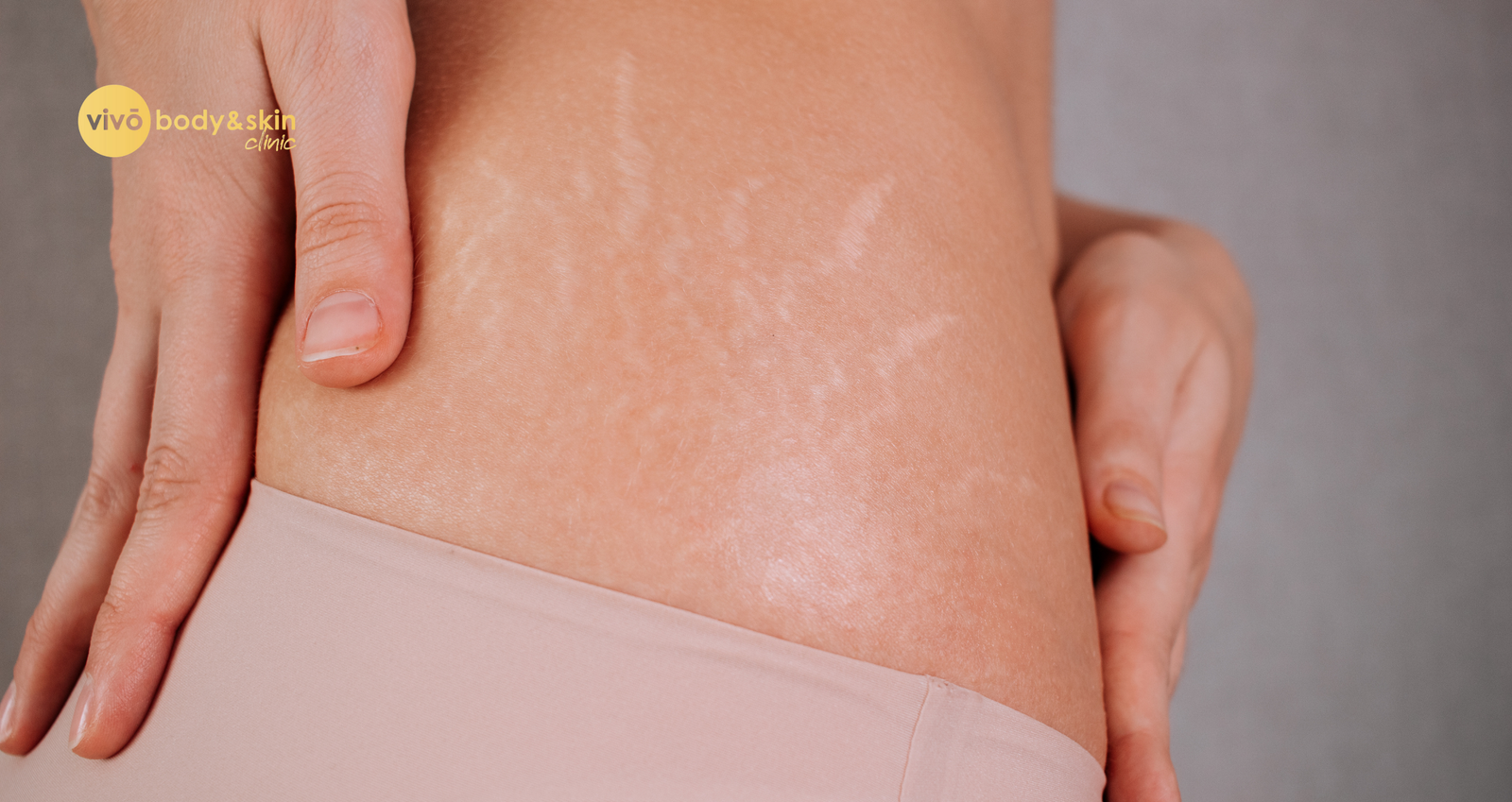
Stretch marks, known medically as striae distensae, are among the most common skin concerns for women across India, particularly after pregnancy or significant weight loss. They appear when the skin is stretched faster than it can comfortably adapt, causing the collagen and elastin networks in the dermis to tear and reorganise as fine linear scars. Although entirely harmless to physical health, they can knock confidence, especially when you have worked hard for a healthier body.
The good news is that non-surgical stretch mark reduction in India has advanced considerably. Modern radiofrequency, microneedling and laser technologies can visibly soften colour, texture and depth without the downtime, cost or risk of surgery. For most people, these treatments strike the ideal balance between meaningful results and gentle, skin-friendly recovery.
What Actually Causes Stretch Marks?
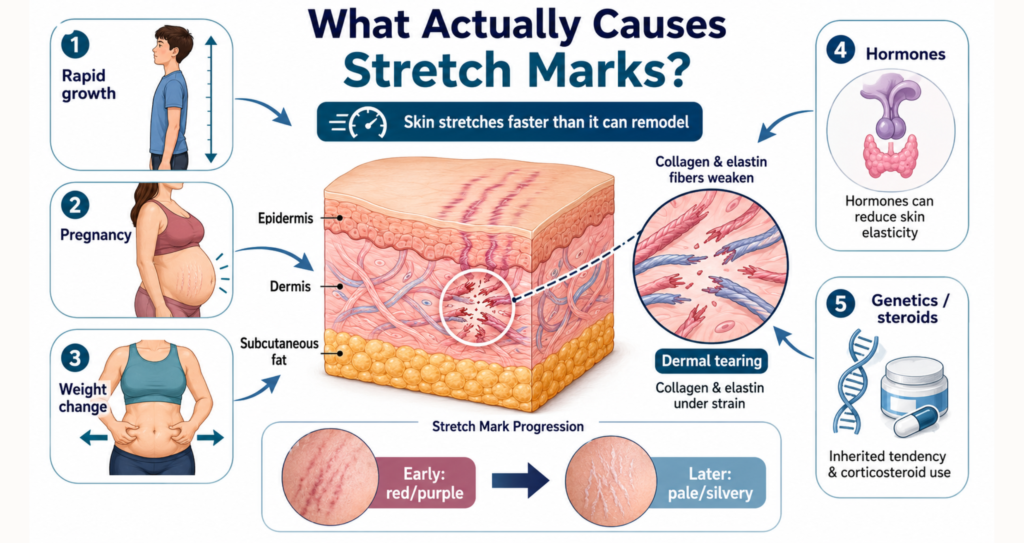
Stretch marks form when rapid mechanical stretching exceeds the skin’s capacity for elastic recoil and orderly repair. When fibroblasts, the cells responsible for collagen production, are overwhelmed or disrupted, the skin heals with a scar-like band rather than restoring its original architecture. Several factors combine to trigger this process.
- Pregnancy: Rising cortisol and oestrogen levels, combined with rapid abdominal expansion, make striae gravidarum extremely common, with prevalence reported above 70% in many studies. They typically appear across the abdomen, breasts and thighs during the second and third trimesters.
- Rapid weight fluctuation: Quick weight gain or loss, including after bariatric surgery, does not give the dermis time to adapt gradually.
- Hormonal changes: Elevated glucocorticoids, whether from pregnancy, endocrine disorders or overuse of steroid creams, weaken collagen synthesis.
- Reduced skin elasticity and collagen loss: Genetics, ageing and fibrillin depletion all influence how resilient your skin is under tension.
Understanding your personal triggers helps a clinician tailor treatment. Early red or purple marks (striae rubra) respond differently from older, silvery-white marks (striae alba), so accurate assessment matters.

Radiofrequency (RF) Therapy
Radiofrequency treatment, particularly RF microneedling (also called MNRF), has become one of the most versatile tools for RF stretch mark reduction. The technology delivers controlled radiofrequency energy into the deeper layers of the dermis through fine microneedles, creating small thermal zones that activate fibroblasts and stimulate fresh collagen and elastin production. This combination of mechanical micro-injury and heat effectively turns collagen induction therapy into a more powerful, deeper-acting treatment.
How it works
Because the energy is delivered below the surface while largely sparing the epidermis, RF is especially well suited to melanin-rich Indian skin, where laser-based treatments can sometimes cause pigmentation. A prospective study of fractional radiofrequency for stretch marks found an average 19.1% reduction in striae volume, alongside reductions in redness and pigmentation, with high tolerability and no serious adverse events.
Benefits
- Lower risk of post-inflammatory hyperpigmentation than ablative lasers, making it safer for darker skin tones
- Simultaneously tightens mild skin laxity, ideal after pregnancy or weight loss
- Minimal downtime, with most people resuming normal life within a day or two
- Treats both new and older stretch marks
Treated areas
RF microneedling is commonly used on the abdomen, thighs, buttocks, hips, breasts and upper arms. Indian dermatologists frequently report around 50 to 60% improvement in stretch mark appearance over four to six sessions. Because RF also firms lax skin, it pairs naturally with non-surgical skin tightening after weight loss and skin tightening after pregnancy.
Microneedling / Collagen Induction Therapy
Microneedling, often described as collagen induction therapy, uses arrays of very fine needles to create thousands of microscopic channels in the skin. These controlled micro-injuries trigger the body’s natural wound-healing cascade, prompting a surge in collagen and elastin, the proteins that keep skin firm and smooth. It is a minimally invasive, outpatient procedure and is one of the more accessible forms of microneedling for stretch marks India.
How it works
A topical anaesthetic is applied for around 30 to 45 minutes before treatment to keep you comfortable. The device is then passed over the affected area, with needle depth adjusted according to stretch mark severity and location. Over the following weeks and months, new collagen gradually rebuilds the dermal structure, softening the texture and appearance of the marks. According to the Cleveland Clinic, microneedling carries a lower risk of skin discolouration than many heat- or light-based procedures, making it particularly suitable for people with darker skin tones.
Results and advantages
- Excellent safety profile for Fitzpatrick IV to VI skin common in India
- Affordable relative to some laser and RF options
- Compatible with breastfeeding once cleared by your clinician
- Works well combined with platelet-rich plasma (PRP) to enhance collagen response
Most people need three to six sessions spaced four to six weeks apart, with visible improvement emerging gradually over three to six months as collagen matures. It is a gentle, reliable choice for early and mixed-stage stretch marks.

Fractional Laser Therapy
Fractional laser for stretch marks Mumbai clinics typically offer both non-ablative and ablative options, and the choice matters enormously for Indian skin. Fractional lasers create tiny microscopic treatment zones in the skin, leaving surrounding tissue intact to speed healing and drive collagen remodelling.
The procedure
Non-ablative fractional lasers, such as the Nd:YAP 1340 nm and long-pulsed Nd:YAG 1064 nm systems, deliver energy into the dermis while largely preserving the epidermis. A clinical study of non-ablative fractional Nd:YAP 1340 nm laser reported excellent improvement in 88% of patients with minimal pain and no long-term pigmentary side effects, with meaningful gains in colour, contour and texture sustained at six months.
Effectiveness
A comparative study of long-pulsed Nd:YAG versus fractional CO₂ for white stretch marks found the Nd:YAG side achieved greater clinical improvement with far fewer adverse events; permanent hyperpigmentation occurred in nearly 17% of CO₂-treated areas but none with Nd:YAG. This is why experienced Indian clinicians usually favour non-ablative or deeper-wavelength lasers over aggressive ablative CO₂ resurfacing in darker skin.
Ideal candidates
Fractional laser therapy suits people with established, mature striae alba and stable weight, ideally after breastfeeding has finished. Typically three to four sessions are recommended, spaced around four weeks apart, with strict sun protection throughout.
Comparing the Three Leading Treatments
No single treatment is a universal gold standard; the right choice depends on your stretch mark stage, skin type, budget and lifestyle. The table below summarises how the main non-surgical options compare.
| Treatment | Effectiveness | Sessions | Downtime | Approx. cost/session | Best suited for |
|---|---|---|---|---|---|
| RF Microneedling | High (~50-60% improvement); also tightens skin | 4-6 | 1-2 days redness | ₹7,500-₹14,500 | New and old marks, lax skin, darker skin tones |
| Microneedling (CIT) | Moderate; gradual texture improvement | 3-6 | Minimal, 1-3 days | ₹3,500-₹7,000 | Early/mixed marks, budget-conscious, breastfeeding-safe |
| Fractional Laser | High for mature marks | 3-4 | Few days redness | ₹4,000-₹15,000 | Established white striae, stable weight, non-pregnant |
Combination protocols, such as RF microneedling paired with PRP, frequently outperform single treatments by addressing colour, texture and collagen loss together.
Cost of Stretch Mark Treatment in India
Pricing for post-pregnancy stretch mark treatment and post-weight-loss care varies according to the technology used, the size of the treatment area, the number of sessions and the reputation of the clinic. In Mumbai and other metropolitan centres, realistic per-session pricing looks roughly like this:
- Microneedling: ₹3,500 to ₹7,000
- RF microneedling: ₹7,500 to ₹14,500, with full courses ranging from ₹22,500 to ₹87,000 depending on area and sessions
- Fractional laser: ₹4,000 to ₹15,000
- PRP add-ons: ₹6,000 to ₹15,000
Larger areas such as the abdomen naturally cost more than smaller zones. Because stretch mark treatments are considered cosmetic, they are rarely covered by insurance, so it is worth discussing package pricing and payment options during your consultation. Investing in a qualified clinic with proven technology reduces the risk of complications that could prove costlier to correct later.
What to Expect During and After Treatment
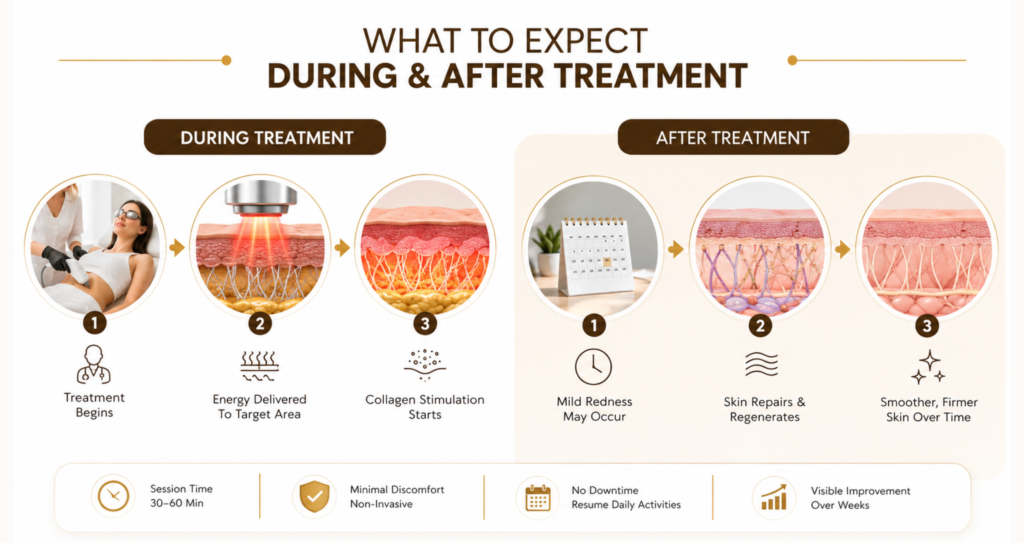
Your journey begins with a thorough consultation, where a clinician assesses your skin type, stretch mark stage and medical history, including whether you are pregnant or breastfeeding. This informs a personalised plan.
On the day, the treatment area is cleansed and a topical numbing cream is applied for 30 to 45 minutes to keep you comfortable. The procedure itself usually takes between 20 minutes and an hour, depending on the area. Most people describe the sensation as mild tingling, warmth or light pressure rather than pain; reported pain scores for RF and non-ablative laser are consistently low.
Afterwards, expect some redness, mild swelling and a sensation of tightness for a day or two, similar to mild sunburn. This settles quickly. Aftercare is straightforward but important:
- Keep the area clean and avoid rubbing or scratching
- Apply the recommended soothing moisturiser
- Use a broad-spectrum SPF 30+ diligently, as sun protection is essential to prevent pigmentation
- Avoid harsh exfoliants, hot baths and intense exercise for a couple of days
Results build gradually as collagen remodels, with the most noticeable improvement appearing over three to six months. Occasional maintenance sessions may be recommended to sustain results.
Stretch marks are permanent scars, but modern non-surgical treatments can dramatically reduce their colour, depth and visibility, restoring both smoothness and confidence.
Who Should Choose Each Treatment?
Matching the treatment to your circumstances is the key to satisfying results and safe post-weight-loss skin rejuvenation.
Choose RF microneedling if
You have a mix of new and old stretch marks, some accompanying skin laxity after pregnancy or weight loss, and darker skin that would benefit from a lower pigmentation risk. It is especially effective on the abdomen, thighs and buttocks, and complements body-focused care such as post-pregnancy body contouring and treatment for loose skin after weight loss.
Choose microneedling if
You have early or mixed-stage marks, are still breastfeeding (once cleared by your clinician), or want a gentle, affordable entry point. It suits sensitive skin and delivers dependable, gradual improvement.
Choose fractional laser if
Your stretch marks are older, silvery-white and well established, your weight is stable, and you are no longer pregnant or breastfeeding. Non-ablative options are preferred for Indian skin tones.
New mothers should note that topical retinoids are avoided during pregnancy and breastfeeding, so treatment plans are timed and adapted accordingly. If facial concerns coincide with body changes, our guide on post-pregnancy facial rejuvenation offers helpful context.
Non-Surgical Stretch Mark Reduction at a Glance
Benefits
- No surgery, incisions or general anaesthetic required
- Minimal downtime, so you return to daily life quickly
- Safe options available for darker Indian skin tones
- Treats both texture and colour, and can tighten mild skin laxity
- Suitable for post-pregnancy and post-weight-loss skin
Considerations
- Results are improvement, not complete erasure, of permanent scars
- Multiple sessions are needed and results take months to appear
- Some treatments are unsuitable during pregnancy or breastfeeding
- Costs are usually not covered by insurance
- Requires diligent sun protection and aftercare
Why Choose Vivo Body & Skin Clinic
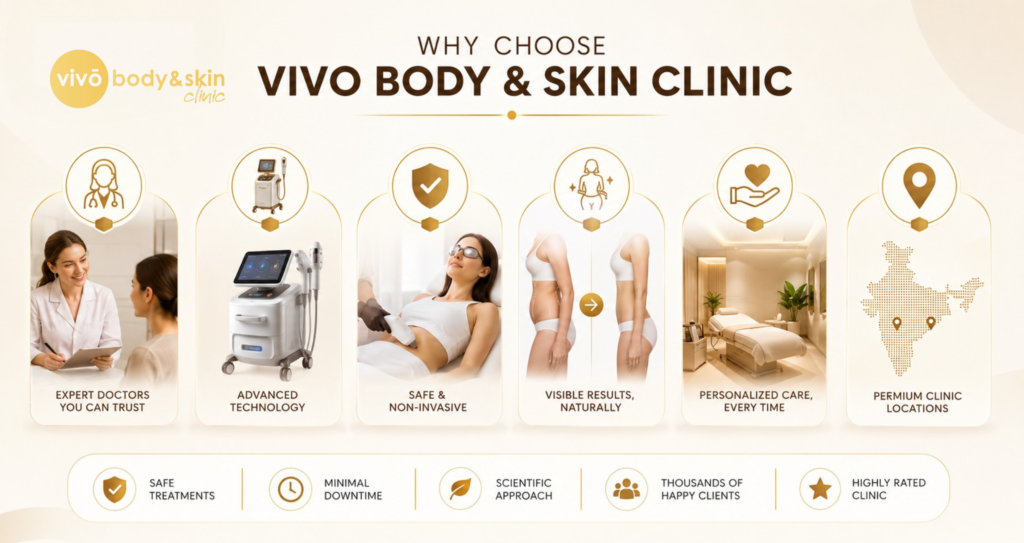
At VIVO Body & Skin Clinic in Mumbai, we specialise in affordable, non-invasive aesthetic treatments delivered by an experienced team using the latest pioneering technology. We understand that post-pregnancy and post-weight-loss skin concerns are deeply personal, so every plan is tailored to your skin type, stretch mark stage and goals, with a strong focus on outcomes that are safe for Indian skin tones.
Our practitioners take the time to set realistic expectations, combine treatments intelligently for the best results, and guide you through every step with genuine, personalised care. Alongside stretch mark reduction, we offer complementary body treatments including non-surgical cellulite reduction and abdominal skin tightening. Book your consultation today to restore smooth, healthy skin.
Can stretch marks be completely removed?
No. Stretch marks are a type of permanent scar, so they cannot be fully erased. However, non-surgical treatments can significantly reduce their colour, texture and visibility, with studies reporting improvements in the 20 to 60% range. Most Indian clinics honestly describe the goal as visible fading and smoothing rather than complete removal.
Are these treatments safe for darker Indian skin tones?
Yes, with the right modality and an experienced practitioner. RF microneedling, microneedling and non-ablative lasers such as Nd:YAG and Nd:YAP are generally safe for Fitzpatrick IV to VI skin because they spare the epidermis and carry a lower risk of hyperpigmentation. Aggressive ablative CO₂ lasers should be used cautiously in darker skin.
How many sessions will I need?
Most device-based treatments require multiple sessions spaced four to six weeks apart. RF microneedling typically needs four to six sessions, microneedling three to six, and fractional laser three to four. Your clinician will confirm a plan based on the severity and age of your stretch marks.
When will I see results?
Results are gradual because collagen and elastin take time to remodel. You may notice subtle improvements in texture and colour after the first few sessions, with more significant changes emerging over three to six months. Some people benefit from occasional maintenance sessions.
Can I have treatment while pregnant or breastfeeding?
During pregnancy, treatment is limited to safe measures such as moisturisers and certain hyaluronic acid or Centella-based creams; energy-based devices and retinoids are avoided. While breastfeeding, gentle options like microneedling and non-ablative lasers may be considered, but topical retinoids and strong peels are usually deferred until after weaning.
Do home remedies like cocoa butter or almond oil work?
Controlled studies have found that cocoa butter, almond oil, olive oil and vitamin E do not meaningfully prevent or reduce stretch marks beyond placebo. They can moisturise skin pleasantly but should not be relied upon as treatments. Evidence-based options such as prescription tretinoin, hyaluronic acid and device treatments have far stronger data.
Is RF microneedling better than standard microneedling?
RF microneedling usually delivers stronger, faster results because it combines mechanical micro-injury with deep dermal heating, boosting collagen and elastin while also tightening mild laxity. Standard microneedling is effective and more affordable, making it a good entry point, but RF often achieves greater improvement for deeper or older marks.