Slimmer knees and toned inner thighs are among the most requested goals at aesthetic clinics across India, yet these areas are notoriously resistant to diet and exercise. Increasingly, people are turning away from liposuction in favour of treatments that involve no incisions, no anaesthesia and no recovery period. Non-surgical knee and inner thigh slimming in India has matured rapidly, with technologies such as HIFU, radiofrequency and fat freezing now offering measurable, clinically documented fat reduction. This guide explains why fat collects around the knees and inner thighs, compares the three leading treatments, outlines realistic costs in Mumbai, and helps you decide which approach suits your body and goals.
Why Fat Collects Around the Knees and Inner Thighs
Fat distribution in the lower body is shaped by several factors working together. Genetics plays the largest role: many women inherit a pear-shaped fat storage pattern in which oestrogen directs fat towards the hips, inner thighs and the soft pads around the inner knees. Hormonal shifts during puberty, pregnancy and perimenopause can accentuate this pattern, which is why many women first notice inner thigh fullness after having children. If this applies to you, our guide to post-pregnancy thigh and hip contouring covers the topic in more depth.
Lifestyle factors matter too. Sedentary work, weight fluctuations and ageing all contribute, and the inner thigh region is known to be less responsive to exercise-driven fat loss than other areas due to regional differences in how fat cells respond to lipolytic signals. Even people who lose significant weight often retain disproportionate fullness at the inner thighs and medial knees. Beyond aesthetics, this can cause chafing, skin irritation and discomfort in warm Indian climates, which is why targeted, localised treatments have become so popular.

HIFU Thigh Slimming: Focused Ultrasound Fat Reduction
High-intensity focused ultrasound (HIFU) works by concentrating ultrasound waves at a precise depth within the subcutaneous fat layer, typically heating the focal point above 58°C. This causes targeted destruction of fat cells through a combination of thermal and mechanical effects, while the skin surface and deeper structures remain untouched. The body then clears the treated fat cells gradually over the following weeks through its natural lymphatic and metabolic processes.
What makes HIFU particularly well suited to the thigh and knee region is its dual action. As well as reducing fat, the heat stimulates collagen production in the dermis, which firms and tightens the overlying skin. This matters around the knees, where reducing fat without addressing laxity can leave a crepey or wrinkled appearance. Peer-reviewed research summarised in reviews of non-invasive body contouring has shown that focused ultrasound can deliver statistically significant reductions in localised fat, with abdominal studies recording circumference reductions of more than 2 cm after a single session.
Demand for HIFU for thighs in Mumbai has grown steadily because treatment is typically completed in one or two sessions, fits easily around work commitments, and suits Indian skin types without risk of pigmentation change. It works well for inner thigh fullness, the area just above the knee, and patients who want fat reduction and skin tightening in a single treatment. Sessions can feel warm and occasionally prickly, but discomfort is brief and there is no downtime. Results develop progressively over eight to twelve weeks. You can read more about how this technology works across the body in our overview of HIFU treatment in India, including common myths and realistic expectations.
Radiofrequency (RF): Fat Reduction with Skin Tightening
Radiofrequency treatments use alternating electrical currents to generate controlled heat within the fat layer and the dermis. Fat cells are heated to the point of irreversible injury and are gradually cleared by the body, while the skin surface is kept at a safe temperature throughout. A recent study of radiofrequency lipolysis demonstrated that modern RF devices can selectively reduce subcutaneous fat thickness and shrink adipocyte size without any skin damage, with histological analysis confirming the skin remained healthy.
The standout benefit of RF skin tightening for inner thighs is its remodelling effect on collagen and elastin. Heating the dermis triggers neocollagenesis – the formation of fresh collagen – which firms loose or crepey skin over the following months. This makes RF the treatment of choice when laxity is as much of a concern as fat, a common scenario above the knees and along the inner thighs after weight loss or pregnancy. The American Board of Cosmetic Surgery notes that RF treatments have been used for non-surgical tightening since 2001 with an excellent safety record across all skin types, including the darker Fitzpatrick types common in India, where post-inflammatory pigmentation is a frequent worry with other energy-based treatments.
A typical course involves three to six sessions spaced a few weeks apart. Each session feels like a warm massage, lasts 30-45 minutes, and requires no recovery time beyond perhaps a few hours of mild redness. Improvements in firmness and contour build gradually, with the best results visible three to six months after completing the course. If you are weighing up the two heat-based options, our comparison of HIFU versus RF skin tightening explains the practical differences in depth, intensity and session numbers.
Fat Freezing (Cryolipolysis): The Best-Evidenced Option for Inner Thighs
Cryolipolysis – widely known as fat freezing – takes the opposite approach to heat-based treatments. A specially shaped applicator draws or presses a fold of tissue against cooling plates, chilling the fat to temperatures at which fat cells crystallise and undergo apoptosis (programmed cell death), while the water-rich skin, nerves and muscle are unharmed. The treated fat cells are cleared naturally over the following two to three months. Fat freezing is FDA cleared, which is an important reassurance for anyone researching fat freezing for knees in India, where device quality varies widely between clinics.
Crucially, fat freezing has the strongest published evidence specifically for the inner thighs. A multicentre clinical study using a flat cup applicator designed for the inner thigh recorded a mean fat layer reduction of 2.8 mm and a 0.9 cm circumference reduction at 16 weeks after a single session, with 93% of participants satisfied and 89% saying they would recommend the treatment to a friend. Broader reviews report fat reductions of up to 20-25% in a treated area per session.
For the knees, smaller contoured applicators can target the distinct, pinchable fat pads above and beside the inner knee. The procedure involves an intense cold sensation for the first few minutes, after which the area goes numb. Sessions last around 35-60 minutes per area, and you can return to work immediately. Temporary redness, numbness or bruising is normal and resolves within days. For a detailed head-to-head of all three technologies across the body, see our guide to fat freezing vs HIFU vs RF for body contouring.
Non-Surgical Knee & Thigh Slimming: Benefits and Considerations
Benefits
- No incisions, scars, anaesthesia or hospital stay
- Walk-in, walk-out treatments with little to no downtime
- Fat freezing is FDA cleared with strong inner thigh evidence
- HIFU and RF tighten skin as well as reducing fat
- Treated fat cells, once destroyed, do not regenerate
- Safe for Indian skin types with minimal pigmentation risk
Considerations
- Results are modest (typically 15-25% fat reduction per area) rather than dramatic
- Multiple sessions are usually needed, especially with RF
- Changes develop gradually over two to six months
- Not a weight-loss treatment – best for those near their ideal weight
- Remaining fat cells can enlarge with weight gain, so lifestyle still matters
- Significant loose skin may still require surgical correction
Comparison: HIFU vs RF vs Fat Freezing for Knees and Inner Thighs
| Factor | HIFU | Radiofrequency (RF) | Fat Freezing |
|---|---|---|---|
| Effectiveness | Good fat reduction plus skin tightening | Moderate fat reduction; excellent skin tightening | Up to 20-25% fat reduction per session; best inner thigh evidence |
| Sessions needed | 1-2 | 3-6 | 1-3 per area |
| Downtime | None; mild soreness possible | None; brief redness | None; temporary numbness or bruising |
| Indicative cost (per session, Mumbai) | ₹15,000-₹40,000 | ₹8,000-₹25,000 | ₹30,000-₹50,000 per area |
| Ideal candidate | Moderate fat with mild skin laxity; wants fewer sessions | Mild fat with noticeable looseness or crepey skin | Distinct, pinchable fat bulges with reasonable skin tone |
Cost of Knee and Inner Thigh Treatments in India
Pricing for ultrasound thigh fat reduction and related treatments varies by city, clinic and technology. In Mumbai, fat freezing typically costs ₹30,000-₹50,000 per area per session, so treating both inner thighs may require two cycles. HIFU body sessions generally range from ₹15,000-₹40,000 depending on the size of the treated area, while RF courses are usually priced per session at ₹8,000-₹25,000, with packages reducing the per-session cost.
Several factors influence the final figure: the brand and calibre of the device (genuine FDA-cleared platforms cost clinics more to run), the experience of the practitioner, the number of areas treated, and whether fat reduction is combined with skin tightening. Be cautious of prices that seem too good to be true – they often indicate copy devices or non-medical operators. As a benchmark for body contouring in Mumbai, expect a complete knee and inner thigh programme to fall between ₹50,000 and ₹1,50,000 depending on the technologies combined and the number of sessions required.
Non-surgical treatments don’t change the number on the scale – they change the shape. For stubborn inner thigh and knee fat that survives every diet, that targeted reshaping is exactly what most people are looking for.
What to Expect During and After Treatment
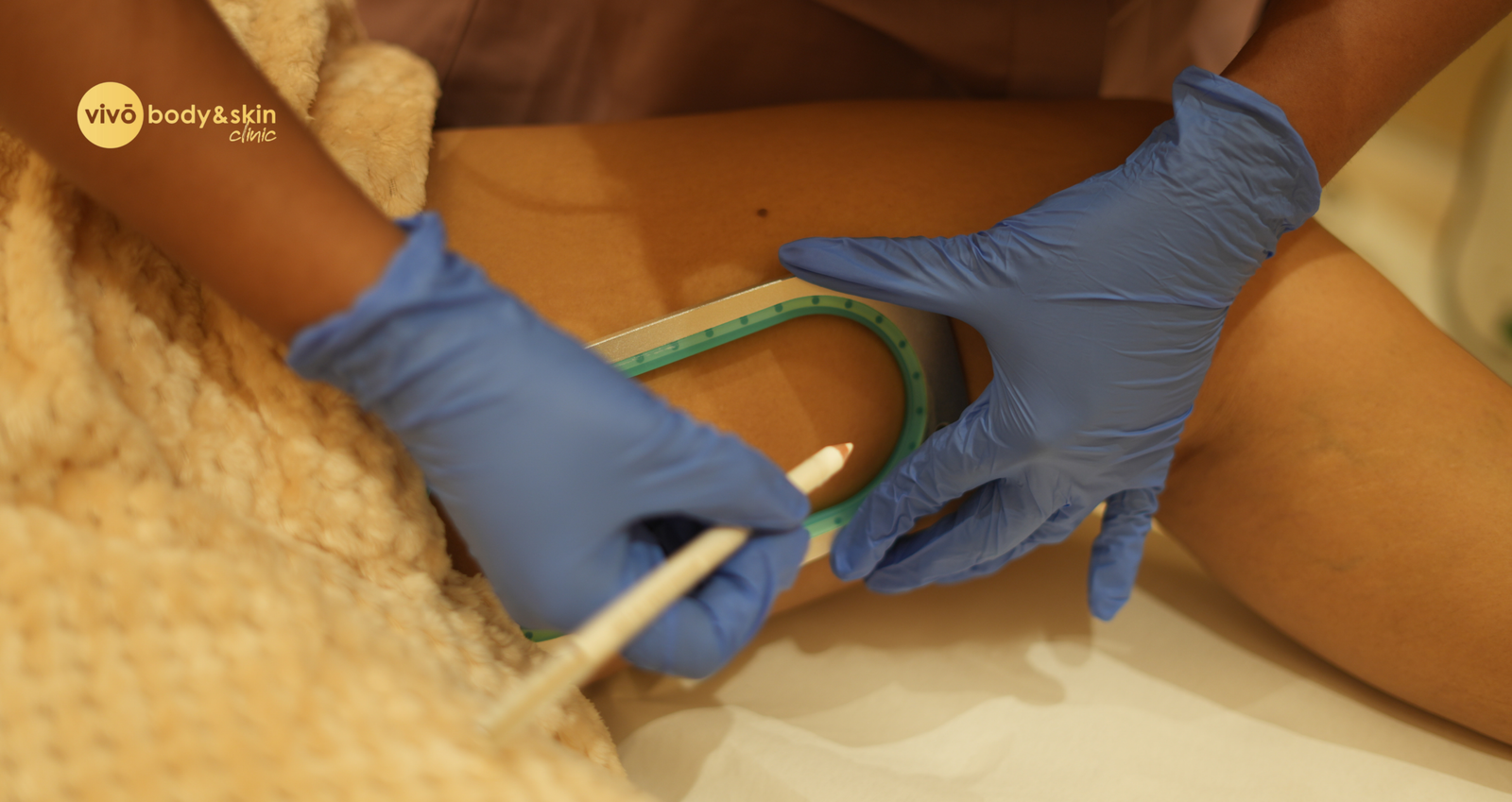
Your journey begins with a consultation, where a practitioner assesses your fat thickness, skin quality and overall suitability, takes baseline photographs and measurements, and recommends the most appropriate technology. On treatment day, the area is cleansed and marked, and a protective gel or pad is applied.
With fat freezing, you will feel intense cold and a pulling sensation for the first five to ten minutes before the area numbs; many clients read or work on a laptop during the session. HIFU feels like brief pulses of deep warmth, while RF resembles a progressively warm massage. Sessions last between 30 and 60 minutes per area, and you can drive home and return to normal activities straight away.
Afterwards, mild redness, tenderness, swelling or numbness is normal and settles within days to two weeks. There are no dressings, garments or activity restrictions. Results emerge gradually: early changes are often visible at four to six weeks, with the full outcome at two to three months for fat freezing and HIFU, and three to six months for an RF tightening course. Follow-up reviews allow your practitioner to measure progress and plan any additional sessions. Staying well hydrated and maintaining a stable weight supports the body’s clearance of treated fat cells, as cryolipolysis research consistently emphasises.
Which Treatment Should You Choose?
The right choice depends on your anatomy, skin and priorities. If you have a distinct, pinchable bulge on the inner thigh or above the knee with reasonably firm skin, fat freezing offers the strongest evidence and the largest per-session fat reduction. If your concern combines moderate fat with early skin laxity – common after pregnancy or weight loss – HIFU addresses both in one or two sessions. If looseness and crepey texture are your main complaint, with only mild excess fat, a course of RF skin tightening is usually the better investment; our article on skin tightening after pregnancy explores this scenario.
Body weight matters too. These treatments work best for people near their ideal weight, generally with a BMI under 30, who have localised pockets resistant to diet and exercise. If you are carrying significant excess weight, addressing that first will deliver far more visible change. Many clients also combine technologies – fat freezing to debulk, followed by RF to tighten – and similar combination approaches apply to other areas, from belly fat reduction to arm contouring. A qualified practitioner will design a staged plan rather than a one-size-fits-all package.
Why Choose Vivo Body & Skin Clinic For Knee & Inner Thigh Slimming?
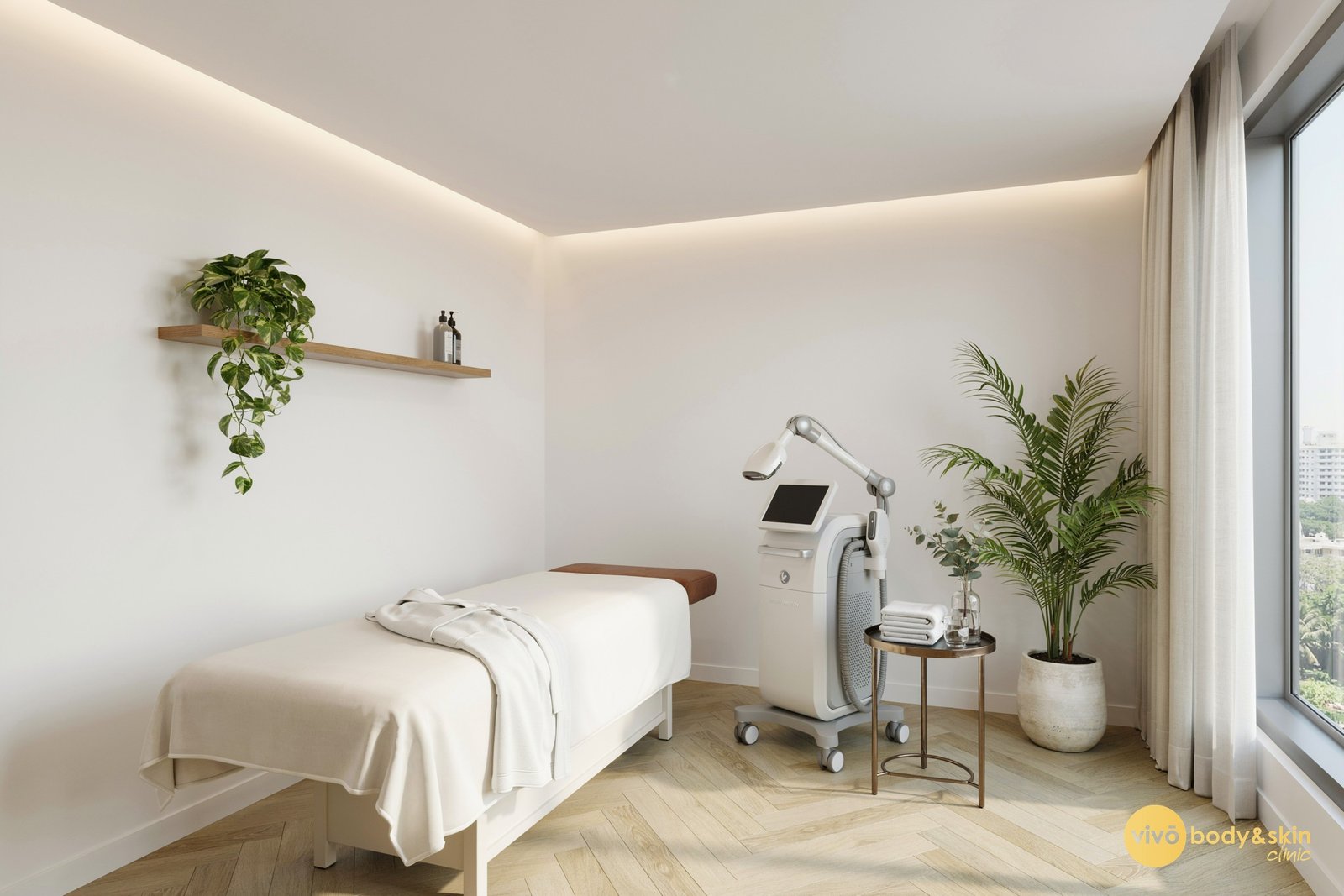
At VIVO Body & Skin Clinic Mumbai, knee and inner thigh contouring begins with an honest, personalised assessment – not a sales pitch. Our experienced team uses the latest pioneering aesthetic technology, including FDA-cleared fat freezing, advanced HIFU and medical-grade RF platforms, to deliver unrivalled results at affordable prices. We assess your fat distribution, skin quality and goals before recommending a treatment plan, and we will tell you candidly if a different approach would serve you better. Every session is performed under proper protocols with careful follow-up, so your results are measured, not guessed. Book your consultation today for safe knee and thigh slimming.
Are non-surgical knee and inner thigh treatments safe?
Yes, when performed with approved devices by trained professionals. Fat freezing is FDA cleared, and HIFU and RF have well-established safety profiles. Side effects are usually limited to temporary redness, numbness or mild bruising. Energy-based treatments like RF and fat freezing are also safe for darker Indian skin types, with minimal pigmentation risk.
How much fat reduction can I realistically expect?
Most modalities reduce fat in the treated area by around 15-25% per session. A clinical study of inner thigh fat freezing recorded an average 2.8 mm reduction in fat thickness and a 0.9 cm reduction in thigh circumference after a single session. These changes are visible but subtle – these are contouring treatments, not weight-loss procedures.
How many sessions will I need?
Fat freezing often shows results after one session per area, though two or three may be recommended for larger bulges. HIFU typically requires one or two sessions, while RF works best as a course of three to six sessions spaced a few weeks apart.
Is there any downtime?
No. All three treatments are walk-in, walk-out procedures. You can return to work, drive and exercise the same day. Mild redness, tenderness or numbness may persist for a few days to two weeks but does not restrict activity.
When will I see results?
Results develop gradually as the body clears treated fat cells. Early changes are typically visible at four to six weeks, with full results at two to three months for fat freezing and HIFU. RF skin tightening continues improving for three to six months after the final session.
Will the fat come back?
Fat cells destroyed by these treatments do not regenerate. However, the remaining fat cells can enlarge if you gain weight, which can diminish your results. Maintaining a stable weight through sensible diet and regular exercise protects your investment.
Do these treatments hurt?
Discomfort is generally mild. Fat freezing feels intensely cold and tuggy for the first few minutes before the area numbs. HIFU produces brief pulses of deep warmth or prickling, and RF feels like a warm massage. No anaesthesia is required for any of them.
Can I treat both knees and inner thighs in one visit?
Usually, yes. Multiple areas can be treated in a single appointment, although fat freezing may require separate cycles per area, extending the visit to two hours or more. Your practitioner will plan the most efficient schedule for your goals and budget.
Who is not a good candidate?
These treatments are unsuitable for people significantly above their ideal weight (generally BMI over 30), those who are pregnant, anyone with certain medical conditions affecting healing or circulation, and individuals with severe loose skin, which may need surgical correction. A consultation will confirm your suitability.
Should I avoid fat-dissolving injections for my thighs?
Yes. The FDA has warned against unapproved fat-dissolving injections, which have caused permanent scarring, infections and painful nodules. The only approved injectable, deoxycholic acid, is licensed solely for under-chin fat – not thighs or knees. Stick to evidence-based, device-led treatments at medical clinics.
Is HIFU the same as ultrasound cavitation?
No. HIFU focuses high-intensity ultrasound at a precise depth to destroy fat cells thermally, while cavitation uses lower-frequency waves to disrupt fat cell membranes more diffusely. They differ in intensity, results and session requirements – our comparison of HIFU vs ultrasound cavitation explains which suits different goals.
Conclusion
Slimmer knees and inner thighs no longer require surgery. Fat freezing offers the strongest clinical evidence for inner thigh reduction, HIFU delivers fat loss and skin tightening in fewer sessions, and RF excels where laxity is the main concern. Results are gradual and modest but genuine – typically 15-25% fat reduction per treated area – with no scars, no anaesthesia and no time off work. The key is choosing the right technology for your anatomy under proper medical guidance. If you are ready to address stubborn knee and inner thigh fat, book a consultation with VIVO Body & Skin Clinic Mumbai and let our team design a safe, personalised plan for you.