HIFU vs Ultrasound Cavitation for Body Contouring: Which Is More Effective for Fat Reduction?
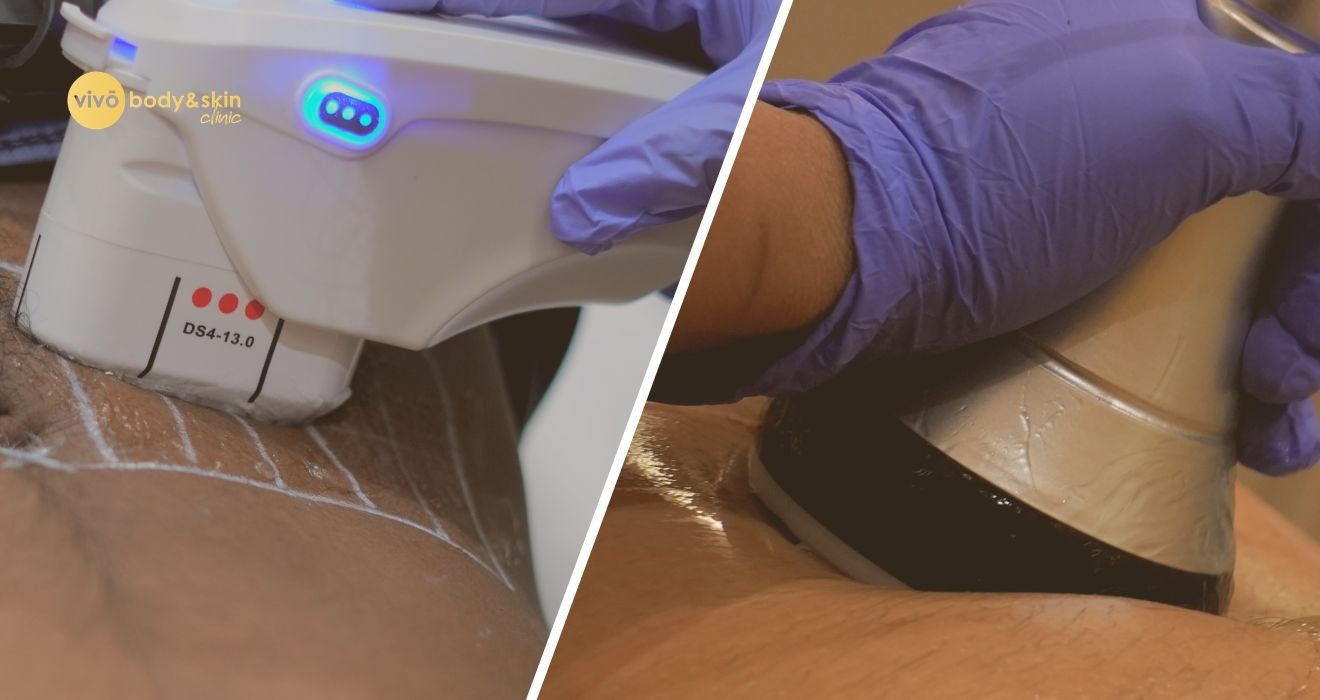
For people looking to reduce stubborn pockets of fat without surgery, two treatments often come up in the same conversation: HIFU and ultrasound cavitation. Both are marketed as non-surgical fat reduction options, both use ultrasound technology, and both can support body contouring rather than dramatic weight loss. However, they do not work in exactly the same way, and they do not always deliver the same level of fat reduction.
When comparing HIFU vs Ultrasound Cavitation for body contouring, the most important factors are treatment intensity, evidence, the area being treated, expected downtime, and whether you also want skin tightening. In general, HIFU fat reduction tends to be more targeted and better supported by clinical data, while ultrasound cavitation fat loss is often chosen as a gentler, lower-cost option that may require more sessions. If you are exploring non-surgical belly fat reduction options or broader non-surgical weight loss treatments in Mumbai, this comparison will help you make a more informed decision.
At Vivo Body & Skin Clinic in Mumbai, patients often ask which treatment is better for belly fat, flanks, thighs or post-weight-loss shaping. The answer depends on your goals, body type and budget, so let us break down both technologies clearly.
What Is HIFU?
HIFU stands for High-Intensity Focused Ultrasound. In body contouring, it uses focused ultrasound energy to target fat beneath the skin at precise depths. This energy creates thermal injury in selected fat layers while sparing the surface of the skin and nearby tissues when the treatment is performed correctly with appropriate devices. Clinical literature has shown that focused ultrasound can reduce waist circumference in suitable patients, with studies reporting measurable circumference reduction after treatment. A useful overview of non-invasive body contouring technologies is available via PubMed.
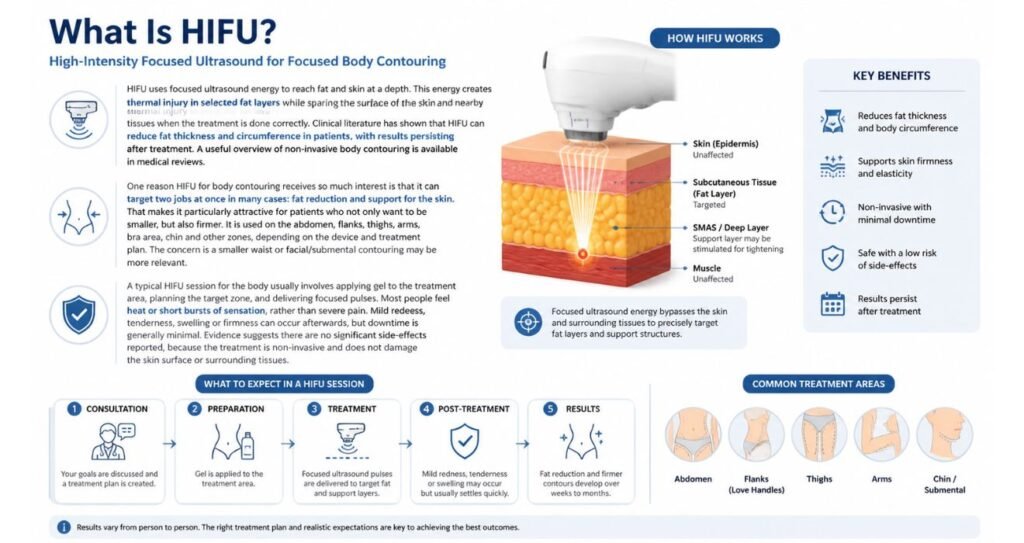
One reason HIFU fat reduction receives so much attention is that it can do two jobs at once in some cases: reduce localised fat and support skin tightening. That makes it particularly attractive for patients who do not just want to look smaller, but also firmer. It is commonly used on the abdomen, flanks, thighs, arms and sometimes under the chin, depending on the device and treatment plan. If your concern is a smaller facial or submental area, you may also want to read about double chin removal without surgery.
A HIFU session for the body usually involves applying gel to the treatment area, mapping the zone, and delivering pulses of focused ultrasound. Most people describe the sensation as heat, tingling or short bursts of discomfort rather than severe pain. Mild redness, tenderness, swelling or firmness can occur afterwards, but downtime is generally limited. Evidence suggests there are no significant changes in body weight or BMI because the treatment is designed for contouring, not overall slimming. If you are considering this option, it is also worth reading what to know about HIFU side effects before treatment and myths, facts and benefits of HIFU for face and body.
What Is Ultrasound Cavitation?
Ultrasound cavitation is another non-invasive body contouring treatment that uses ultrasound energy, but at a lower intensity than HIFU. Instead of sharply focused thermal energy, cavitation creates pressure changes that disrupt fat cell membranes. The released contents are then gradually processed and cleared by the body through natural metabolic and lymphatic pathways. It is commonly used for areas such as the abdomen, love handles, thighs, hips and arms.
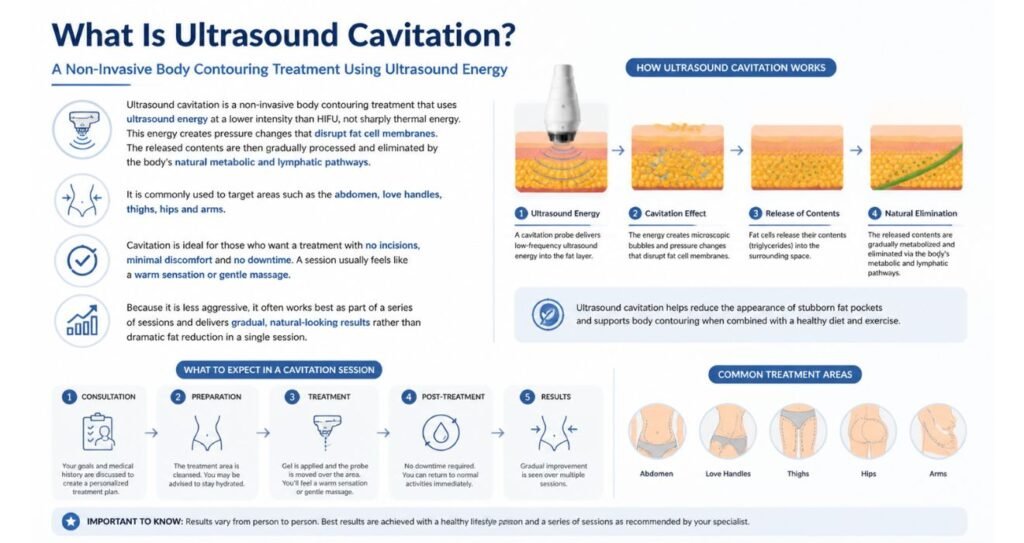
Ultrasound cavitation fat loss appeals to people who want a gentler treatment with no incisions, no anaesthesia and effectively no downtime. A session is usually comfortable, with a warm sensation or mild vibration. Because it is less aggressive, it often forms part of a course of sessions rather than a one-off intervention. Some clinics also combine cavitation with massage, radiofrequency or lymphatic support depending on the treatment plan.
The biggest distinction in the HIFU vs cavitation debate is usually power and predictability. Cavitation can improve body shape and reduce inches in selected patients, but the supporting evidence is generally less robust than for HIFU, and outcomes may depend more heavily on maintaining a healthy diet and exercise routine. That does not mean cavitation is ineffective; it simply means expectations should be realistic. It is best suited to patients who are close to their target weight and want help with stubborn areas rather than significant fat removal. If your broader goal is medical weight reduction rather than contouring alone, see why weight loss often fails and what actually works and a practical guide to medical weight loss.
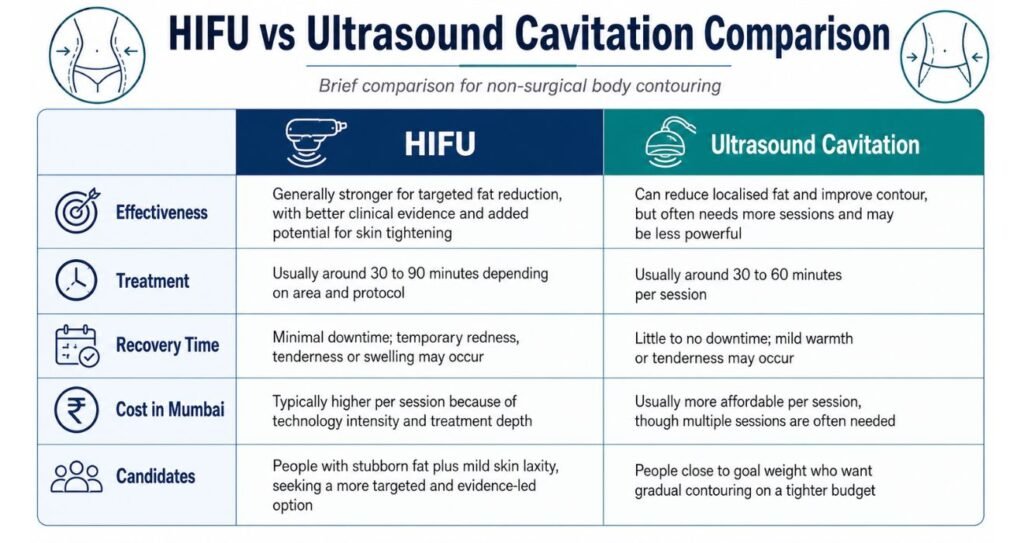
HIFU vs Ultrasound Cavitation Comparison
| Factor | HIFU | Ultrasound Cavitation |
|---|---|---|
| Effectiveness | Generally stronger for targeted fat reduction, with better clinical evidence and added potential for skin tightening | Can reduce localised fat and improve contour, but often needs more sessions and may be less powerful |
| Treatment Duration | Usually around 30 to 90 minutes depending on area and protocol | Usually around 30 to 60 minutes per session |
| Recovery Time | Minimal downtime; temporary redness, tenderness or swelling may occur | Little to no downtime; mild warmth or tenderness may occur |
| Cost in Mumbai | Typically higher per session because of technology intensity and treatment depth | Usually more affordable per session, though multiple sessions are often recommended |
| Ideal Candidates | People with stubborn fat plus mild skin laxity, seeking a more targeted and evidence-led option | People close to goal weight who want gradual contouring on a tighter budget |
From a purely results-focused perspective, many practitioners consider HIFU the more effective option for localised fat reduction. This aligns with published data showing waist reduction after focused ultrasound treatment and a favourable safety profile in selected patients. For example, studies available via PubMed discuss the use of high-intensity focused ultrasound in non-invasive fat reduction. Cavitation remains useful, but it is usually chosen for affordability, comfort and gradual inch loss rather than maximum intensity.
HIFU vs Ultrasound Cavitation: Benefits and Considerations
Benefits
- HIFU fat reduction is more targeted and usually offers stronger contouring power in fewer sessions.
- HIFU may also improve mild skin laxity, which can be helpful after fat reduction.
- Ultrasound cavitation fat loss is comfortable, non-invasive and usually involves no downtime.
- Cavitation is often more budget-friendly per session, making it accessible for gradual body contouring.
- Both treatments can address localised fat on areas such as the abdomen, flanks, thighs and arms.
- Neither treatment requires surgery, scars or a prolonged recovery period.
Considerations
- HIFU is usually more expensive than cavitation in Mumbai.
- HIFU can feel more intense during treatment, with temporary tenderness or swelling afterwards.
- Ultrasound cavitation often requires a course of sessions to achieve visible results.
- Cavitation is generally less effective than HIFU for more resistant or thicker fat pockets.
- Neither option is a substitute for medical weight loss if you have obesity or need significant overall fat reduction.
- Results for both treatments vary depending on the device, practitioner skill, body area and patient lifestyle.
If your main goal is stronger fat reduction with some tightening, HIFU often has the edge. If your priority is a gentler, lower-cost route to gradual inch loss, cavitation may be enough.
Which Treatment Should You Choose?
Choosing between HIFU vs Ultrasound Cavitation for body contouring comes down to what you want most from treatment.
Choose HIFU if your priority is stronger fat reduction
If you have a clearly defined area of stubborn fat that has not shifted with diet and exercise, HIFU is often the better choice. It delivers focused energy deeper into the treatment zone and tends to be preferred when patients want more noticeable sculpting. It is especially useful if there is mild looseness in the skin, because HIFU may offer a tightening benefit that cavitation usually does not match. Patients comparing body treatments with facial tightening options may also find it helpful to review HIFU vs RF skin tightening or explore how HIFU is used across face, jawline, neck and body.
Choose ultrasound cavitation if you want a gentler, more affordable plan
If your budget is tighter and you are comfortable with more gradual changes over multiple sessions, ultrasound cavitation can be a sensible option. It may suit patients who are already near their target weight, have mild to moderate localised fat, and prefer a comfortable treatment with no real disruption to daily life. It is popular for maintenance programmes and for people who are committed to hydration, healthy eating and regular exercise after treatment.
Think about your body goals, not just the technology
One of the most common mistakes patients make is choosing the machine before clarifying the goal. Ask yourself whether you want:
- Reduction in a small, stubborn bulge
- Better contour around the waist or lower abdomen
- Visible inch loss before an event
- Improved firmness as well as fat reduction
- A lower-cost course of treatments spread over time
If your goal is overall weight loss, neither HIFU nor cavitation is the full answer. Both are body contouring tools rather than treatments for obesity. In that case, a medical assessment may be more appropriate, particularly if lifestyle measures alone have not worked. You can also learn more in our guide to what non-surgical weight loss treatments actually work in Mumbai.
Why a consultation matters
The best candidates for both treatments are usually close to a stable weight, with realistic expectations and isolated fat deposits. Skin thickness, fat layer depth, previous weight changes and even your schedule can influence which option is best. At Vivo Body & Skin Clinic, we assess the treatment area, skin quality and desired outcome before recommending a personalised body contouring Mumbai treatment plan, rather than using a one-size-fits-all approach.
Cost of HIFU vs Ultrasound Cavitation in Mumbai
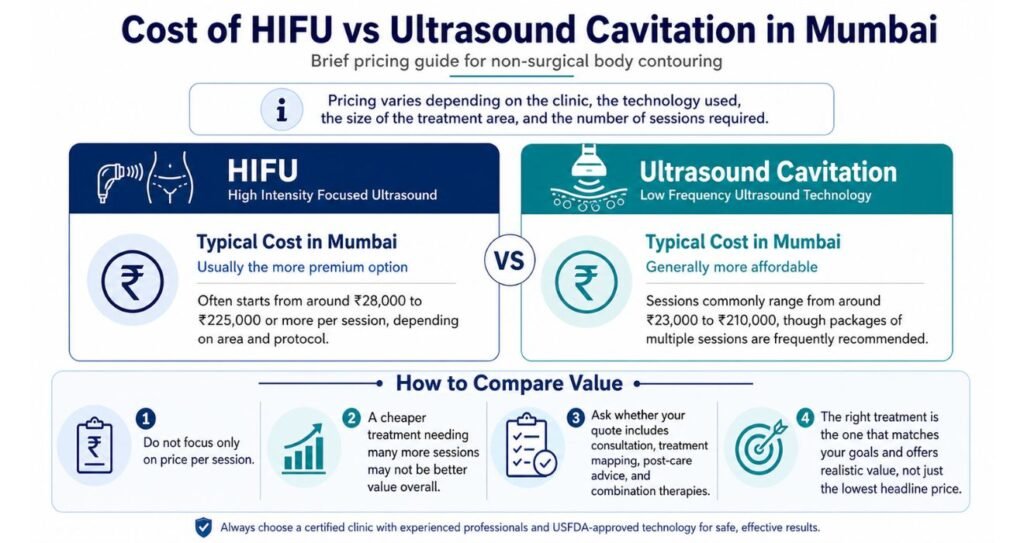
Pricing varies depending on the clinic, the technology used, the size of the treatment area and the number of sessions required. In Mumbai, HIFU for body contouring is usually the more premium option, often starting from around ₹8,000 to ₹25,000 or more per session depending on area and protocol. Ultrasound cavitation is generally more affordable, with sessions commonly ranging from around ₹3,000 to ₹10,000, though packages of multiple sessions are frequently recommended.
When comparing costs, do not focus only on the price per session. A cheaper treatment that needs many more sessions may not be better value overall. Ask whether your quote includes consultation, treatment mapping, post-care advice and combination therapies. The right treatment is the one that matches your goals and offers realistic value, not just the lowest headline price.
Why Choose Vivo Body & Skin Clinic for Body Contouring?
When choosing any non-surgical fat reduction treatment, the clinic matters just as much as the device. Vivo Body & Skin Clinic Mumbai offers advanced aesthetic technology, experienced practitioners and personalised treatment planning focused on safety, suitability and results. We do not push a single treatment on everyone; instead, we assess whether HIFU, cavitation or another approach is the better fit for your goals, body area and budget.
Our team focuses on realistic advice, clear aftercare guidance and tailored treatment programmes for patients seeking body contouring Mumbai solutions without surgery. If you are researching clinics before making a decision, you may also find our advice on what to check before choosing a clinic in Mumbai useful. Book a consultation today to find the best treatment plan for you!
Conclusion
In the comparison of HIFU vs Ultrasound Cavitation for body contouring, HIFU is usually the more effective option for targeted fat reduction and may also help with mild skin tightening. Ultrasound cavitation remains a worthwhile choice for gradual shaping, comfort and affordability. The best option depends on your body goals, the area being treated and how quickly you want to see change. A professional consultation is the safest way to choose wisely and achieve natural-looking, proportionate results.
Body contouring works best when the treatment matches the goal: shaping stubborn areas, not chasing unrealistic weight-loss promises.
What is the difference between HIFU and ultrasound cavitation?
Both treatments use ultrasound, but they work differently. HIFU uses high-intensity focused ultrasound to target fat more precisely and deeply, often with a stronger effect on localised fat and possible skin tightening. Ultrasound cavitation uses lower-intensity energy to disrupt fat cells more gently, usually over a course of sessions.
Which treatment is more effective for belly fat?
For many patients, HIFU is more effective for stubborn belly fat because it is more targeted and supported by stronger clinical evidence. Cavitation can still help with mild to moderate abdominal contouring, especially if you are close to your ideal weight and willing to have multiple sessions.
How long do HIFU results last?
HIFU results can last for months or longer, provided your weight remains stable. The treated fat cells do not simply refill in the same way, but remaining fat cells can still enlarge if you gain weight. Maintaining a healthy lifestyle helps preserve your contour.
Is ultrasound cavitation safe?
Ultrasound cavitation is generally considered safe for suitable candidates when performed by a trained practitioner using the correct protocol. It is non-invasive and usually has minimal downtime. However, it is not suitable for everyone, so a medical history review is important before treatment.
How many sessions of cavitation are usually needed?
Many patients need a course of sessions rather than a single treatment. The exact number depends on the area, fat thickness, device used and desired outcome, but multiple sessions are commonly recommended to achieve visible body contouring results.
Can HIFU or cavitation help with weight loss?
No, not in the way a medical weight-loss programme does. Both are classed as non-surgical fat reduction or body contouring treatments, meaning they target localised stubborn fat rather than causing major changes in body weight or BMI. If you need overall weight reduction, a broader medical strategy may be more appropriate.