Understanding PCOS Facial Hair and Why It Feels So Stubborn
If you live with polycystic ovary syndrome (PCOS), you already know that unwanted facial hair can be one of its most upsetting symptoms. The daily routine of shaving, threading or plucking the chin, upper lip and jawline can take a real toll, not just on your time but on your confidence too.
You may have tried losing weight, changing your diet or managing your lifestyle, only to find that the hair keeps coming back. This is completely understandable, and you are not doing anything wrong. The reason lies in the hormones that drive the problem in the first place.
In this guide, we will look honestly at what laser hair reduction can and cannot do for PCOS facial hair, how many sessions you may need, and what results you can realistically expect. The goal is to give you clear, medically responsible information so you can make a confident decision.
Why PCOS Causes Excess Facial Hair
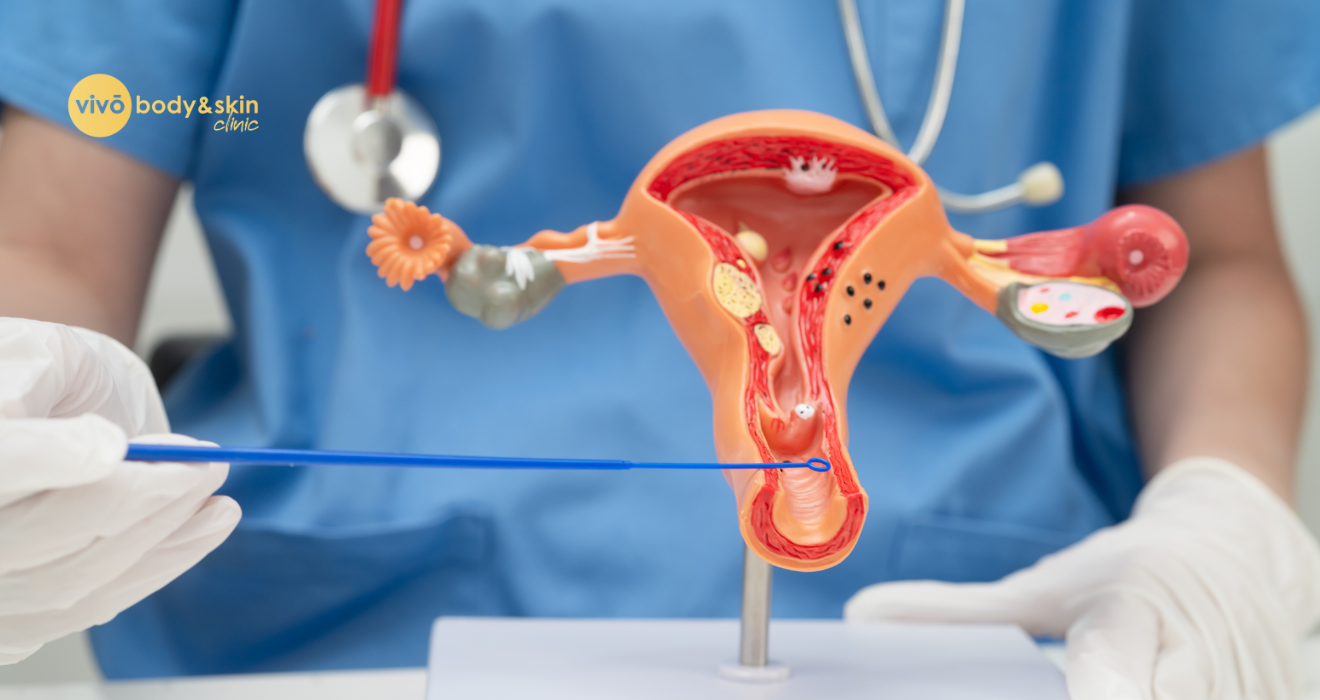
PCOS is a common hormonal condition affecting up to around one in ten women of reproductive age. One of its defining features is hyperandrogenism, meaning the body produces higher levels of male-type hormones (androgens) such as testosterone.
These androgens act on hair follicles in androgen-sensitive areas of the face and body. Over time, they convert fine, soft, barely visible hairs (vellus hairs) into thick, dark, coarse hairs (terminal hairs). This is why women with PCOS often notice hair on the chin, upper lip, jawline, sideburn area and cheeks, a pattern doctors call hirsutism.
According to the 2023 International Evidence-based Guideline for PCOS, hirsutism is not simply a cosmetic concern. It is a visible sign of underlying hormonal activity and is strongly linked to lower self-esteem, anxiety and low mood. Recognising this helps explain why the symptom deserves genuine, considered treatment rather than being dismissed.
Why facial hair persists despite weight loss or lifestyle changes
Many women assume that losing weight or improving their diet will clear up facial hair. While weight management is important for overall PCOS health and can help reduce androgen levels gradually, it rarely removes hair that has already become thick and terminal.
Once a follicle has transformed into a coarse, pigmented hair, lifestyle changes alone will not reverse it. In addition, the ongoing hormonal activity of PCOS can continue to recruit new follicles over time. This is precisely why facial hair feels so persistent and why many women look towards more direct treatments such as laser hair reduction.

What Laser Hair Reduction Actually Does
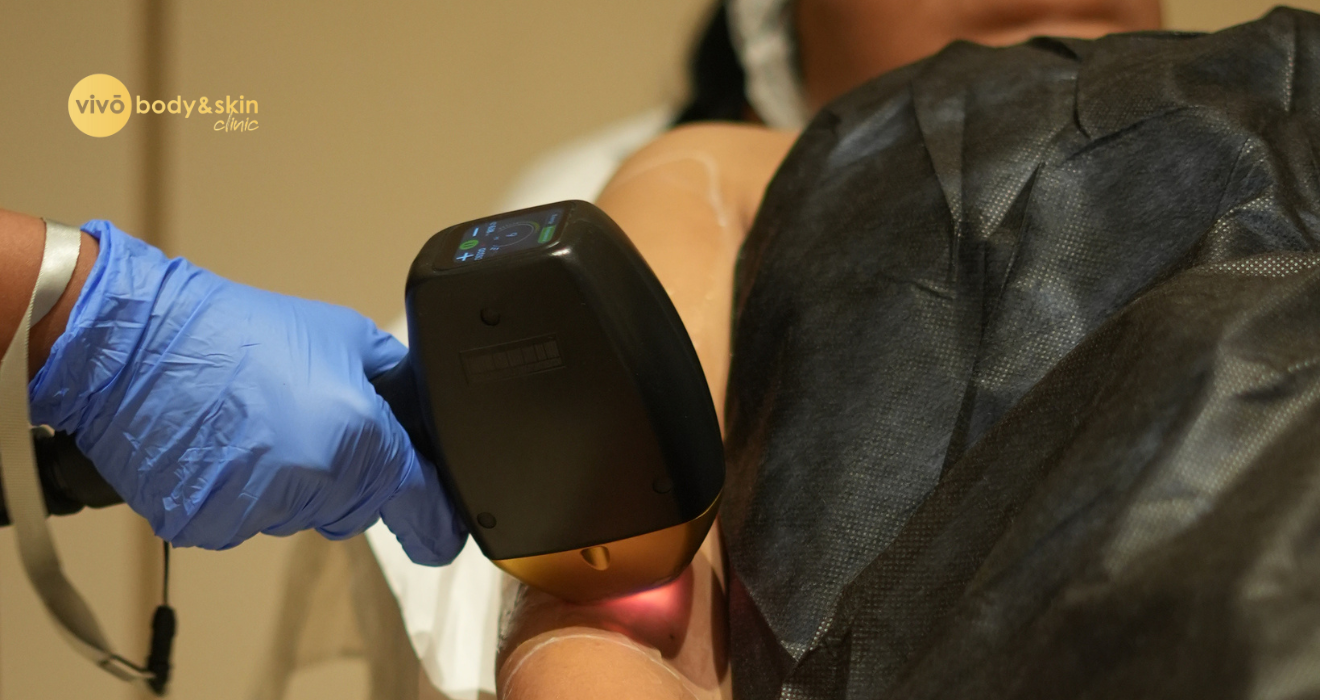
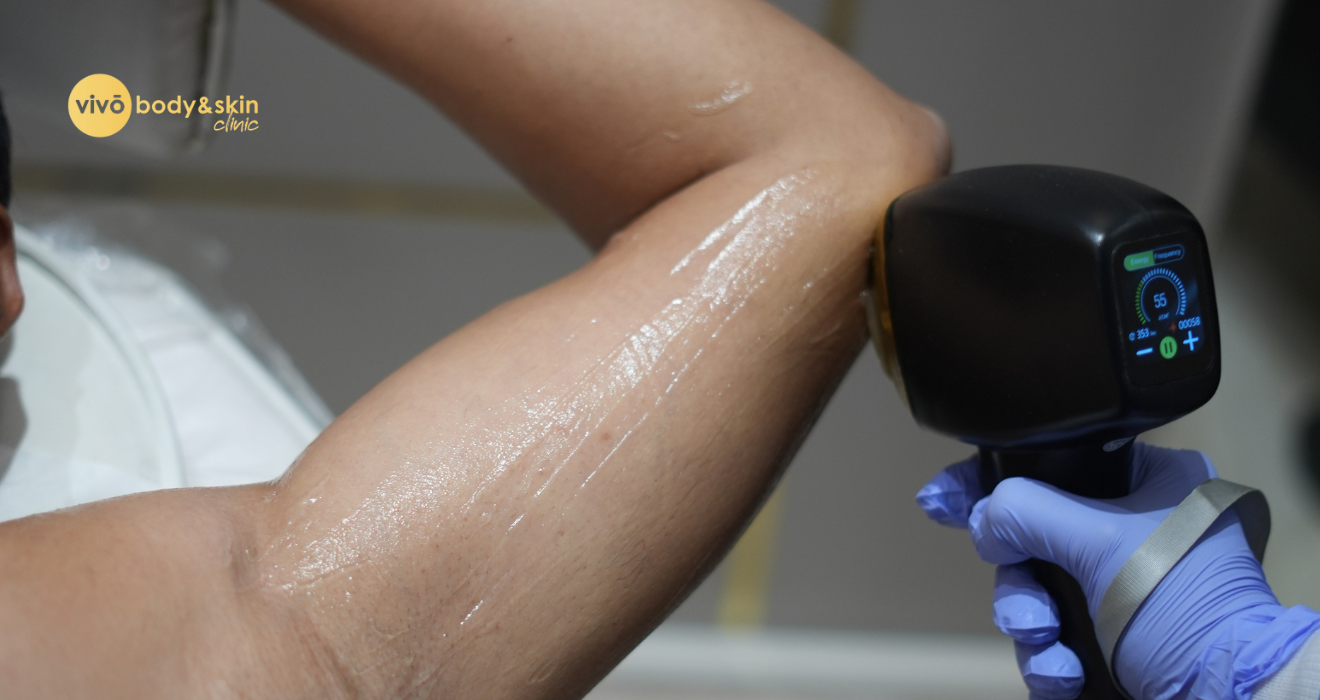
Laser hair reduction works on a principle called selective photothermolysis. In simple terms, the laser emits light that is absorbed by the pigment (melanin) inside the hair shaft and follicle. This light energy turns into heat, which damages the cells responsible for producing hair.
Because the laser targets pigment, it works best on dark, coarse hair, exactly the type of hair that PCOS tends to produce on the face. Fine, light, grey or white hairs contain little melanin and respond poorly, which is an important point to understand when setting expectations.
A crucial detail is the hair growth cycle. Hair grows in phases, and only follicles in the active growth phase can be properly treated by laser. Since not all follicles are active at the same time, several sessions spaced a few weeks apart are needed to catch each follicle at the right stage. This is the single biggest reason why laser hair reduction is never a one-off treatment.
Does Laser Hair Reduction Really Work for PCOS Facial Hair?
The short answer, supported by research, is yes, it can work meaningfully for many women with PCOS, although results vary from person to person.
A systematic review published in JAMA Dermatology (2024) examined laser and light-based therapies specifically in women with PCOS. Across the studies reviewed, alexandrite and diode lasers consistently reduced hair counts, often by around half or more, extended the hair-free interval and improved quality of life. The authors noted the overall certainty of evidence remains low, so honest, realistic expectations are essential.
Earlier randomised research reinforced this. In one well-known trial, women with PCOS who received high-fluence alexandrite laser saw their self-rated facial hair severity drop by roughly half, and their weekly hair-removal time fell from almost two hours to around twenty minutes. Importantly, the same study found significant improvements in anxiety and low mood after treatment.
What this tells us is encouraging: for many women, laser hair reduction can shift facial hair from a daily, exhausting battle to a far more manageable, occasional concern. If you would like a more detailed overview, our guide on laser hair removal for PCOS in India explains the journey step by step.
Can Laser Hair Reduction Permanently Remove PCOS Facial Hair?
This is the question we hear most often, and it deserves a clear, honest answer. The term “permanent hair removal” is often misunderstood, so let us separate it from “long-term hair reduction”.
In dermatology, permanent hair reduction means a stable, long-lasting decrease in the number of hairs that regrow after a course of treatment, not the complete and lifelong elimination of every single hair. On non-facial areas in women without hormonal conditions, laser can destroy many follicles permanently. On the female face, and particularly in PCOS, the picture is more nuanced.
The reason is simple. PCOS involves ongoing androgen activity. Even when existing hairs are successfully reduced, hormones can gradually encourage previously fine follicles to become terminal hairs over time. So while laser can permanently damage many treated follicles, new hairs may still appear as long as the underlying hormonal drive continues.
This is why, for PCOS facial hair, it is more accurate and more honest to describe laser as a powerful, long-term hair reduction treatment rather than a guaranteed permanent cure. Most women need a course of sessions followed by occasional maintenance to keep results looking their best.
For PCOS facial hair, laser is best understood as long-term reduction rather than a permanent cure, because the hormones driving hair growth are still at work.
How Many Laser Sessions Are Needed for PCOS Facial Hair?
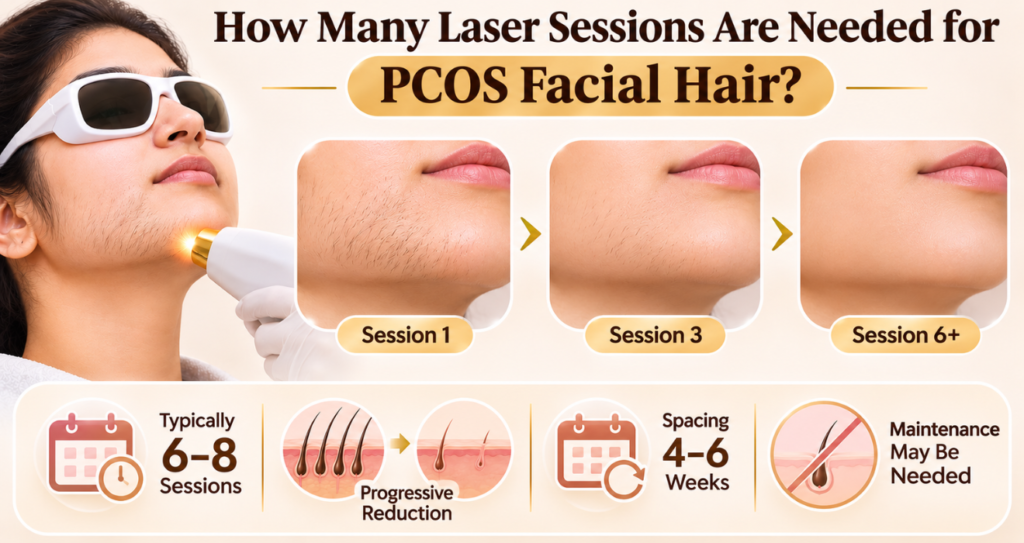
There is no single magic number, and anyone who promises one should be treated with caution. For most people, laser hair reduction requires around six or more sessions to achieve substantial results, with treatments spaced roughly four to six weeks apart for facial hair.
However, the PCOS guidelines are clear that women with PCOS often need more sessions than women with non-hormonal hirsutism. This is because the hormonal activity of PCOS keeps recruiting new follicles, meaning there is simply more hair to treat over time.
In practice, many women with PCOS plan for an initial course of six to eight sessions on the face, then reassess. Some will be delighted within that window; others may need ten or more sessions to reach their goal. After the initial phase, maintenance sessions, perhaps once or twice a year, help keep new and regrowing hairs under control.
The exact number depends on several factors, including your baseline hair density, hair and skin colour, hormonal control and how your body responds. A personalised assessment is the only reliable way to estimate your likely course.

Realistic Results and Expected Timeline
Setting realistic expectations is the kindest thing we can do. Here is what most women with PCOS can reasonably expect from a properly planned course of laser hair reduction.
- After one to two sessions: Hair often grows back more slowly and may feel a little finer, although visible change is usually modest at this early stage.
- After three to four sessions: Many women notice clearly reduced density and thickness, with longer gaps between needing to remove hair.
- After six or more sessions: Substantial reduction in visible facial hair, with hair that is often finer, lighter and easier to manage.
- Ongoing maintenance: Occasional top-up sessions help sustain results as PCOS continues over the years.
It is worth remembering that treated hairs do not vanish instantly. They typically shed over one to three weeks after each session. You may also see new hairs appear between sessions, which is normal and simply reflects the hair growth cycle at work.
Factors that affect your results
Several factors influence how well laser works for you:
- Hair colour: Dark, coarse hair responds best; grey, white, blonde and red hair respond poorly.
- Skin tone: Laser can be used across skin tones, but device choice and settings must be matched carefully to your skin.
- Hormonal activity: Well-managed PCOS tends to give more durable results, which is why medical management matters alongside laser.
Is Laser Hair Reduction Safe for Indian Skin?
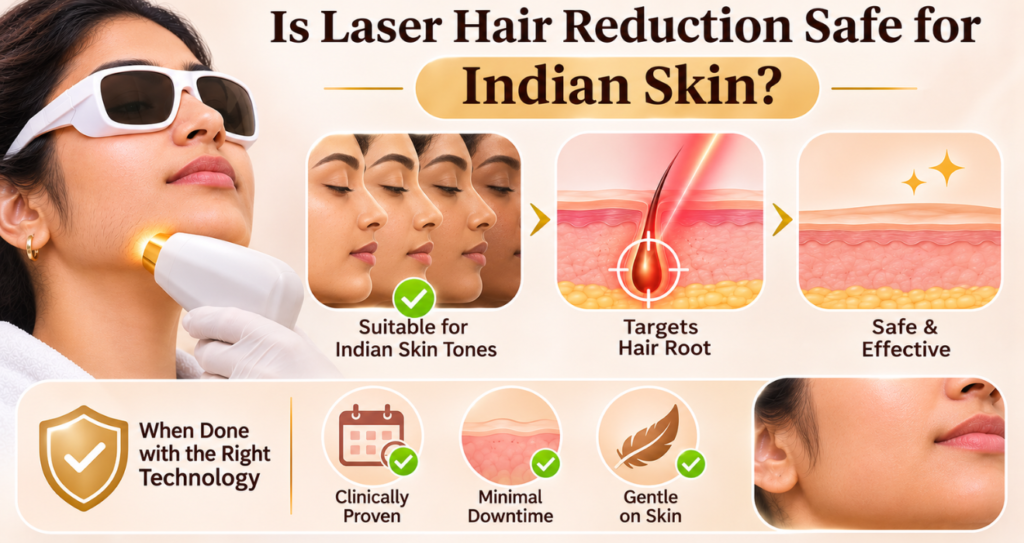
This is a very reasonable concern, and the answer is that laser hair reduction can be performed safely on Indian and darker skin tones, provided the right device, settings and expertise are used.
Indian skin has more melanin in the epidermis. With unsuitable lasers or incorrect settings, this can increase the risk of burns or temporary pigmentation changes. The key is appropriate laser selection. The Endocrine Society guidelines recommend longer-wavelength devices such as Nd:YAG, and in some cases diode lasers, with effective skin cooling for women with darker skin tones.
Equally important are a thorough professional assessment, test patches where appropriate, conservative starting settings and careful attention to recent sun exposure or tanning. If your skin is tanned, treatment is usually postponed until the tan fades, because tanned skin carries a higher risk of side effects.
This is exactly why choosing an experienced clinic matters far more than choosing the cheapest option. If you are planning treatment around the festive season, our article on when to start laser hair removal before Diwali explains how to time your sessions sensibly.
Common Treatment Areas for PCOS Facial Hair
Laser hair reduction can be tailored to the specific areas that trouble you most. The most commonly treated facial zones in PCOS include:
- Upper lip: One of the most frequent and visible concerns.
- Chin: Often the most stubborn area in PCOS, where coarse hair is common. Many women search specifically for PCOS chin hair treatment, and this is an area where laser can make a real difference.
- Jawline: Hair here can contribute to a shadowed appearance that many find distressing.
- Cheeks and sideburn area: Treated to create a softer, more even look.
Your clinician will assess each area individually, as hair colour and thickness can vary across the face, which in turn affects how each zone responds.
Laser Hair Reduction vs Shaving, Waxing and Threading
Many women with PCOS have cycled through every temporary method before considering laser. The table below compares them honestly.
| Method | How long it lasts | Effect over time | Key considerations |
|---|---|---|---|
| Laser hair reduction | Long-term reduction; maintenance needed | Progressively reduces hair growth | Requires a course of sessions; works best on dark hair; needs experienced provider |
| Shaving | One to a few days | No lasting change to growth | Quick, safe and cheap; does not thicken hair despite the myth; preferred between laser sessions |
| Waxing | A few weeks | No lasting reduction | Can cause ingrown hairs and irritation; removes the hair root, so must be paused before laser |
| Threading | A few weeks | No lasting reduction | Popular and precise for facial hair; can cause redness; must be paused before laser |
The key difference is that shaving, waxing and threading only remove visible hair, whereas laser aims to reduce how much hair grows in the first place.
Laser Hair Reduction for PCOS: An Honest Overview
Potential Benefits
- Can substantially reduce facial hair density and thickness
- Dramatically cuts time spent on daily hair removal
- Often improves confidence, mood and quality of life
- Works particularly well on the dark, coarse hair typical of PCOS
- Can be combined with medical PCOS management for better results
Important Considerations
- Not a permanent cure; maintenance sessions are usually needed
- PCOS often requires more sessions than non-hormonal hirsutism
- Less effective on grey, white, blonde or red hair
- Does not treat the underlying PCOS itself
- Requires appropriate device selection and expertise for darker skin
Preparation, Aftercare and Possible Side Effects
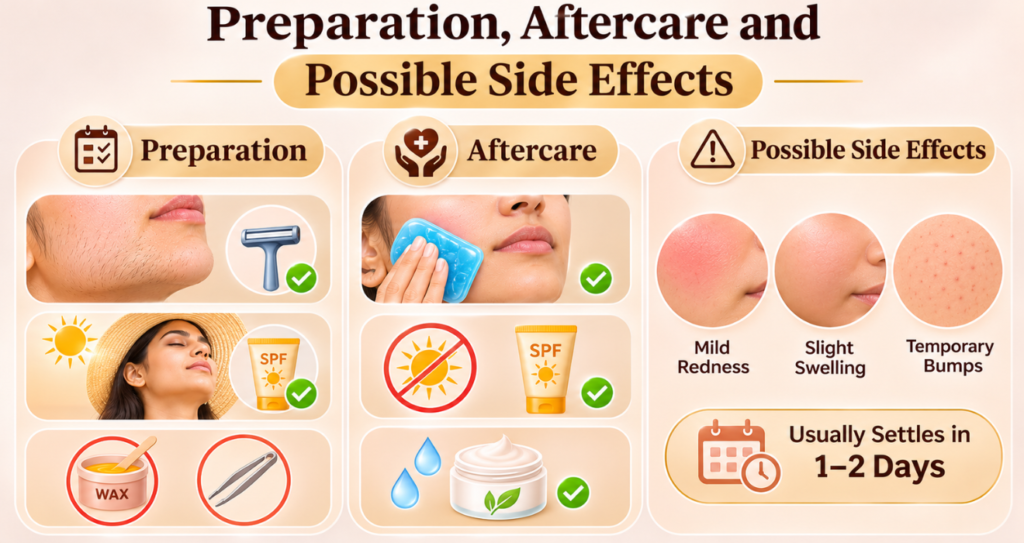
Before your session
- Avoid sun exposure and tanning (including self-tan) for a few weeks beforehand.
- Shave the area within 24 hours of treatment, rather than waxing, plucking or threading, which remove the follicle target.
- Tell your clinician about any medications, skin conditions or recent treatments.
After your session
- Expect some redness and mild swelling around the follicles for a few hours to a day or two.
- Apply broad-spectrum sunscreen diligently and avoid direct sun.
- Avoid saunas, hot baths and vigorous exercise for 24 to 48 hours.
- Use gentle skincare and avoid harsh exfoliants or retinoids for several days.
- Between sessions, shave or trim rather than wax or thread.
Possible temporary side effects
Most side effects are mild and short-lived, including redness, swelling and a mild stinging sensation during treatment. Temporary pigmentation changes can occur, especially in darker skin, which is why professional settings matter. Rare side effects include blistering or, in certain higher-risk groups, paradoxical hair growth. A thorough consultation helps identify and minimise these risks.
When treatment should be postponed or assessed first
Laser hair reduction should be postponed or carefully reviewed if you are pregnant, have recently been in the sun or are tanned, have an active skin infection in the area, or are taking certain photosensitising medications. A professional assessment is essential before starting.
Why Managing PCOS Itself Still Matters
Laser hair reduction treats the hair, not the hormones. For the best and most durable results, it works alongside, not instead of, good PCOS management.
Lifestyle measures, weight management where appropriate, and medical treatments such as combined oral contraceptives or, where clinically indicated, anti-androgens can reduce the hormonal drive that creates new terminal hair. Research consistently shows that combining medical management with laser tends to produce more lasting results than laser alone.
For some women, PCOS also brings other concerns following weight changes, such as skin and body changes after significant weight loss. If that resonates with you, our guides on facial changes after weight loss and non-surgical skin tightening after weight loss may be helpful.
When to see a dermatologist or gynaecologist
If you have not yet been formally diagnosed, or if your facial hair appeared suddenly or is worsening quickly, it is important to see a gynaecologist or endocrinologist for assessment. Sudden or severe hirsutism occasionally signals other hormonal conditions that need evaluation. A dermatologist can advise on the most suitable hair-reduction approach for your skin and hair type.
Laser Hair Reduction Cost in Mumbai
Cost is understandably one of the first things people want to know. Rather than quote a figure that may not reflect your individual needs, it is more useful to explain what actually influences the price of laser hair reduction in Mumbai.
- Treatment areas: Treating the upper lip alone costs less than treating the full face.
- Number of sessions: PCOS often requires a longer course, which affects the overall investment.
- Hair density and skin type: These influence session length and the technology used.
- Maintenance: Occasional top-up sessions should be factored into long-term planning.
Because PCOS facial hair is individual, the most accurate way to understand your cost is through a personal consultation, where we can assess your needs and provide clear, transparent pricing for your specific plan.
Why Choose Vivo Body & Skin Clinic
At VIVO Body & Skin Clinic in Mumbai, we understand how deeply PCOS facial hair can affect your confidence, and we treat it with the seriousness and sensitivity it deserves.
Our approach begins with a personalised assessment of your skin tone, hair type and hormonal background. We carry out a careful suitability evaluation, plan your treatment professionally and prioritise safety at every step, using the latest aesthetic technology to deliver results you can trust. We believe in honest expectations, not empty promises, which is why we take the time to explain exactly what laser can and cannot achieve for your PCOS facial hair.
If you are ready to explore your options, we warmly invite you to book a consultation with our experienced team. Together we can create a tailored plan designed around your skin, your hair and your goals.
Can laser hair reduction permanently remove PCOS facial hair?
Laser can permanently damage many treated follicles, but because PCOS involves ongoing hormonal activity, new hairs can still develop over time. For this reason, it is more accurate to describe laser as a long-term hair reduction treatment for PCOS facial hair rather than a permanent cure. Most women need a course of sessions followed by occasional maintenance to sustain results.
How many laser sessions will I need for PCOS facial hair?
Most people need around six or more sessions, but women with PCOS often require more because the hormones keep producing new hair. Many plan for six to eight sessions initially on the face, then reassess, with some needing ten or more. Maintenance sessions once or twice a year are usually recommended afterwards. A personalised assessment gives the most reliable estimate.
Is laser hair reduction safe for Indian and darker skin tones?
Yes, when the right laser and settings are used by an experienced provider. Longer-wavelength devices such as Nd:YAG are often preferred for darker skin, along with effective cooling and conservative settings. Avoiding sun exposure and tanning before treatment is important to reduce the risk of pigmentation changes.
Does laser hair reduction treat PCOS itself?
No. Laser treats the hair on the surface but does not change the underlying hormones or metabolic features of PCOS. For the best long-term results, laser works alongside good PCOS management, which may include lifestyle measures and medical treatments prescribed by your doctor.
Which facial areas can be treated for PCOS hair?
The most common areas are the upper lip, chin, jawline, cheeks and sideburn region. The chin is often the most stubborn area in PCOS, where hair tends to be coarse and dark, which is exactly the type of hair that responds well to laser.
Will laser work if I have light, grey or white facial hair?
Laser targets the pigment in hair, so it works best on dark, coarse hair. Light, grey, white, blonde or red hairs contain little pigment and respond poorly. If you have a mix, laser can reduce the dark hairs effectively, and other methods may be considered for any remaining light hairs.
Can I have laser if I am taking PCOS medication such as the pill or metformin?
In most cases, yes. Combined oral contraceptives and metformin are generally compatible with laser, and combining medical management with laser can actually improve long-term results. Always tell your clinician about all medications you take so your treatment can be planned safely.
Is laser safe during pregnancy?
Elective laser hair reduction is usually avoided during pregnancy, as safety data are limited. Most clinics recommend postponing treatment until after pregnancy and breastfeeding. If you are planning a pregnancy soon, discuss timing with your clinician.
Do at-home laser or IPL devices work for PCOS facial hair?
There is no reliable evidence that home-based devices are effective for PCOS facial hair, and PCOS guidelines do not support home IPL kits. Because PCOS hair is hormonally driven and more resilient, professionally administered treatment with proper oversight is both safer and more effective.
When should I see a doctor rather than just booking laser?
If your facial hair appeared suddenly, is worsening rapidly, or you have not yet been diagnosed with PCOS, see a gynaecologist or endocrinologist first. Sudden or severe hirsutism occasionally indicates other hormonal conditions that need assessment before cosmetic treatment.