Reclaiming Tone After Weight Loss
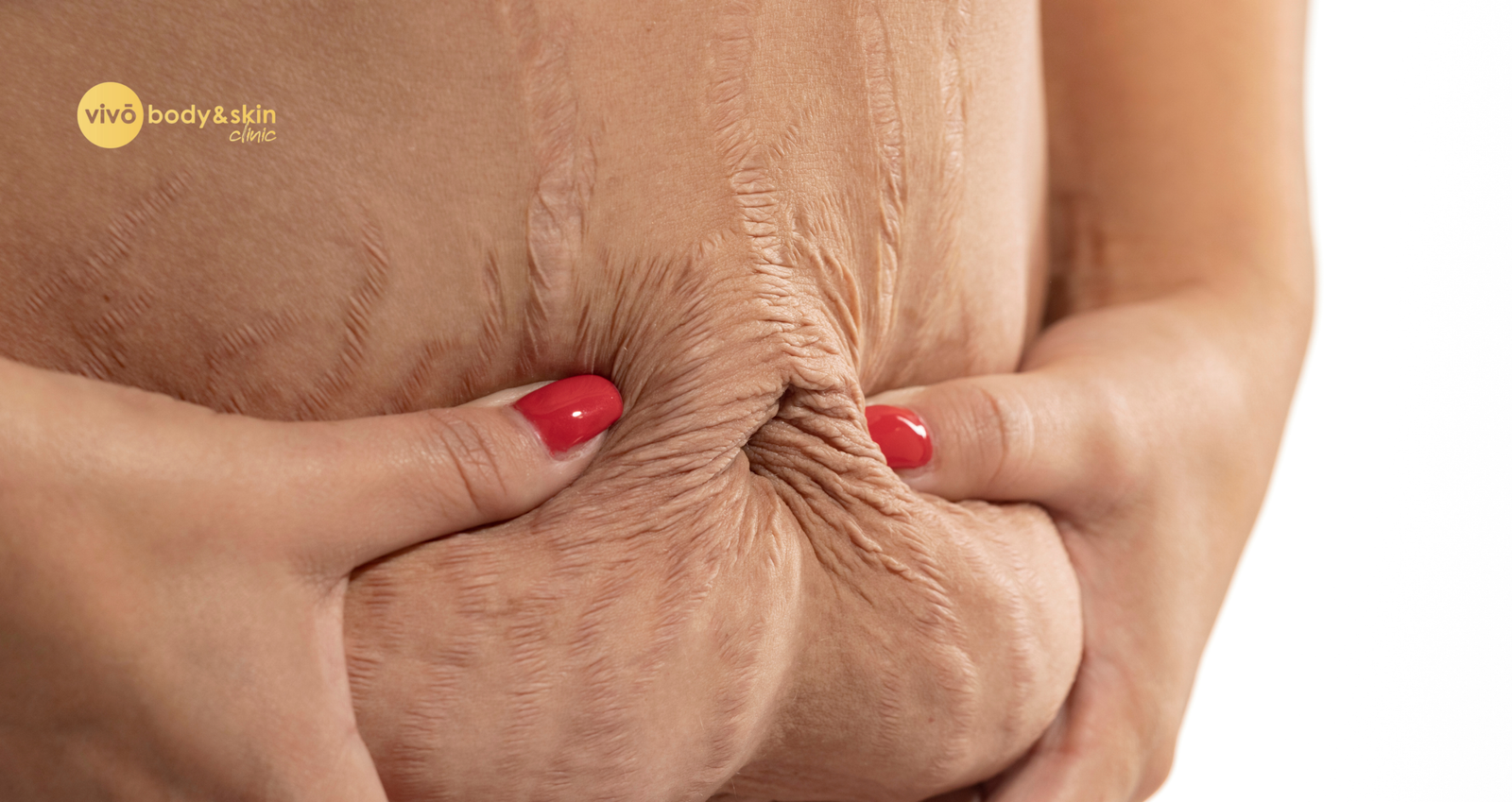
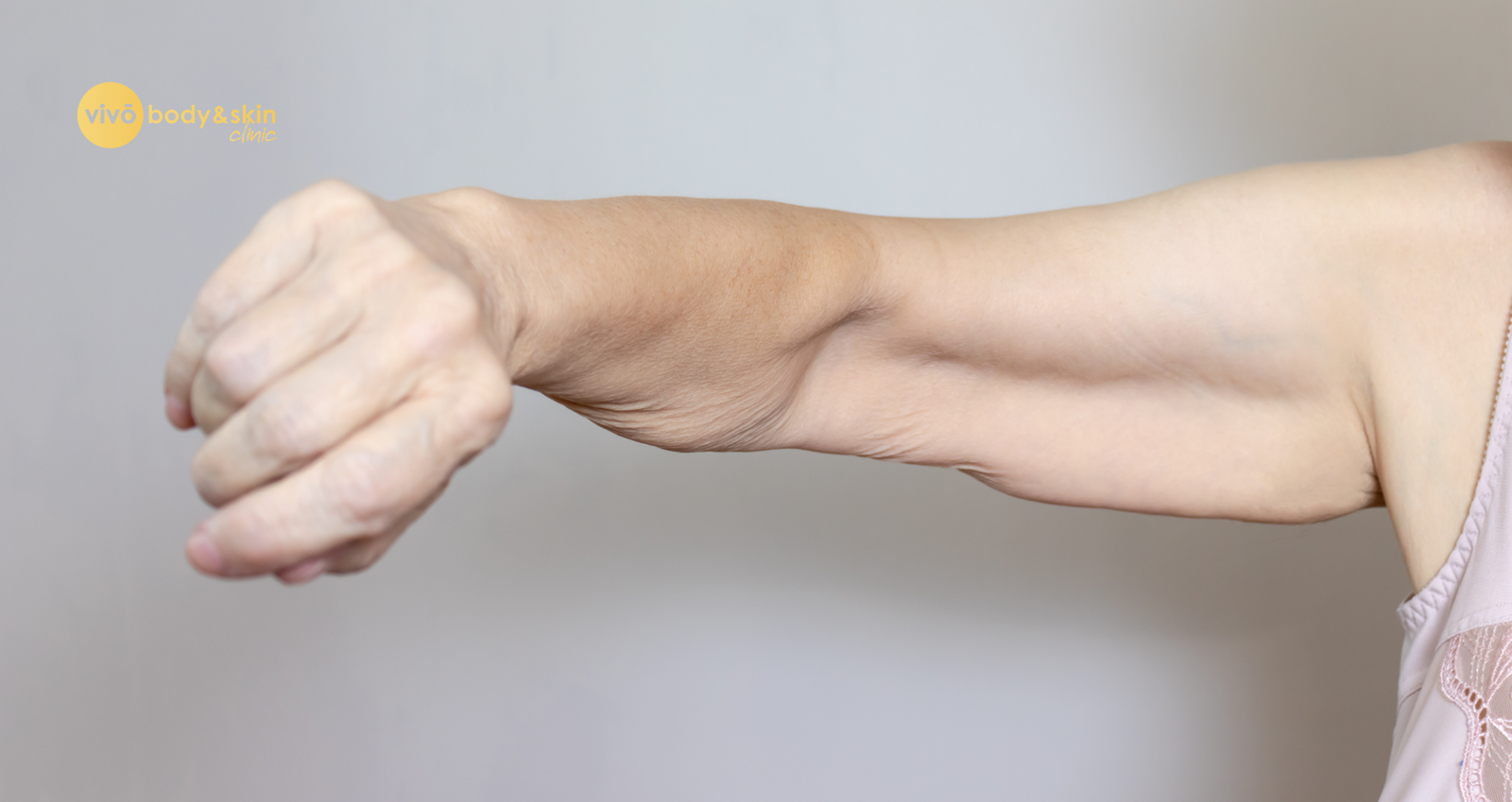
Losing a significant amount of weight is a genuine achievement, yet many people in India are surprised to find their arms and shoulders don’t quite match the rest of their progress. Loose, draping skin around the upper arms, often nicknamed “bat wings”, along with residual fat pockets, can prove stubbornly resistant to diet and exercise. The result is a frustrating mismatch between hard-won health and lingering body-image concerns.
This is precisely why interest in a non-surgical arm and shoulder lift in India has grown so rapidly. Compared with traditional arm lift surgery, which involves long scars, anaesthesia and weeks of downtime, non-invasive treatments such as HIFU, radiofrequency and fat freezing offer meaningful tightening and contouring with far less risk and recovery. This 2026 guide explains what genuinely works, who it suits, and how to choose safely.
Why Arms and Shoulders Sag After Weight Loss
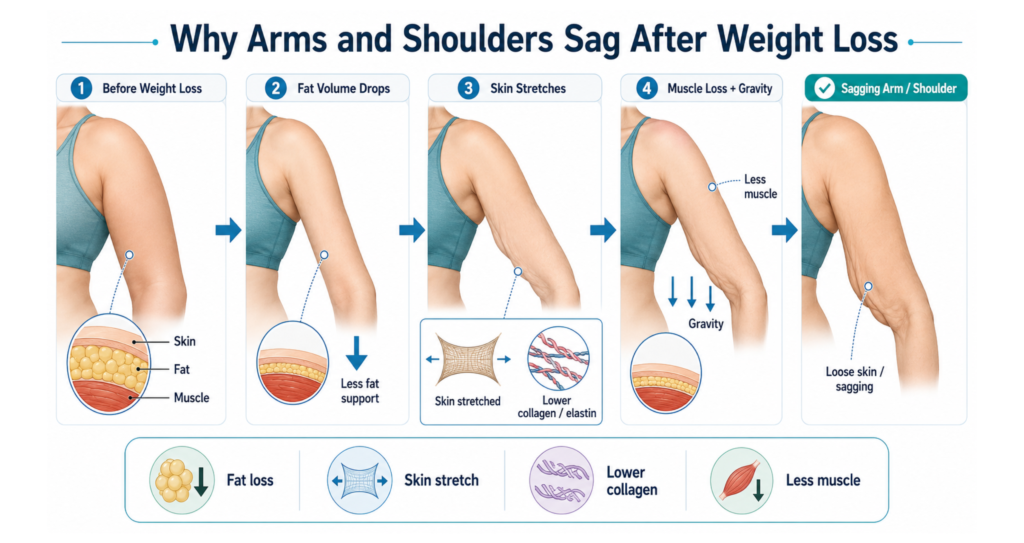
To choose the right treatment, it helps to understand why this area loses tone in the first place. Three factors usually combine.
Fat reduction outpaces skin recoil
When body mass increases, the fat layer beneath the skin expands and the overlying skin stretches to accommodate it. After substantial weight loss, the fat shrinks far more quickly than the skin can adapt, leaving a deflated, draping envelope that hangs from the triceps towards the armpit and shoulder.
Skin laxity and collagen loss
The skin’s ability to bounce back depends on its collagen and elastin scaffold. Years of stretching, combined with intrinsic ageing, sun exposure and smoking, disrupt these fibres and reduce elastic recoil. As the American Academy of Dermatology notes, the upper arms and abdomen are among the areas most prone to loose skin after weight change.
Age, genetics and pace of weight loss
Younger people who lose modest amounts of weight often see better natural tightening, whereas older individuals or those who have lost weight rapidly, including after bariatric surgery or with medications, tend to retain more persistent folds. Because the upper arms are thin-skinned, highly mobile and very visible, even mild laxity here is noticeable, particularly in sleeveless clothing.
HIFU for Arms: Focused Ultrasound Tightening
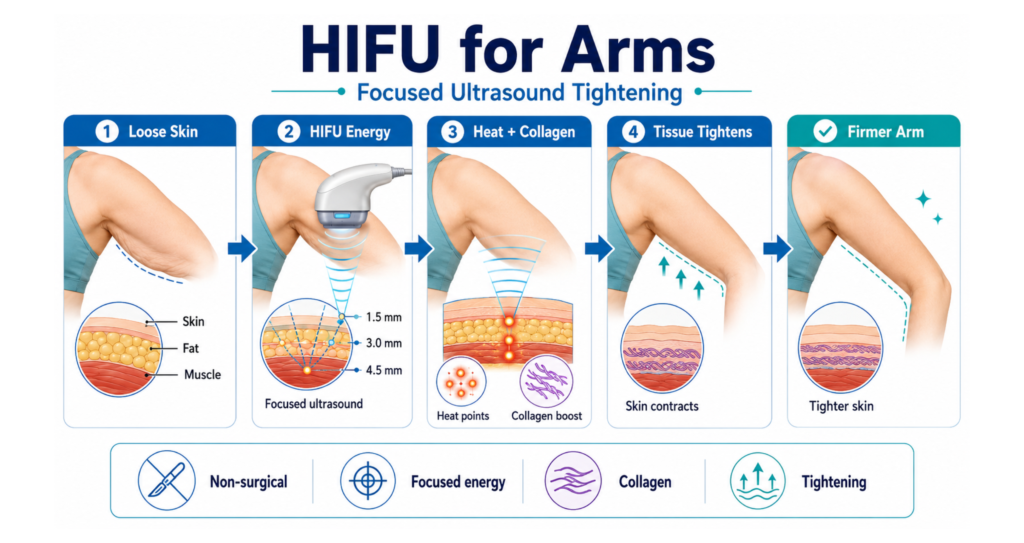
High-intensity focused ultrasound (HIFU) is one of the most popular non-surgical tightening options, and HIFU for arms in Mumbai is increasingly requested by post-weight-loss patients.
How it works
HIFU delivers focused ultrasound energy to precise depths within the deep dermis and the fibrous support layers beneath the skin. This creates tiny, controlled thermal coagulation points that trigger collagen denaturation followed by a remodelling response. Over the following weeks, the body lays down fresh collagen and elastin, gradually firming and lifting the tissue.
Target areas and benefits
On the arms, HIFU targets the loose skin of the posterior upper arm and the region towards the armpit and shoulder. Because the energy reaches the deeper structural layers rather than simply heating the surface, it can produce visible tightening in mild to moderate laxity. Systematic reviews indicate that focused ultrasound is both efficacious and safe for skin tightening with minimal downtime.
Most people need one or two sessions, with gradual improvement appearing over two to six months and results lasting roughly a year or more depending on skin quality and lifestyle. There are no incisions, no anaesthesia and no recovery period, though some patients find the treatment more intense than radiofrequency. If you are weighing ultrasound against other technologies, our guide on HIFU versus RF skin tightening explores the differences in detail. Importantly, HIFU tightens and lifts by millimetres; it cannot remove large hanging folds, so it suits arms that are reasonably shaped but lax rather than severely redundant.
RF Arm Contouring: Radiofrequency Skin Tightening
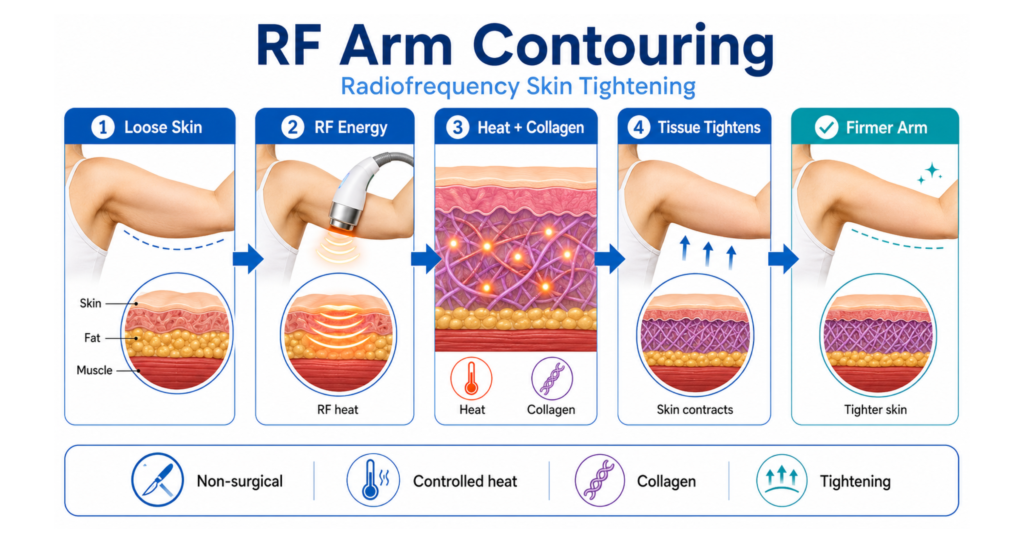
Radiofrequency (RF) is among the best-studied non-surgical methods for body skin laxity, and RF arm contouring is a mainstay of modern aesthetic clinics.
How RF tightens skin
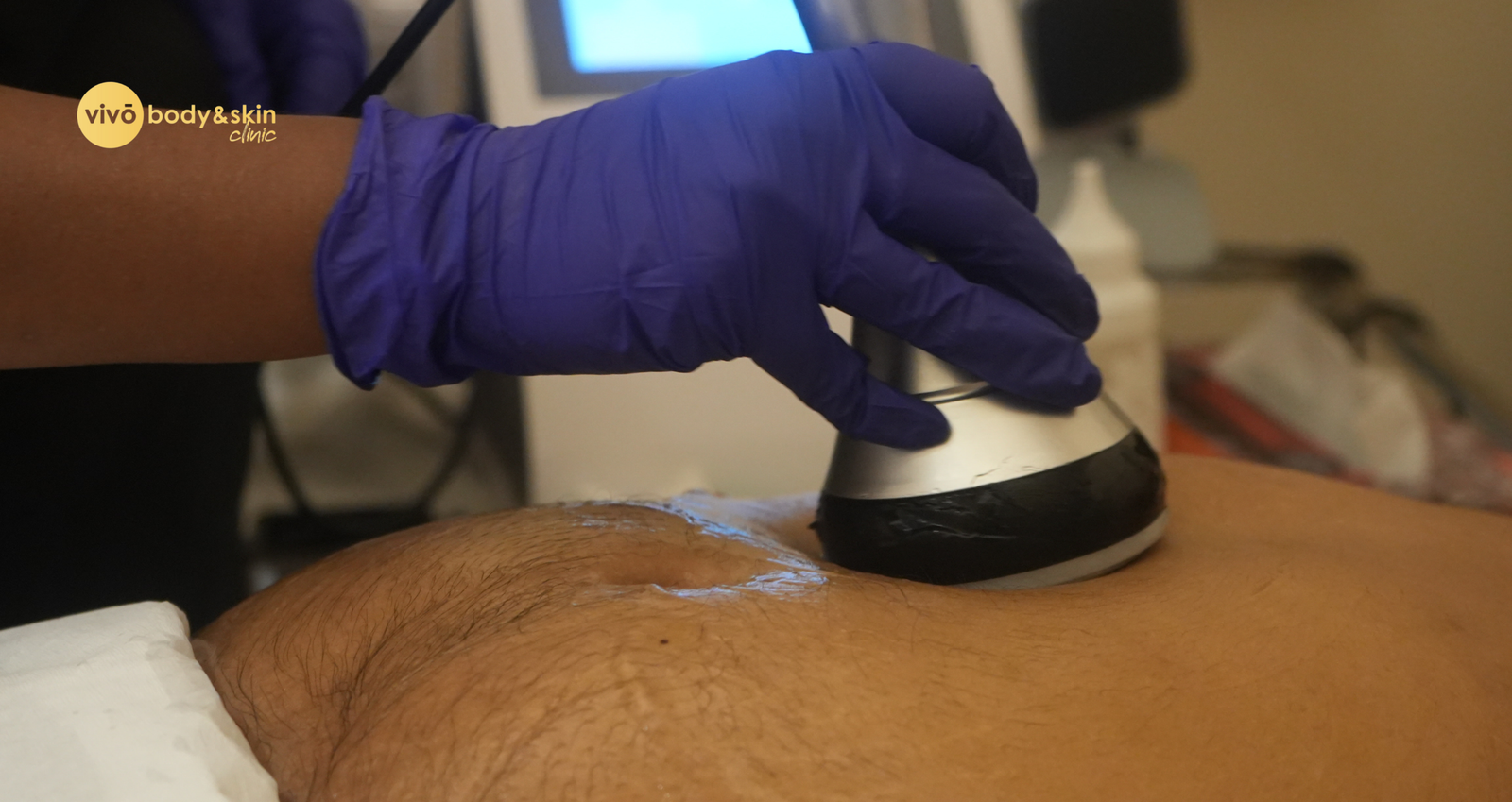
RF devices pass an alternating electromagnetic current through the tissue, generating heat as it meets resistance. By carefully controlling the energy, the dermis and subdermis are warmed to around 42-45°C, a range that contracts existing collagen immediately and stimulates new collagen and elastin over the following months. The Cleveland Clinic describes RF skin tightening as a non-surgical outpatient procedure with gradual results appearing over two to six months and durability of one to three years.
Boosting elasticity on the arms
For the upper arms, surface RF handpieces glide over the skin with a coupling gel, delivering a comfortable, deep warmth across 30-60 minutes per arm. Studies of RF body tightening report high patient satisfaction and measurable improvements in laxity, typically after a course of treatments. Newer combination devices pair RF with microneedling or acoustic energy for stronger effects on thicker, crepey skin.
The advantages of upper arm skin tightening with RF are clear: no scars, no anaesthesia and a quick return to normal life. Patients should expect to need several sessions and periodic maintenance, as gains gradually fade with natural ageing. To understand how RF compares with other modalities, see our overview of fat freezing versus HIFU versus RF for body contouring. RF is also valuable as a finishing treatment to refine skin quality after fat reduction.
Fat Freezing (Cryolipolysis) for Upper Arm Fat
Where the main concern is a residual fatty pad rather than loose skin, fat freezing arms in India, also known as cryolipolysis, can be highly effective.
The procedure
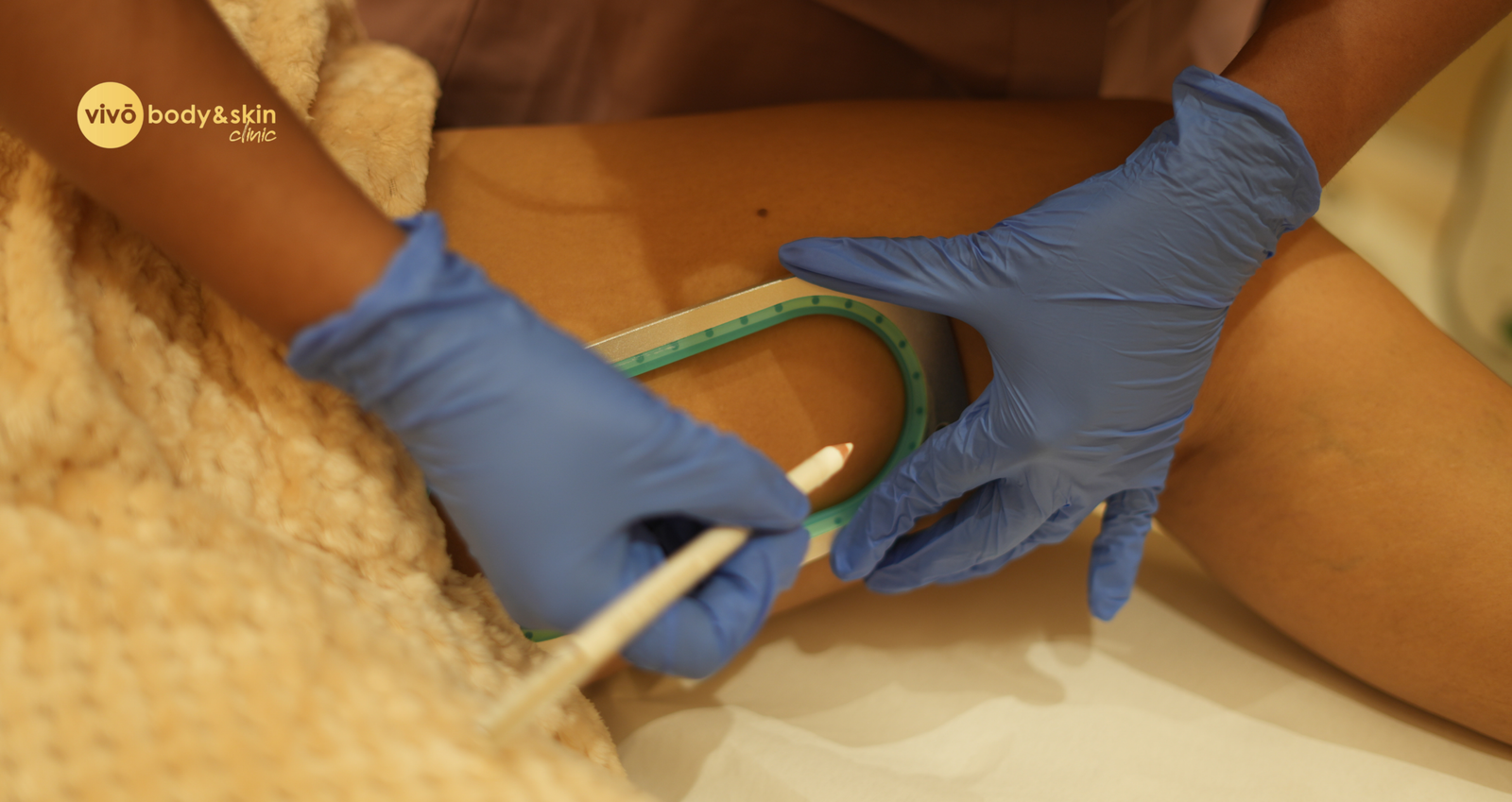
A specialised applicator draws the posterior upper arm fat between cooling panels and chills it for around 35-75 minutes. The controlled cold crystallises and injures the fat cells while sparing the skin and surrounding structures. Over the following weeks to months, the body gradually clears these damaged cells, producing a leaner, smoother arm.
Effectiveness and ideal candidates
Clinical experience shows cryolipolysis can reduce fat thickness in a treated area by roughly 10-25% per session, with high satisfaction and a low rate of serious adverse events. It works best for small, pinchable fat bulges in people whose weight is stable and near a healthy range. Crucially, fat freezing does not tighten skin, so it suits those with reasonably good skin tone. In patients with marked laxity, removing the underlying fat can actually make draping more obvious, which is why many clinicians pair fat freezing with RF or HIFU. For a closer look at how these technologies differ, our comparison of HIFU versus ultrasound cavitation is a useful read. Temporary numbness, tingling and bruising can occur but typically settle within days. Cryolipolysis is not a weight-loss tool; it is a contour refinement.
Non-Surgical Arm & Shoulder Lift: Weighing It Up
Benefits
- No incisions, scars or general anaesthesia
- Little to no downtime, so you can return to daily life quickly
- Gradual, natural-looking improvement in skin firmness and contour
- Lower upfront cost per session than surgery
- Treatments can be combined and tailored to your anatomy
- Low risk of serious complications in trained hands
Considerations
- Cannot remove large, hanging folds of skin like surgery can
- Usually requires multiple sessions for optimal results
- Results are gradual and need periodic maintenance
- Less suited to severe post-bariatric skin redundancy
- Cumulative and maintenance costs can add up over time
- Not covered by health insurance as elective treatments
Comparing HIFU, RF and Fat Freezing
Each technology has a distinct role. The table below summarises how they differ for arm and shoulder rejuvenation.
| Feature | HIFU (Focused Ultrasound) | RF (Radiofrequency) | Fat Freezing (Cryolipolysis) |
|---|---|---|---|
| Primary target | Deep dermis & support layers | Dermis & subdermis | Subcutaneous fat |
| Main benefit | Lifting & tightening | Tightening & elasticity | Localised fat reduction |
| Effectiveness | Good for mild-moderate laxity | Good for mild-moderate laxity | Good for fatty bulges, not laxity |
| Sessions | 1-2 | 4-6 | 1-3 per area |
| Downtime | None | None | Minimal (bruising possible) |
| Results appear | 2-6 months | 2-6 months | Several weeks to months |
| Best suited to | Sagging, crepey skin | Loose skin & texture | Pinchable fat, good skin tone |
For mixed concerns, where both fat and laxity are present, a combination or staged approach usually delivers the best outcome.
Cost of Non-Surgical Arm Lift in India
Pricing varies by city, clinic, device platform and the number of sessions required. As a guide, in Mumbai a single HIFU or RF session for the arms typically ranges from around ₹8,000 to ₹25,000, while a fat freezing session per arm area generally falls between ₹10,000 and ₹30,000. A full, results-oriented course usually involves several sessions, so it is wise to think in terms of a complete plan rather than a one-off price.
By comparison, surgical brachioplasty in India typically costs between ₹1,00,000 and ₹2,50,000, with the added expense of anaesthesia, hospital stay and weeks of downtime. Several factors influence non-surgical pricing: the technology and brand of device used, the size and number of areas treated, the experience of the practitioner, and whether treatments are combined. Genuine, well-regulated platforms cost more than budget alternatives but offer better safety and consistency. Remember that non-surgical results need periodic maintenance every 12-24 months, so factor this into your longer-term budget. These treatments are considered elective and are not covered by health insurance.
Non-surgical treatments don’t replace surgery for severe sagging, but for mild to moderate laxity they can meaningfully restore firmness, contour and confidence, with none of the scars.
What to Expect During and After Treatment
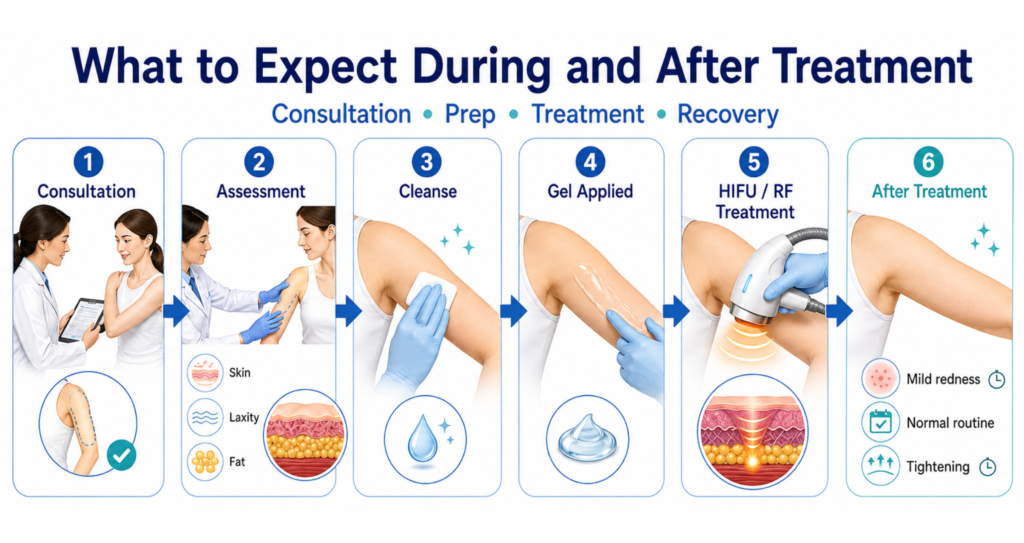
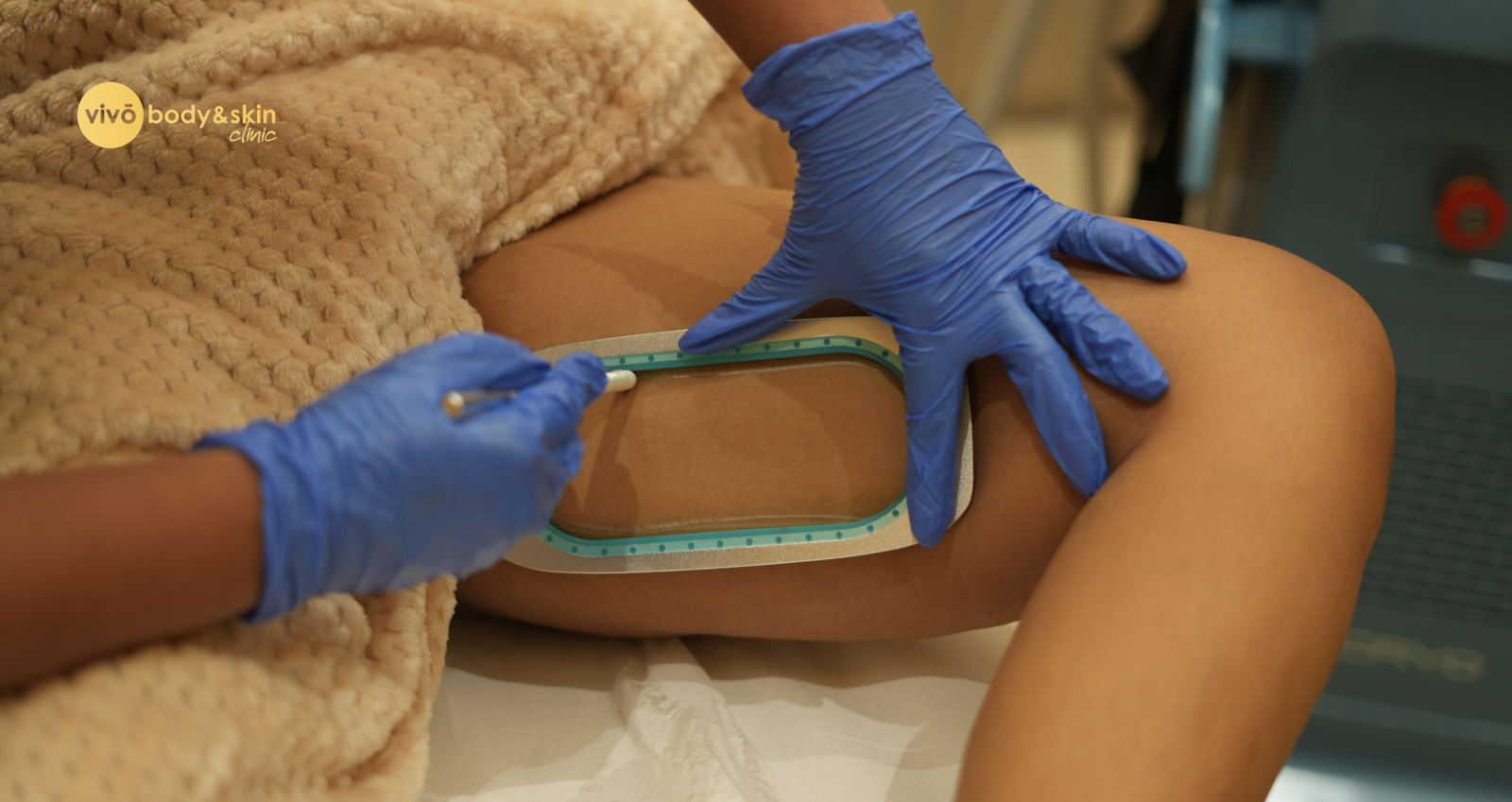
Your journey begins with a consultation, where a clinician assesses your skin quality, the degree of laxity and any residual fat, then recommends a tailored plan. On treatment day, the arm is cleansed and, for ultrasound or RF, a coupling gel is applied.
During a HIFU or RF session, you will feel warmth and occasional brief tingling as the energy is delivered; most people find it very tolerable and describe it as relaxing once they settle in. A fat freezing session begins with a cold sensation and suction that quickly numbs the area, after which it is comfortable. Each session typically lasts between 30 and 75 minutes per arm.
Afterwards, you can return to work and normal activities straight away. Mild redness, warmth or temporary tingling may follow energy-based treatments, while fat freezing can leave brief numbness or light bruising that settles within days. There is no need for compression garments or restricted movement as there would be after surgery. Results emerge gradually as collagen remodels or fat clears, typically over weeks to a few months. Staying well hydrated, eating a protein-rich diet, protecting your skin from the sun and maintaining a stable weight all help preserve and enhance your results.

Who Should Choose Each Treatment
The right choice depends on your age, skin condition and goals.
Choose HIFU if
You have mild to moderate sagging with thin or crepey skin and limited excess fat, and you want lifting and tightening with minimal sessions. HIFU suits those who prefer ultrasound’s deeper structural effect and are comfortable with a slightly more intense sensation.
Choose RF if
Your main concern is loose, lax skin alongside texture changes, and you are happy to commit to a short course of comfortable sessions. RF is particularly versatile and is often the foundation of a combined plan, as well as an excellent finishing treatment after fat reduction.
Choose fat freezing if
You have a stubborn, pinchable fat pad on the upper arm but reasonably good skin tone, and your weight is stable. Fat freezing debulks fat but does not tighten, so it is best avoided as a standalone option when significant laxity is present.
Consider a combination if
You have both fat and laxity, which is common after major weight loss. A staged plan, for example fat freezing followed by RF or HIFU tightening, usually produces the most satisfying contour. Those with severe, hanging skin folds may achieve better results from surgery, and an honest consultation will make this clear. If you are exploring related areas, our guides on post-pregnancy body contouring and non-surgical arm fat reduction offer further reading.
Why Choose Vivo Body & Skin Clinic For Non-Surgical Arm & Shoulder Lift After Weight Loss
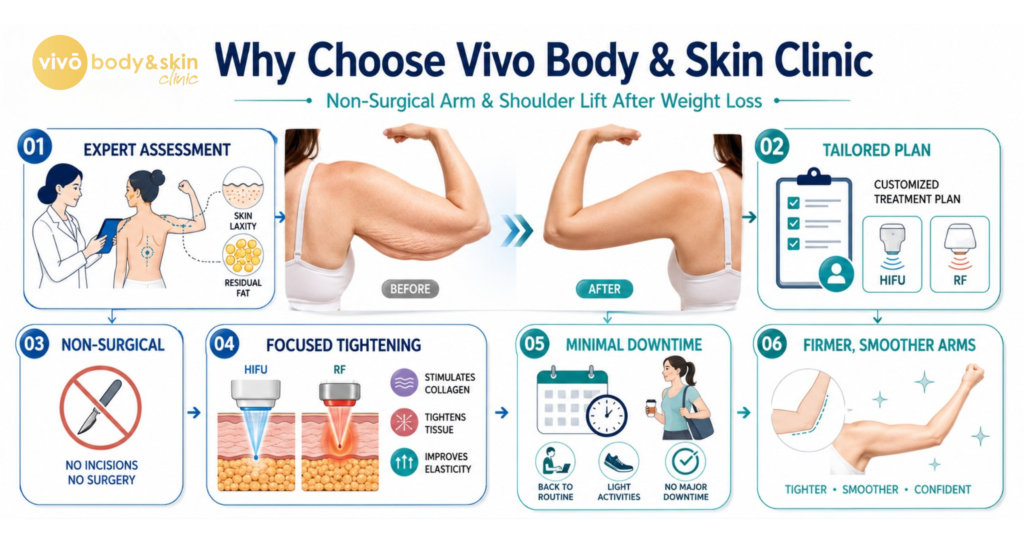
At VIVO Body & Skin Clinic in Mumbai, we specialise in affordable, non-invasive aesthetic treatments delivered with genuine clinical care. Our experienced team uses the latest pioneering aesthetic technology to provide unrivalled, natural-looking results for the arms, shoulders and beyond.
Rather than selling one-size-fits-all packages, we begin with a thorough assessment of your skin, laxity and goals, then design a personalised plan that may combine HIFU, radiofrequency and fat freezing for the best outcome. We believe in honest, realistic advice, including when non-surgical treatment is the ideal solution and when it is not. With a focus on safety, comfort and measurable results, our clinic is a trusted choice for post-weight-loss arm and shoulder rejuvenation.
Book your consultation today to restore arm and shoulder tone safely.
Are non-surgical arm and shoulder treatments safe?
Yes. HIFU, RF and fat freezing have strong safety records when performed by trained professionals using well-regulated devices. Side effects are usually mild and temporary, such as redness, warmth, tingling or light bruising. A proper consultation screens for any conditions that might affect suitability.
Can non-surgical treatments lift my arms like surgery?
They can meaningfully tighten skin, reduce fat and improve contour, but they cannot remove large hanging folds the way an arm lift (brachioplasty) does. For mild to moderate laxity the improvement can feel dramatic; for severe post-weight-loss sagging, surgery remains the gold standard.
How many sessions will I need?
It depends on the technology and your goals. HIFU often needs one or two sessions, RF typically four to six, and fat freezing one to three per area. Combined or staged plans for both fat and laxity may require more. Your clinician will outline a clear plan at consultation.
When will I see results?
Tightening from HIFU and RF develops gradually over two to six months as new collagen forms. Fat freezing results appear over several weeks to a few months as the body clears treated fat cells. The improvement is progressive rather than instant.
How long do the results last?
RF and HIFU tightening typically lasts around one to three years, while fat freezing permanently removes treated fat cells provided your weight stays stable. Because skin continues to age, periodic maintenance treatments every 12-24 months help preserve your results.
Is there any downtime?
Very little. Most people return to work and normal activities immediately after HIFU or RF. Fat freezing may cause brief numbness or mild bruising, but no compression garments or restricted movement are needed, unlike after surgery.
Which treatment is best for loose, crepey skin?
HIFU and RF are best for skin laxity and crepiness because they stimulate collagen and elastin. Fat freezing targets fat rather than skin, so it is not the right choice for loose skin alone and may even accentuate it if used on its own.
Can I combine treatments for better results?
Yes, and combining is often ideal after weight loss when both fat and laxity are present. A common approach is fat freezing to reduce fat followed by RF or HIFU to tighten the skin. Combinations should always be planned and sequenced by a qualified clinician.
Do these treatments work on darker Indian skin tones?
HIFU, RF and fat freezing are generally well suited to all skin tones, as they do not rely on light absorption by pigment in the way some lasers do. This makes them a comfortable, low-risk choice for Indian skin when delivered by an experienced practitioner.
How much does a non-surgical arm lift cost in India?
In Mumbai, individual sessions typically range from around ₹8,000 to ₹30,000 depending on the technology and area treated, with a full course costing more. This is still considerably less upfront than surgical arm lift, though maintenance treatments should be factored into long-term planning.
The Bottom Line
After significant weight loss, sagging arms and shoulders are common, but they are no longer something you simply have to accept. HIFU and RF can tighten lax, crepey skin by stimulating fresh collagen, while fat freezing addresses stubborn fatty pockets, and thoughtful combinations tackle both at once. These non-surgical options offer real, natural-looking improvement with minimal risk and no downtime, making them an appealing alternative to surgery for mild to moderate concerns.
The key to success is an honest assessment, realistic expectations and an experienced clinical team. If you are ready to restore tone to your arms and shoulders safely, book a consultation with VIVO Body & Skin Clinic in Mumbai and let us design a plan tailored to you.