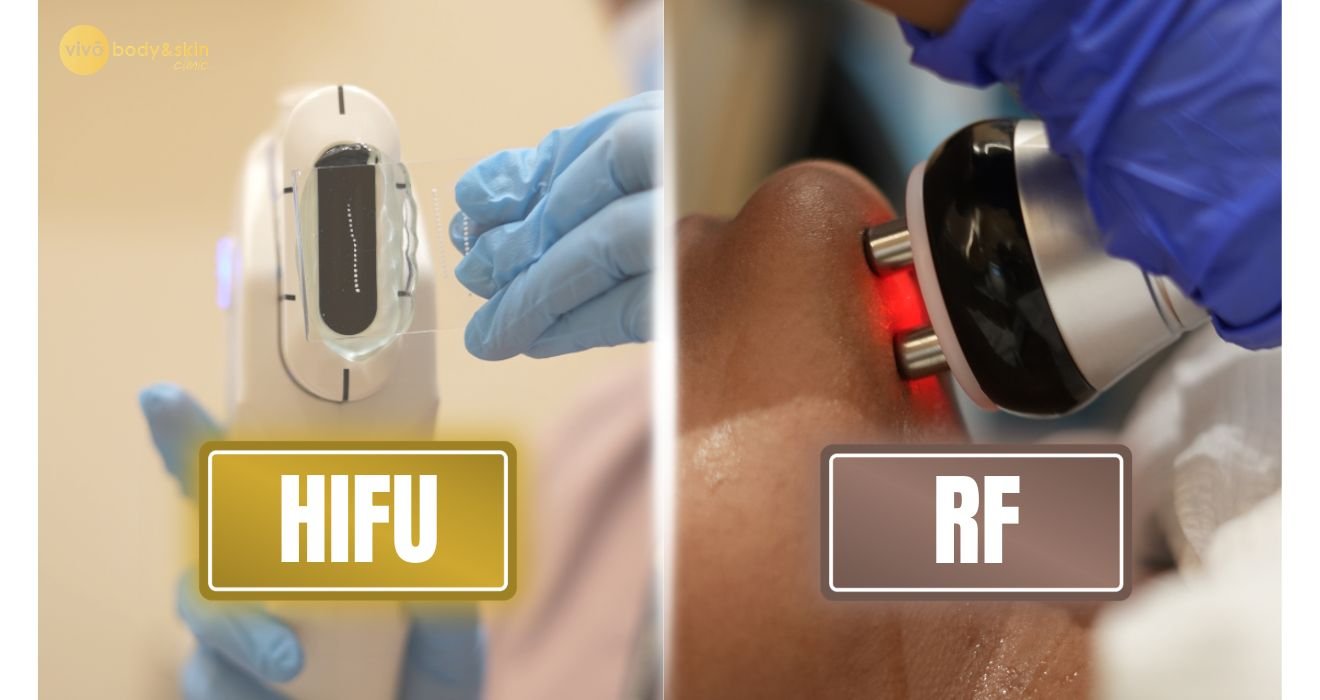
If you are comparing HIFU vs RF skin tightening, you are probably asking one practical question: which treatment will actually give you the result you want without surgery? Both are popular options for people who want firmer, tighter skin with little to no downtime, but they do not work in exactly the same way.
In simple terms, HIFU is usually chosen for deeper lifting and contouring, while radiofrequency skin tightening is often preferred for milder laxity, surface firmness and gradual collagen support. That does not mean one is always better than the other. The right choice depends on your age, degree of skin laxity, treatment area, tolerance for downtime, budget and expectations.
For anyone exploring non-surgical skin tightening Mumbai options, this guide breaks down the evidence, the differences in depth and results, likely costs, and when each treatment makes the most sense. If you are new to ultrasound-based lifting, you may also want to read this guide to HIFU treatment India and our detailed article on HIFU facelift treatment in India.
While both treatments are generally considered safe when performed by trained professionals, they are still medical aesthetic procedures. A proper consultation, skin assessment and discussion of contraindications are essential before you book.
What Is HIFU and How Does It Work?
HIFU stands for High-Intensity Focused Ultrasound. It uses focused ultrasound energy to create precise thermal points beneath the skin, stimulating the body’s natural wound-healing response and encouraging new collagen formation over time. One reason HIFU attracts attention is that it can reach deeper structural layers, including the superficial muscular aponeurotic system, often called the SMAS layer, which is also targeted during surgical facelifts.
Clinical research has shown that microfocused ultrasound can improve skin laxity and lift in selected patients when performed appropriately. A useful overview is available through PubMed, and professional guidance on non-surgical cosmetic procedures highlights the importance of practitioner training and patient selection.
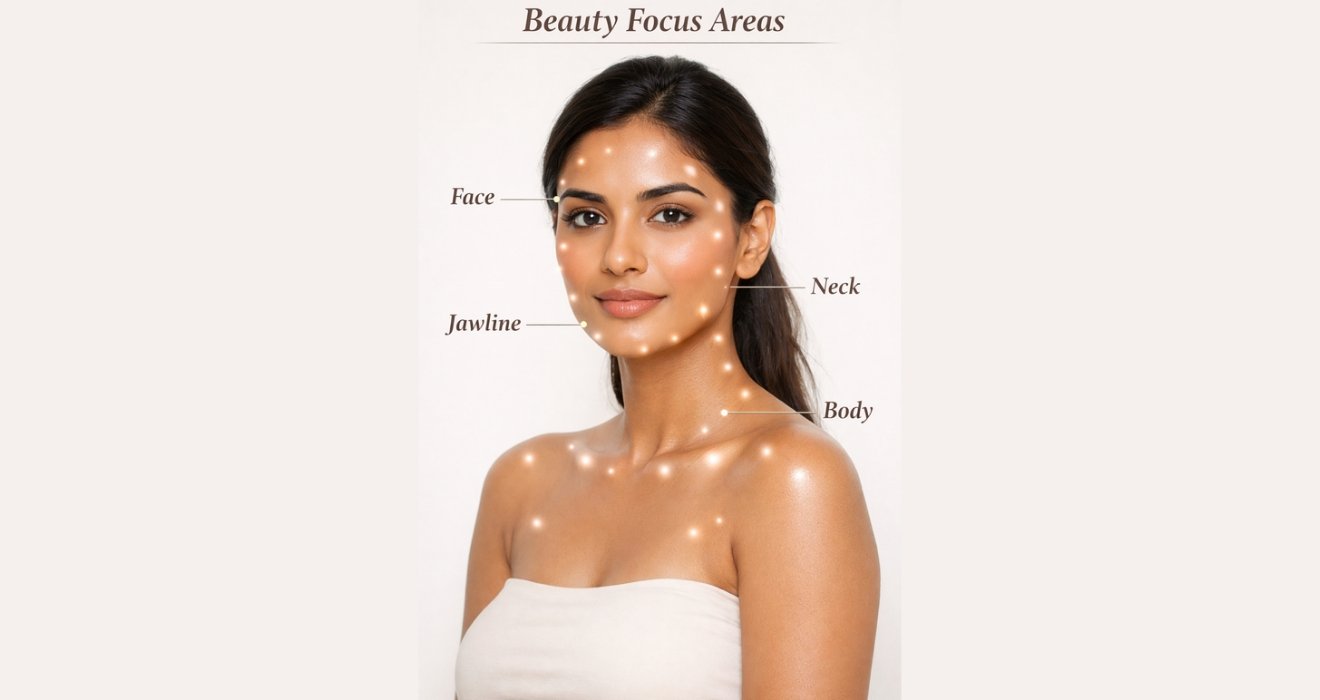
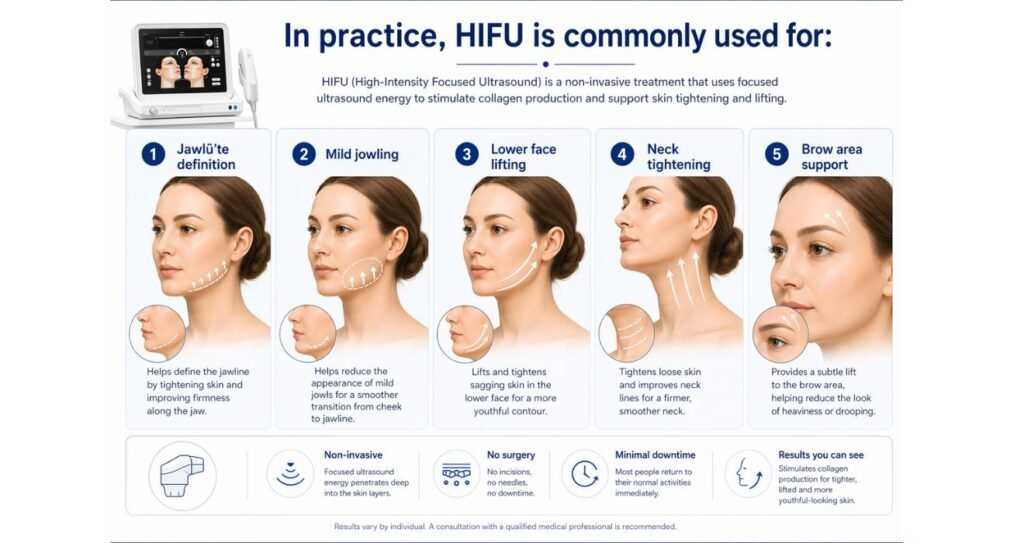
In practice, HIFU is commonly used for:
- Jawline definition
- Mild jowling
- Lower face lifting
- Neck tightening
- Brow area support
Many patients choose it because they want a more lifted look without incisions, stitches or a long recovery. If your main concern is laxity around the jawline or lower face, this overview of HIFU treatment areas may help you understand where it tends to work best.
Typical HIFU experience
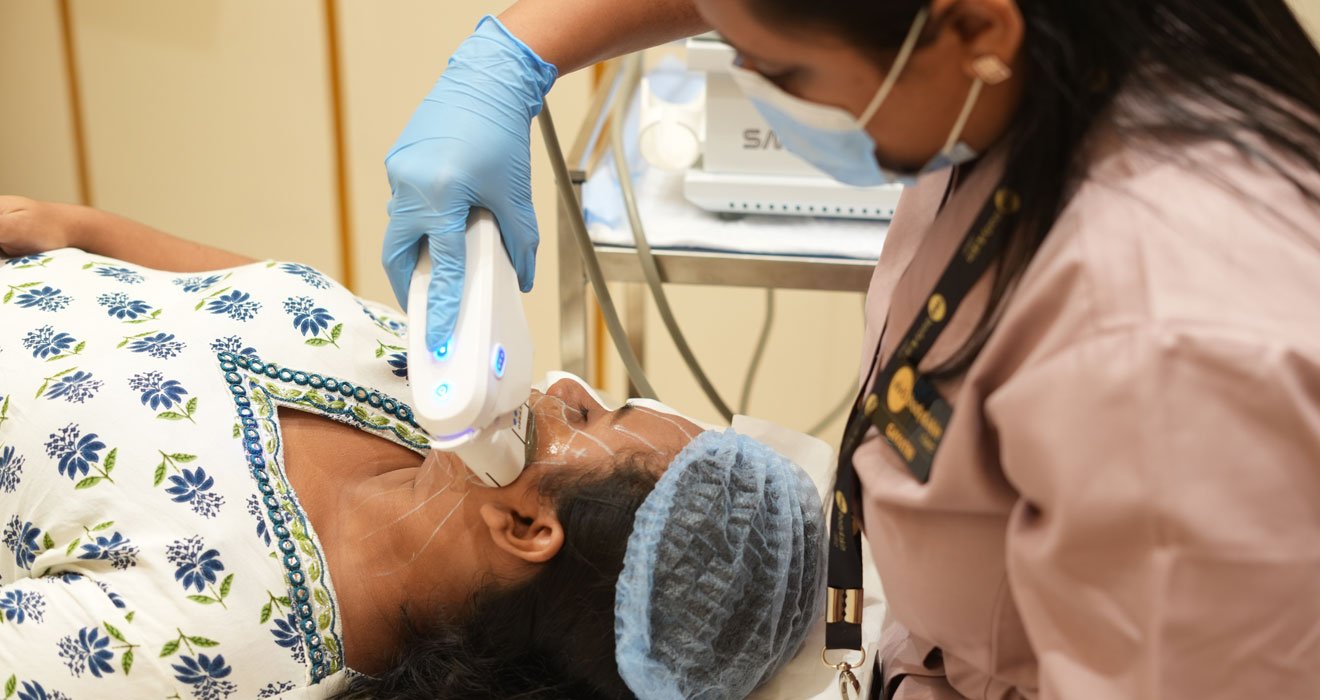
A session usually lasts between 30 and 90 minutes depending on the area treated. You may feel warmth, tingling or short bursts of discomfort as energy is delivered. There is usually no formal downtime, although mild redness, tenderness or slight swelling can happen temporarily.
What Is RF Skin Tightening and How Does It Work?
Radiofrequency skin tightening uses electromagnetic energy to heat the dermis in a more diffuse and volumetric way than HIFU. This controlled heat stimulates collagen remodelling and, in some devices, elastin production. The aim is firmer, smoother skin and gradual improvement in fine lines and mild laxity.
RF is widely used because it is versatile, generally comfortable and suitable for people who want a series-based approach with minimal disruption to daily life. A review of radio frequency in aesthetic dermatology published on PubMed notes its role in non-invasive skin tightening and rejuvenation.
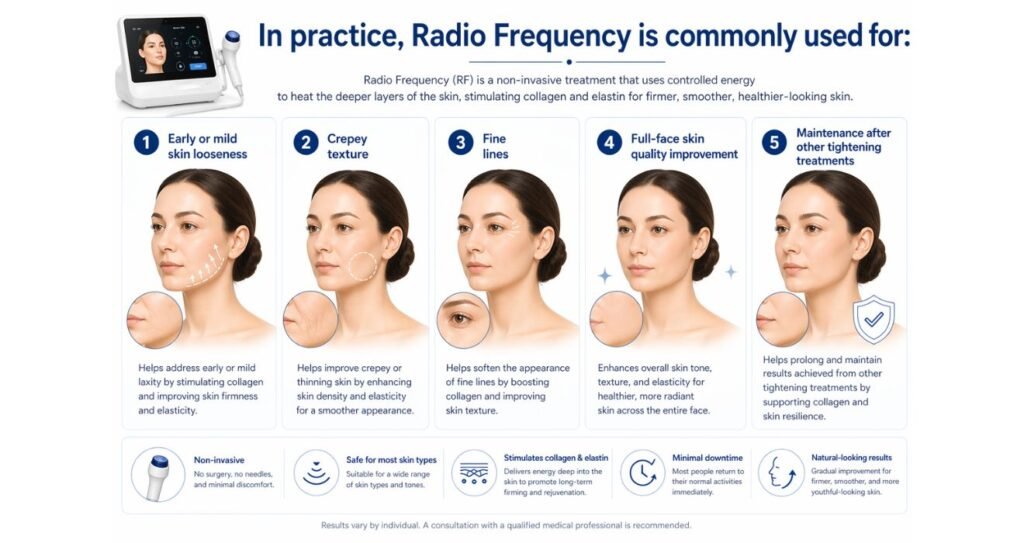
RF is often chosen for:
- Early or mild skin looseness
- Crepey texture
- Fine lines
- Full-face skin quality improvement
- Maintenance after other tightening treatments
Some patients prefer RF because it tends to feel gentler and usually involves several shorter sessions rather than one more intensive appointment.
HIFU vs RF Results: The Core Differences
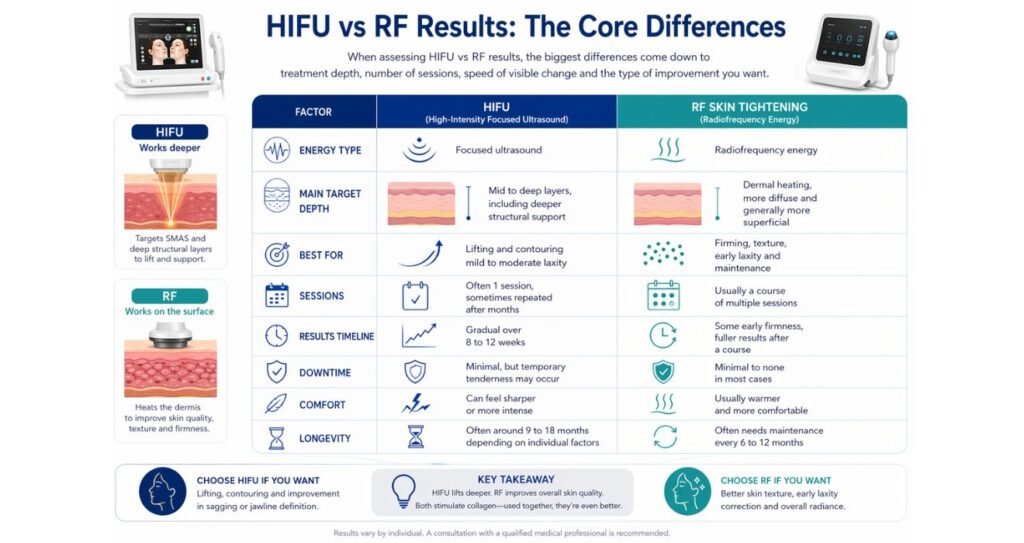
When assessing HIFU vs RF results, the biggest differences come down to treatment depth, number of sessions, speed of visible change and the type of improvement you want.
| Factor | HIFU | RF Skin Tightening |
|---|---|---|
| Energy type | Focused ultrasound | Radiofrequency energy |
| Main target depth | Mid to deep layers, including deeper structural support | Dermal heating, more diffuse and generally more superficial |
| Best for | Lifting and contouring mild to moderate laxity | Firming, texture, early laxity and maintenance |
| Sessions | Often 1 session, sometimes repeated after months | Usually a course of multiple sessions |
| Results timeline | Gradual over 8 to 12 weeks | Some early firmness, fuller results after a course |
| Downtime | Minimal, but temporary tenderness may occur | Minimal to none in most cases |
| Comfort | Can feel sharper or more intense | Usually warmer and more comfortable |
| Longevity | Often around 9 to 18 months depending on individual factors | Often needs maintenance every 6 to 12 months |
That comparison explains why patients with sagging along the jawline may lean towards HIFU, while those concerned about overall firmness and texture may be better suited to RF.
HIFU vs RF Skin Tightening: Benefits and Limitations
Benefits
- HIFU can reach deeper support layers, making it a strong option for lifting the lower face and neck.
- HIFU often requires fewer sessions, which appeals to busy patients.
- RF is usually more comfortable during treatment and suits people who prefer a gentler experience.
- RF can improve mild laxity, fine lines and overall skin texture with very little interruption to routine.
- Both are non-surgical options with low downtime when performed correctly.
- Both stimulate collagen, which can make skin look firmer and fresher over time.
Considerations
- HIFU is not ideal for severe sagging or patients expecting surgical-level lifting.
- HIFU can feel more intense, and results are not usually immediate.
- RF usually needs multiple sessions to build visible improvement.
- RF may not deliver enough lift for patients with moderate structural laxity.
- Neither treatment removes excess skin or replaces a facelift where laxity is advanced.
- Results vary according to age, collagen levels, skin quality, lifestyle and practitioner skill.
Results Timeline: When Will You See a Difference?
Results matter, but so does timing. If you are deciding between these treatments for an event, wedding or milestone, the timeline can influence your choice.
HIFU timeline
- Some people notice a subtle early tightening effect within days
- Most visible improvement develops gradually over 2 to 3 months
- Collagen remodelling may continue for up to 6 months
HIFU is therefore best for patients who can plan ahead and do not expect instant transformation.
RF timeline
- You may notice temporary plumpness or mild tightness soon after a session
- Meaningful results usually build progressively over a course of treatments
- Maintenance may be advised every few months depending on the device and your skin goals
For many patients, the choice comes down to whether they want a deeper single-session strategy or a gentler course-based approach.
There is also growing interest in combining technologies. Some peer-reviewed studies suggest that ultrasound and RF can have complementary effects on different layers of the skin. For example, combination treatment has shown promising results for elasticity and wrinkle improvement in published research available via PubMed. That does not mean everyone needs both, but in selected cases a personalised plan can outperform a one-size-fits-all treatment.
Cost in India and Mumbai
Cost is one of the most common decision-making factors. Prices vary by clinic, device type, treatment area, practitioner expertise and whether you are having a single session or a package.
As a general guide in India:
- HIFU treatment India: often starts from around ₹20,000 to ₹60,000+ per session for facial areas, with premium full-face and neck treatments costing more
- Radiofrequency skin tightening: often ranges from around ₹5,000 to ₹20,000+ per session depending on technology and area treated
For non-surgical skin tightening Mumbai, prices may sit at the higher end because of clinic location, device quality and doctor oversight. However, the cheapest option is not necessarily the best value. You should ask:
- What device is being used?
- Who performs the treatment?
- How many sessions are included?
- Are review appointments included?
- Is the plan tailored to your degree of laxity?
A single HIFU session can seem more expensive upfront, while RF may appear cheaper per visit but cost more over time if multiple sessions and maintenance are required.
Safety, Side Effects and Who Should Avoid Treatment
Because these are aesthetic medical treatments, safety should come before marketing claims. Both HIFU and RF are considered low-downtime procedures, but they must be performed after proper consultation and with suitable device settings.
Common side effects of HIFU
- Temporary redness
- Mild swelling
- Tenderness or tingling
- Sensitivity along the jaw or cheek for a short period
For a fuller discussion, see our guide to HIFU side effects.
Common side effects of RF
- Temporary warmth or redness
- Mild swelling
- Occasional dryness or sensitivity
Who should be cautious or may need to avoid treatment altogether?
- Pregnant patients unless specifically cleared and appropriate for the device
- People with active skin infection, open wounds or severe inflammation in the treatment area
- Patients with certain implanted electronic devices, depending on the RF system used
- People with unrealistic expectations or severe laxity better suited to surgery
- Anyone with recent fillers, threads or procedures who has not had a proper treatment plan mapped out
Good practice includes medical history, consent, photography, realistic discussion of outcomes and aftercare. Guidance from the NHS on cosmetic procedures is helpful when weighing benefits and risks.
The best treatment is not the one with the biggest hype. It is the one that matches your skin laxity, goals, recovery preferences and budget.
Which Treatment Is Best for You?
This is where the HIFU vs RF skin tightening debate becomes personal. Below are realistic scenarios that can help guide your decision.
If you are in your early 30s with mild laxity and want prevention
RF is often the better place to start. At this stage, collagen support, skin quality and maintenance may matter more than deep lifting. If your skin still bounces back reasonably well, radiofrequency skin tightening can help maintain firmness with minimal disruption.
If you are in your late 30s to 50s and notice jawline softening
HIFU may be the stronger choice, especially if your main concern is lower-face sagging rather than surface texture. Patients wanting a more defined jawline often compare HIFU with other contouring options, and you may also find this guide to double chin removal without surgery useful if fullness under the chin is part of the issue.
If your skin looks loose and crepey but not heavily sagged
RF may suit you better. It is commonly selected for all-over firmness and textural refinement rather than a lifting effect alone.
If you want one main session rather than a package
HIFU usually fits that preference better, although some patients need repeat treatment after several months depending on response and age-related change.
If you are nervous about discomfort or downtime
RF is often seen as the easier entry point. Most people tolerate it well and return to normal activity quickly.
If you have moderate laxity and want a balanced plan
You may benefit from a combined or staged approach, but only after an in-person assessment. Some clinics use HIFU for deeper support, then RF for maintenance and skin quality. The right combination depends on your face, not on trends.
Why Choose Vivo Body & Skin Clinic?
When considering any facial tightening treatment, the clinic matters as much as the device. At Vivo Body & Skin Clinic Mumbai, patients are guided through consultation, skin assessment, goal-setting and realistic treatment planning rather than being pushed towards a single machine for everyone.
Our team uses advanced non-invasive technology and focuses on personalised plans for facial contouring, firmness and rejuvenation. That may mean HIFU, RF, or in some cases another option entirely depending on your skin quality and desired outcome. If you are specifically researching facial lifting, you can also read our article on HIFU facial treatment. For anyone comparing clinics, here are key things to check before choosing a clinic in Mumbai.
If you are unsure which treatment fits your goals, the best next step is a professional consultation. You can explore our treatment pages here: HIFU treatment page, RF skin tightening page, or book a consultation.
Final Thoughts
There is no universal winner in the HIFU vs RF results conversation. HIFU is usually better for patients who want deeper lifting and contour improvement. RF is often better for those wanting gradual firming, collagen support and minimal disruption. The best decision comes from understanding your skin, not following a trend.
If you want expert guidance on non-surgical skin tightening Mumbai, a personalised consultation can help you choose the treatment that is safe, realistic and worth your investment.
Is HIFU better than RF for skin tightening?
Not always. HIFU is often better for deeper lifting and jawline or neck laxity, while RF is often better for mild laxity, firmness and texture. The right answer depends on your skin concerns and expectations.
How many sessions of HIFU or RF will I need?
HIFU is often performed as a single main session with follow-up if needed months later. RF usually works best as a course of multiple sessions, followed by maintenance.
Are HIFU and radiofrequency skin tightening painful?
Both are generally tolerable, but HIFU can feel sharper or more intense during energy delivery. RF usually feels like controlled warmth and is often considered more comfortable.
How long do HIFU vs RF results last?
HIFU results may last around 9 to 18 months in suitable patients, though ageing continues naturally. RF results can be maintained well, but repeat sessions are usually needed more often.
What is the cost of HIFU treatment India compared with RF?
HIFU is usually more expensive per session, often around ₹20,000 to ₹60,000 or more depending on the area and clinic. RF is usually less per session, but total costs can add up because several sessions are commonly recommended.
Who should avoid HIFU or RF skin tightening?
People with active skin infections, certain implanted devices, open wounds, or contraindications identified during consultation may need to avoid or postpone treatment. Pregnancy and recent facial procedures should always be discussed with your practitioner first.
Can HIFU and RF be combined?
Yes, in selected patients they can be combined or staged because they work differently within the skin. This should only be planned by an experienced practitioner after proper assessment.
Is there any downtime after non-surgical skin tightening Mumbai treatments?
Downtime is usually minimal. HIFU may cause temporary tenderness, mild swelling or redness, while RF typically causes short-lived warmth or redness. Most patients return to normal activity quickly.
At what age should I start RF or HIFU?
There is no perfect age. RF is often started earlier for prevention and mild laxity, while HIFU is more commonly chosen when visible lifting becomes a goal. Skin quality matters more than age alone.
Will HIFU or RF give the same result as a facelift?
No. These treatments can improve firmness and mild to moderate laxity, but they do not replace surgery for advanced sagging or excess skin. A good consultation should be honest about that.