
Fat reduction treatments have evolved, and ultrasonic cavitation for fat reduction is one of the most popular non-surgical solutions for those who want to sculpt their bodies without the risks and recovery time associated with traditional liposuction. At Vivo Body and Skin Clinic, we’re proud to offer this innovative treatment that targets stubborn fat, leaving you with smoother, more toned contours. In this guide, we’ll explore how ultrasonic cavitation works, its benefits, what to expect, and why it might be the perfect option for you.
Ultrasonic cavitation is a non-invasive, FDA-cleared treatment designed to break down fat cells using sound waves. The high-frequency ultrasound waves cause bubbles to form in fat cells, which ultimately break apart and liquefy the fat. The body naturally processes and removes this fat, leaving a more sculpted and toned appearance.
The non-surgical fat reduction treatment uses ultrasound waves to penetrate the skin and target fat cells beneath the surface. These waves create pressure changes, forming tiny bubbles within the fat cells. This causes the fat cells to rupture and release their contents, which are then processed by the body.
After the fat cells have been broken down, they are converted into liquid, which is expelled from the body through the lymphatic system. This process helps reduce fat in the treated area and smooths out any irregularities.
Unlike traditional liposuction, ultrasonic cavitation is a non-surgical treatment that requires no incisions, anesthesia, or recovery time. You can resume your normal activities immediately after the session.
Studies show that clinically, the ultrasound treatment caused a significant reduction of abdominal fat
Ultrasonic cavitation offers a wide range of benefits, making it one of the most sought-after non-invasive fat reduction treatments available. Let’s explore why it’s such a popular choice:
Ultrasonic cavitation is completely non-invasive. Unlike surgical fat reduction procedures, there are no cuts or stitches involved, and there is no downtime. You can return to your regular activities right after the treatment, making it a perfect solution for busy individuals.
Many people struggle with stubborn fat in areas such as the abdomen, thighs, arms, and love handles. Ultrasonic cavitation specifically targets these problem areas and provides noticeable results after just a few sessions.
Ultrasonic cavitation is FDA-cleared and has undergone extensive clinical testing to ensure it’s safe and effective. It has been shown to reduce fat in targeted areas with minimal risk and no significant side effects.
One of the standout benefits of ultrasonic cavitation is that the results are noticeable within just a few sessions. While the exact number of treatments needed can vary, most patients see significant changes after around 6-8 sessions.
Feature | Ultrasonic Cavitation | Traditional Liposuction |
Invasiveness | Non-invasive | Surgical (requires incisions) |
Recovery Time | No downtime; immediate return to activity | Requires weeks of recovery |
Treatment Duration | 30-60 minutes per session | 1-2 hours per procedure |
Fat Removal | Gradual, natural fat expulsion | Immediate removal during surgery |
Risks | Low risk, minimal side effects | Higher risk of complications |
Cost | Affordable | Expensive |
Suitable for | Small to moderate fat areas | Larger areas requiring surgery |
Ultrasonic cavitation is ideal for individuals who are close to their ideal weight but have localised fat deposits that resist diet and exercise. It’s not intended as a weight loss treatment, but rather as a solution for body contouring and the elimination of stubborn fat. This is the perfect treatment for fat reduction without surgery.
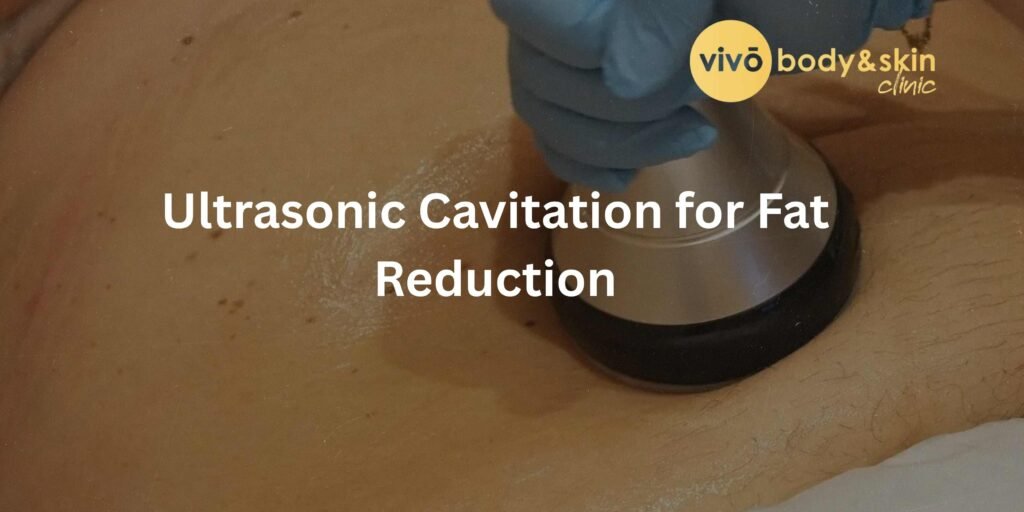
Each session of ultrasonic cavitation for fat reduction typically lasts between 30-60 minutes, depending on the area being treated. The procedure is relatively comfortable and feels like a gentle massage. The practitioner will apply a gel to the treatment area, which helps the ultrasound waves penetrate the skin more effectively.
You may hear a mild buzzing sound during the treatment, but there’s no pain. After the session, there may be some mild redness or warmth in the treated area, but this usually fades within a few hours.
The number of treatments required depends on factors like the area being treated and the amount of fat in the target area. Typically, 6-8 sessions are recommended for optimal results. These sessions are usually spaced a week apart to allow the body time to process and eliminate the fat.
At Vivo Body and Skin Clinic, we specialise in non-surgical treatments that deliver real, lasting results. Our team of experts ensures you receive the highest level of care, using state-of-the-art ultrasonic cavitation technology for optimal fat reduction and body sculpting.
Ultrasonic cavitation is a safe, non-invasive, and highly effective fat reduction treatment that can help you achieve the body shape you’ve always desired. At Vivo Body and Skin Clinic, we are committed to delivering exceptional results with the latest technologies.
If you’re looking for a safe and efficient way to target stubborn fat, opt for the best Ultrasonic Cavitation treatment. Book your consultation with us today and take the first step toward a slimmer, more sculpted you!
Laser Hair Reduction is a non-invasive cosmetic treatment that uses focused laser energy to target hair follicles. The heat damages the follicle, reducing future hair growth and making regrowth thinner and lighter over time.
Laser Hair Reduction provides long-term hair reduction. While it significantly decreases hair growth, occasional maintenance sessions may be required depending on hormonal factors and individual hair patterns.
Most individuals require 6 to 8 sessions spaced 4 to 6 weeks apart. The exact number depends on the treatment area, hair thickness, and individual growth cycle.
Yes, modern laser technologies are designed to be safe for Indian and darker skin tones when performed by trained professionals using appropriate settings.
The procedure is generally well tolerated. Most patients describe the sensation as mild warmth or a light snapping feeling. Cooling technology helps improve comfort during treatment.
Laser Hair Reduction can be performed on the face, back, hands, legs, underarms, bikini area, chest, and other body areas depending on individual needs.
Yes, laser treatment significantly reduces ingrown hair by targeting the follicle directly, preventing repeated irritation caused by shaving or waxing.
There is no major downtime. Mild redness may occur temporarily, but most individuals can resume normal activities immediately after treatment.
Yes, Laser Hair Reduction is suitable for both men and women. Men commonly choose this treatment for the back, chest, beard shaping, and full body grooming.
Yes, facial laser hair reduction is commonly performed for upper lip, chin, jawline, and full face. It is especially beneficial for hormonal hair growth conditions.
Laser Hair Reduction can help manage excessive hair growth caused by hormonal conditions such as PCOS, although medical evaluation may also be recommended.
Avoid waxing or threading for at least 4 weeks before treatment. Minimize sun exposure and avoid tanning to reduce the risk of skin sensitivity.
After treatment, avoid direct sun exposure, hot showers, and harsh skincare products for 24–48 hours. Applying sunscreen regularly is recommended.
Laser works best on dark hair because it targets melanin. White, grey, or very light hair may not respond effectively to laser technology.
Most patients begin noticing reduced hair growth after 2 to 3 sessions. Significant reduction becomes visible after completing the recommended course.
Reviewed by the Clinical & Aesthetic Medicine Team
All clinical content published on this website is reviewed for medical accuracy and aligned with current dermatology and aesthetic medicine standards. Our treatment information reflects established safety protocols, evidence-based practice, and responsible patient guidance.
All procedures mentioned are performed using medical-grade technology under professional supervision. Every patient undergoes a personalized consultation to determine suitability based on skin type, medical history, and treatment goals.
This content is intended for educational purposes and does not replace individualized medical advice.
Laser Hair Reduction is a non-invasive cosmetic treatment that uses focused laser energy to target hair follicles. The heat damages the follicle, reducing future hair growth and making regrowth thinner and lighter over time.
Laser Hair Reduction provides long-term hair reduction. While it significantly decreases hair growth, occasional maintenance sessions may be required depending on hormonal factors and individual hair patterns.
Most individuals require 6 to 8 sessions spaced 4 to 6 weeks apart. The exact number depends on the treatment area, hair thickness, and individual growth cycle.
Yes, modern laser technologies are designed to be safe for Indian and darker skin tones when performed by trained professionals using appropriate settings.
The procedure is generally well tolerated. Most patients describe the sensation as mild warmth or a light snapping feeling. Cooling technology helps improve comfort during treatment.
Laser Hair Reduction can be performed on the face, back, hands, legs, underarms, bikini area, chest, and other body areas depending on individual needs.
Yes, laser treatment significantly reduces ingrown hair by targeting the follicle directly, preventing repeated irritation caused by shaving or waxing.
There is no major downtime. Mild redness may occur temporarily, but most individuals can resume normal activities immediately after treatment.
Yes, Laser Hair Reduction is suitable for both men and women. Men commonly choose this treatment for the back, chest, beard shaping, and full body grooming.
Yes, facial laser hair reduction is commonly performed for upper lip, chin, jawline, and full face. It is especially beneficial for hormonal hair growth conditions.
Laser Hair Reduction can help manage excessive hair growth caused by hormonal conditions such as PCOS, although medical evaluation may also be recommended.
Avoid waxing or threading for at least 4 weeks before treatment. Minimize sun exposure and avoid tanning to reduce the risk of skin sensitivity.
After treatment, avoid direct sun exposure, hot showers, and harsh skincare products for 24–48 hours. Applying sunscreen regularly is recommended.
Laser works best on dark hair because it targets melanin. White, grey, or very light hair may not respond effectively to laser technology.
Most patients begin noticing reduced hair growth after 2 to 3 sessions. Significant reduction becomes visible after completing the recommended course.

Start Your Application
"*" indicates required fields
"*" indicates required fields
